
About Horatio Seymour
Lived 1810 – 1886 (aged 75). Horatio Seymour was an American lawyer, politician, governor, jurist and mayor.
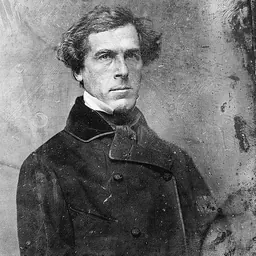
Horatio Seymour (May 31, 1810 – February 12, 1886) was an American politician. He served as the eighteenth Governor of New York from 1853 to 1854 and again from 1863 to 1864. He was the Democratic Party nominee for president in the 1868 United States presidential election, losing to Republican Ulysses S. Grant.
Born in Pompey, New York, Seymour was admitted to the New York bar in 1832. He primarily focused on managing his family's business interests. After serving as a military secretary to Governor William L. Marcy, Seymour won election to the New York State Assembly. He was elected that body's speaker in 1845 and aligned with Marcy's "Softshell Hunker" faction. Seymour was nominated for governor in 1850 but narrowly lost to the Whig candidate, Washington Hunt. He defeated Hunt in the 1852 gubernatorial election, and spent much of his tenure trying to reunify the fractured Democratic Party, losing his 1854 re-election campaign in part due to this disunity.
Despite this defeat, Seymour emerged as a prominent national figure within the party. As several Southern states threatened secession, Seymour supported the Crittenden Compromise as a way to avoid civil war. He supported the Union war effort during the Civil War but criticized President Abraham Lincoln's leadership. He won election to another term as governor in 1862 and continued to oppose many of Lincoln's policies. Several delegates at the 1864 Democratic National Convention hoped to nominate Seymour for president, but Seymour declined to seek the nomination. Beset by various issues, he narrowly lost re-election in 1864. After the war, Seymour supported President Andrew Johnson's Reconstruction policies.
As the 1868 Democratic National Convention opened, there was no clear front-runner for the Democratic presidential nomination, but Seymour remained widely popular. Serving as the chairman of the convention, as he had in 1864, Seymour refused to seek the nomination for himself. After twenty-two indecisive ballots, the convention nominated Seymour, who finally relented on his opposition to running for president. Seymour faced General Ulysses S. Grant, the widely popular Republican Party nominee, in the 1868 election. Grant won a strong majority of the electoral vote, though his margin in the popular vote was not as overwhelming. Seymour never again sought public office but remained active in politics and supported Grover Cleveland's 1884 campaign for president.
Early life and education Seymour was born in Pompey Hill, Onondaga County, New York in 1810. His father was Henry Seymour, a merchant and politician; his mother, Mary Ledyard Forman (1785–1859), of Matawan, New Jersey, was the daughter of General Jonathan Forman and Mary Ledyard. He was one of six children, and his sister Julia Catherine became the wife of Roscoe Conkling. At the age of 10 he moved with the rest of his family to Utica, where he attended a number of local schools, including Geneva College (later Hobart College). In the autumn of 1824 he was sent to the American Literary, Scientific & Military Academy (Norwich University). Upon his return to Utica after graduating in 1828, Seymour read for the law in the offices of Greene Bronson and Samuel Beardsley. Though admitted to the bar in 1832, he did not enjoy work as an attorney and was primarily preoccupied with politics and managing his family's business interests. He married Mary Bleecker in 1835.
Political career
Entry into politics Seymour's first role in politics came in 1833, when he was named aide-de-camp to the state's newly elected Democratic governor, William L. Marcy with the rank of colonel. In 1835, he succeeded Thomas W. Harman as Marcy's military secretary. The Republican campaign, by contrast, was the first in which they "waved the bloody shirt", highlighting Seymour's support for mob violence against African-Americans. Though Seymour ran fairly close to Grant in the popular vote, he was defeated decisively in the electoral vote by a count of 214 to 80.
In January 1886 his wife Mary suffered an illness. Seymour's own health worsened further. Seymour died in February 1886 and was interred in Forest Hill Cemetery in Utica, New York; Mary died a month later and is buried next to him.
Legacy
The Horatio Seymour memorial at the Cathedral of All Saints (Albany, New York). The city of Seymour, Wisconsin, was founded in 1868 and named after Horatio Seymour. Additionally, Seymour is memorialized in the Cathedral of All Saints (Albany, New York), which finished construction in 1888. Seymour Avenue in the Bronx, New York, is also named for him.
Electoral history
Gubernatorial elections
1868 presidential election
Don’t just read it —
keep it.
Full-length biographies made to live with: read them, listen on the way to work, watch them tonight.
- E-book
- Audio
- Video
Instant download · yours to keep · every purchase keeps this site free
Important facts
People in Horatio Seymour's life
Named in this biography and alive at the same time


Related people
Same field, nearest in time




Contemporaries
People whose lives overlapped Horatio Seymour's




Frequently asked questions
Who was Horatio Seymour?
American politician (1810–1886)
When was Horatio Seymour born?
Horatio Seymour was born on 31 May 1810 in Pompey.
When did Horatio Seymour die?
Horatio Seymour died on 12 February 1886 in Utica.
What was Horatio Seymour's occupation?
Horatio Seymour was a lawyer, politician, governor, jurist and mayor.
What nationality was Horatio Seymour?
Horatio Seymour was American.
Sources & further reading
Cite this page
APA: Biography.guide. (2026). Horatio Seymour. https://biography.guide/horatio-seymour-lawyer/
MLA: "Horatio Seymour." Biography.guide, https://biography.guide/horatio-seymour-lawyer/.
Chicago: "Horatio Seymour." Biography.guide. https://biography.guide/horatio-seymour-lawyer/.
Data last updated: 2026-09-20 · Spot an error? Report a correction.
Page generated 2026-09-27 05:22 UTC