
About Horatio Pettus Mackintosh Berney-Ficklin
Lived 1892 – 1961 (aged 68). Horatio Pettus Mackintosh Berney-Ficklin was a British military officer.
Major-General Horatio Pettus Mackintosh Berney-Ficklin, (13 June 1892 – 17 February 1961) was a British Army officer who served in both the First and Second World Wars. During the latter, he commanded for just over three years – from July 1940 until August 1943 – the 5th Infantry Division (nicknamed "The Globe Trotters"), the most widely travelled division of the British Army during the Second World War.
Early life and military career Born on 13 June 1892, the son of Philip Berney-Ficklin and Janet Margaret Tennant (Rita) Mackintosh, Horatio was educated at Rugby School and Jesus College, Cambridge. He had a younger brother, Alexander Tennent Mackintosh, born on 10 May 1895. After attending the Officer Training Corps (OTC) at Rugby School, he was commissioned as a second lieutenant (on probation) into the Special Reserve of the Norfolk Regiment (later the Royal Norfolk Regiment) on 18 May 1912. He was confirmed in his rank of second lieutenant on 26 February 1913.
Berney-Ficklin was gazetted into the 1st Battalion, Norfolk Regiment in June 1914, shortly before the outbreak of the First World War. Promoted to the temporary rank of lieutenant on 22 September 1914, he transferred to the 8th (Service) Battalion, Norfolk Regiment, a Kitchener's Army unit in which his brother was also serving, which formed part of the 53rd Brigade of the 18th (Eastern) Division, as the battalion's adjutant. Promoted to the temporary rank of captain on 11 January 1915 and lieutenant on 26 February, his battalion departed for the Western Front in July. He was awarded the Military Cross (MC) on 5 June 1916 and was promoted to temporary major on 1 July, the first day of the Battle of the Somme in which his division played a significant role. The following year he became brigade major of the 152nd (Seaforth Highlanders) Brigade, part of the 51st (Highland) Division, a Territorial Force (TF) formation. Between 1920 and 1925 he transferred to the TF (later renamed the Territorial Army) as a temporary captain and was adjutant of the Bristol University Officer Training Corps (OTC). However, in August 1926 he retired from the army with the rank of major. He joined the Army Reserve of Officers and in January 1929 was promoted to lieutenant colonel and assumed command of the 5th Battalion, Norfolk Regiment, a TA unit. In November 1930 he relinquished his commission in the TA upon his reappointment to the Regular Army.
In December 1932 Berney-Ficklin, having divorced his wife, transferred from the Norfolk Regiment to the Highland Light Infantry (HLI) as a major. In July 1934 he was promoted to brevet lieutenant colonel and, in December 1936, lieutenant colonel, and became Commanding Officer (CO) of the 2nd Battalion of his new regiment, which was then serving in India. While in India he was promoted to the local rank of brigadier and given temporary command of the Peshawar Brigade, holding this post in addition to commanding his battalion, from 27 June until 9 October 1938, reverting to lieutenant colonel. For his Palestinian service he was later mentioned in despatches.
In June 1939 Berney-Ficklin handed over command of the battalion to Lieutenant Colonel Bernard Campbell Fletcher and returned to England where, on 1 July, he received a promotion to the temporary rank of brigadier (with seniority backdated two years) and the permanent rank of colonel on the same date
Service in Britain Having been deemed fit for duty, Berney-Ficklin was re-promoted to temporary brigadier on 25 May and briefly reassumed command of the 15th Brigade, then serving in Scotland under Scottish Command, awaiting the arrival of the rest of the division. On 19 July he was promoted to the acting rank of major general
At the time there was fear that the German Army, then fighting the Soviet Red Army on the Eastern Front where it recently launched an offensive, carrying it across the Don and threatening the Caucasus, and there were not enough British or Indian troops to prevent a German breakthrough if Soviet resistance collapsed. Arriving there in late September 1942, the division formed part of III Corps, still under Desmond Anderson, itself part of the Tenth Army, commanded by General Sir Edward Quinan, itself part of Paiforce (formerly Iraqforce) under the newly created Persia and Iraq Command. In early October the division concentrated in Kermanshah before moving to Qum for the winter, where training continued, although it was made difficult by the severe weather. However, the German defeat at Stalingrad in February 1943 removed the threat of invasion and the division was available for service elsewhere. Travelling and training in both amphibious landings and mountain warfare in the Lebanon, Egypt and Syria, the division became part of Lieutenant General Miles Dempsey's XIII Corps, itself part of the British Eighth Army, under General Sir Bernard Montgomery. Berney-Ficklin, promoted on 5 May 1943 to permanent major general (with seniority backdated to 17 November 1941), was already familiar with Dempsey, as the latter had commanded the 13th Brigade while the former commanded the 15th Brigade over three years before.
Sicily and return to Britain On 10 July Berney-Ficklin's 5th Division landed on Sicily as part of Operation Husky, the Allied invasion of Sicily. They were amongst the first British troops to land in Europe for more than three years. Before the day was over his division had captured Syracuse, with Augusta falling soon days later. Thereafter the division, aiming for Messina, who had faced only light resistance from the Italian Army, faced stiffening opposition from the Germans, in particular from the Hermann Göring Division in the Plain of Catania. Before the campaign was over, however, on 3 August Berney-Ficklin was relieved of his command and replaced as GOC by Major General Gerard Bucknall, a protégé of Montgomery's who was two years younger, and returned to England. Despite being a popular GOC, his performance in Sicily had impressed neither Montgomery or Dempsey, thus ending Berney-Ficklin's long association with the division. Ironically Bucknall, who commanded the 5th Division in the early stages of the Italian campaign before being promoted to the command of XXX Corps in the Normandy campaign, would himself be relieved of his command exactly a year later, for much the same reason as Berney-Ficklin was relieved. On 5 August Berney-Ficklin, for his services in Persia and Iraq, was mentioned in despatches.
In early September, however, shortly after returning to England, Berney-Ficklin became GOC of the 48th Infantry (Reserve) Division, succeeding Major General Hayman Hayman-Joyce. The division, originally a first-line Territorial Army (TA) which had fought with distinction in France in 1940, had been converted into a reserve formation in December 1942 and was now responsible for the training of soldiers who had completed their initial training and corps training. The division was not organised for active service and provided an additional five weeks of training for soldiers of all arms before they were drafted overseas.
In mid-July 1944, after handing over the 48th Division to Major General William Bradshaw, he then became GOC of the 55th (West Lancashire) Infantry Division, succeeding Major General Walter Clutterbuck. Unlike the 48th Division, the 55th Division was a field formation but remained in the United Kingdom throughout the war and was then serving in Northern Ireland under command of British Troops in Northern Ireland.
Postwar After the war Berney-Ficklin presided over a British Military Tribunal convened at Lüneburg from 17 September to 17 November 1945 to try suspected war criminals from the Bergen-Belsen concentration camp. Serving as Colonel of the Royal Norfolk Regiment from 1 May 1946 until 4 October 1947 Berney-Ficklin retired from the army on 14 January 1948, due to disability. He moved with his new wife, the daughter of a Russian general, to Cape Town, South Africa, where he died on 17 February 1961, at the age of 68.
Don’t just read it —
keep it.
Full-length biographies made to live with: read them, listen on the way to work, watch them tonight.
- E-book
- Audio
- Video
Instant download · yours to keep · every purchase keeps this site free
Important facts
People in Horatio Pettus Mackintosh Berney-Ficklin's life
Named in this biography and alive at the same time
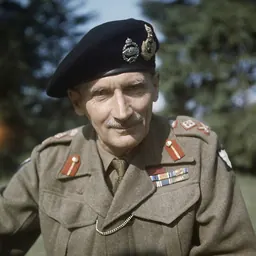
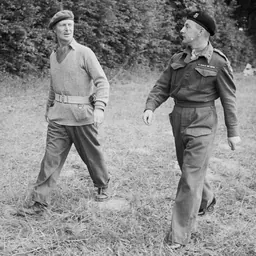
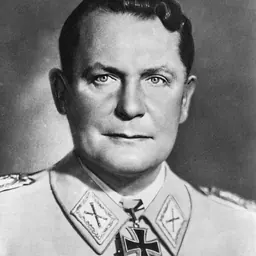

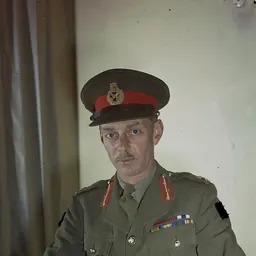


Related people
Same field, nearest in time


Contemporaries
People whose lives overlapped Horatio Pettus Mackintosh Berney-Ficklin's

Frequently asked questions
Who was Horatio Pettus Mackintosh Berney-Ficklin?
British Army general (1892-1961)
When was Horatio Pettus Mackintosh Berney-Ficklin born?
Horatio Pettus Mackintosh Berney-Ficklin was born on 13 June 1892 in Tasburgh.
When did Horatio Pettus Mackintosh Berney-Ficklin die?
Horatio Pettus Mackintosh Berney-Ficklin died on 17 February 1961 in Cape Town.
What was Horatio Pettus Mackintosh Berney-Ficklin's occupation?
Horatio Pettus Mackintosh Berney-Ficklin was a military officer.
What nationality was Horatio Pettus Mackintosh Berney-Ficklin?
Horatio Pettus Mackintosh Berney-Ficklin was British.
Sources & further reading
· Wikipedia: Horatio Pettus Mackintosh Berney-Ficklin
· DBpedia: Horatio Berney-Ficklin
Cite this page
APA: Biography.guide. (2026). Horatio Pettus Mackintosh Berney-Ficklin. https://biography.guide/horatio-pettus-mackintosh-berney-ficklin/
MLA: "Horatio Pettus Mackintosh Berney-Ficklin." Biography.guide, https://biography.guide/horatio-pettus-mackintosh-berney-ficklin/.
Chicago: "Horatio Pettus Mackintosh Berney-Ficklin." Biography.guide. https://biography.guide/horatio-pettus-mackintosh-berney-ficklin/.
Data last updated: 2026-09-20 · Spot an error? Report a correction.
Page generated 2026-09-27 05:28 UTC