
About Horace Gray
Lived 1828 – 1902 (aged 74). Horace Gray was an American lawyer and judge.
Judicial career
Massachusetts state courts In 1854, he was named Reporter of Decisions for the Massachusetts Supreme Judicial Court. While serving in this capacity, Gray edited sixteen volumes of court records, and also served as a counselor to the governor of Massachusetts on legal and constitutional questions. The quality of Gray's work earned him a reputation for historical scholarship and legal research.
United States Supreme Court In December 1881, President Chester A. Arthur nominated Gray to fill the vacancy on the U.S. Supreme Court created by the death of Nathan Clifford. Additionally, he was one of the few Supreme Court appointees in the latter half of the 19th century who had not previously been a politician, and he maintained the opinion that law and politics were entirely separate fields.
Two years after joining the Court, he wrote the majority opinion in Juilliard v. Greenman (1884), the last of the post–Civil War Legal Tender Cases, which reaffirmed that Congress did have the power to issue paper money as legal tender. as well as the evidence laws in most states.
Gray was also the author of the 1898 case United States v. Wong Kim Ark, ruling that "a child born in the United States, of parents of Chinese descent, who, at the time of his birth, are subjects of the Emperor of China, but have a permanent domicil and residence in the United States, and are there carrying on business, and are not employed in any diplomatic or official capacity under the Emperor of China, becomes at the time of his birth a citizen of the United States.".
He joined the majority in Pollock v. Farmers' Loan & Trust Co. (1895), a 5–4 ruling that the unapportioned income taxes on interest, dividends and rents imposed by the Income Tax Act of 1894 were unconstitutional. This case was heard twice, though only the second hearing resulted in a decision; the justices, feeling that the opinions written had not adequately explained their view of the situation, wished to rehear the case. After the first hearing, Gray wrote that he sided with the defendant (Farmer's Loan & Trust), arguing that the tax was indeed constitutional. He was in the minority, however. After the second hearing, Gray changed his stance, joining with the majority in favor of the plaintiff. He also sided with the majority in Plessy v. Ferguson (1896), a 7–1 ruling that upheld the constitutionality of racial segregation laws for public facilities as long as the segregated facilities were equal in quality.
Gray served on the US Supreme Court for over 20 years, until his death on September 15, 1902. He was succeeded by a fellow Massachusetts native, Oliver Wendell Holmes Jr., who, like Gray, previously served on the Massachusetts Supreme Judicial Court. and in 1866, was elected a Fellow of the American Academy of Arts and Sciences. In 1889, Gray married Jane Matthews (1860–1949), daughter of fellow associate justice Stanley Matthews.
Horace Gray is buried in Mount Auburn Cemetery in Middlesex County, Massachusetts. His home in Washington, D.C. later became the site of the Third Church of Christ, Scientist, which was demolished in 2014.
Legacy The World War II Liberty Ship was named in his honor.
Don’t just read it —
keep it.
Full-length biographies made to live with: read them, listen on the way to work, watch them tonight.
- E-book
- Audio
- Video
Instant download · yours to keep · every purchase keeps this site free
Important facts
People in Horace Gray's life
Named in this biography and alive at the same time



Related people
Same field, nearest in time


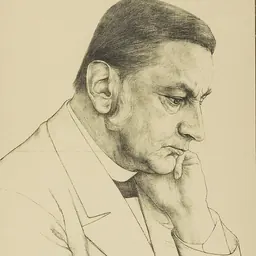
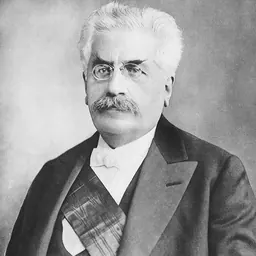

Contemporaries
People whose lives overlapped Horace Gray's



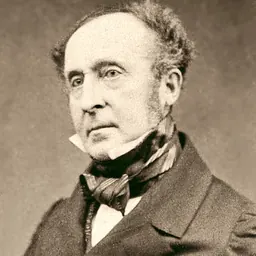
Frequently asked questions
Who was Horace Gray?
American judge (1828–1902)
When was Horace Gray born?
Horace Gray was born on 24 March 1828 in Boston.
When did Horace Gray die?
Horace Gray died on 15 September 1902 in Nahant.
What was Horace Gray's occupation?
Horace Gray was a lawyer and judge.
What nationality was Horace Gray?
Horace Gray was American.
Sources & further reading
Cite this page
APA: Biography.guide. (2026). Horace Gray. https://biography.guide/horace-gray/
MLA: "Horace Gray." Biography.guide, https://biography.guide/horace-gray/.
Chicago: "Horace Gray." Biography.guide. https://biography.guide/horace-gray/.
Data last updated: 2026-09-20 · Spot an error? Report a correction.
Page generated 2026-09-27 05:33 UTC