
About Hope Atherton
Lived 1646 – 1677 (aged 30–31). Hope Atherton was a writer.
Rev. Hope Atherton (1646–1677) was a colonial clergyman. He was born in Dorchester, Massachusetts. Harvard Class of 1665. He was the minister of Hadley, Massachusetts. He served as a chaplain in the King Philips War and became separated from troops during the Battle of Great Falls in 1676. He died months after the battle, aged 30.
Early life Atherton was the tenth child of twelve and fourth son of Major General Humphrey Atherton and Mary Kennion. He was baptized on August 30, 1646, in First Church of Dorchester. He was one of the youngest of the large family whose patriarch, Humphrey Atherton, held prominent public, judicial, and military positions.
His father and members of the congregation had established first elementary school supported by public money in the New World in 1639. A school that both he and his siblings would have attended.
His father suddenly died in an accident in 1661, when he was just 15 years of age.
Teacher and clergyman At the age of 22 he was recorded as the only teacher in his native town of Dorchester, at The Mather School, until he was replaced by John Foster. Atherton departed the environs of Boston and ventured westward into the Connecticut Valley, and began serving as a minister in Hatfield during the fall of 1668. However, on May 17, 1669, the people of Hatfield, formally invited him to settle there as their minister. Dorchester records, from a few weeks later, read:
The Town of Hatfield, originally an outlying section of Hadley on the western bank of the Connecticut River, was incorporated on May 31, 1670. On August 8, at the very first town meeting, it was recorded:
The formation of the church and Atherton's ordination took place during March 1671. He was made a freeman of the town in May 1672.
Battle of Bloody Brook in 1675. Some sources claim Hope Atherton was present
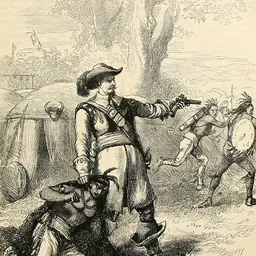
Atherton, was allegedly the chosen chaplain of Captain Lathrop's company, a militia who escorted colonists traveling in loaded wagons, transporting the harvest from Deerfield to Hadley. A large contingent of reportedly 700 Native Americans ambushed the group, resulting in the death of 40 militia men and 17 teamsters, out of a company that included 79 militia. Only 10 colonists survived the attack, solely due to the quick intervention of another militia group in Deerfield who heard the gunshots, led by Major Treat of Hadley and Captain Mosely of Deerfield. The Genealogical and Historical Memoir of the Otis Family cited above, and that of the Hollister Family of America, Alternative sources say they left the previous day. Atherton accompanied the expedition as its chaplain. After an all-night march, the English militia and volunteer settlers achieved their goal of surprise and at daybreak of the 19th attacked and massacred scores of Native Americans; some warriors but mostly women and children. However the sound of the falls masked the arrival of a much larger group of warriors and a counter attack commenced, with the militia losing 42 men, including Capt. Turner.
Atherton was among a half a dozen who were separated from the main body during the chaotic retreat.
Atherton eventually found his own way back to Hadley. However many of the settlers were highly skeptical of the exceptional experiences he recalled, especially in regard to the Native Americans fleeing upon his attempted surrender and the mystery of how he crossed the Connecticut River to eventually stumble into Hadley.
Contemporary historians refer to this event as the Battle of Great Falls, instead of attributing the event solely to Captain William Turner.
Atherton's sermon Compelled to respond to those who doubted his story of wandering in the wilderness, near starvation and trying to evade capture, Atherton shared his experiences in a sermon, which he delivered in the Hatfield church on May 28, 1676:
Atherton was not alone; Jonathan Wells, a 16-year-old boy, also part of the expedition, was left bed-ridden for a full year and by his own account it took him up to four years to fully recover from the battle and its aftermath.
Atherton's health never fully recovered from the exposure he suffered while lost in the woods. and he died June 8, 1677, at age 30.
Hatfield was without minister from the death of Atherton in 1677, until the call of Rev. Nathaniel Chauncey, father of Nathaniel Chauncey, was accepted in 1683. The poverty brought by the King Philips War meant that a settlement of £40 for his widow Sarah was not released until 1679; three years after his death.
Personal Atherton married Sarah Hollister (1646–1691), the daughter of John Hollister and Joanna Treat from Wethersfield, Connecticut, in 1674. They had three children:
Hope Atherton, born on January 7, 1675, in Hatfield, Massachusetts. Died in infancy. Joseph Atherton, born January 7, 1675, in Hatfield, Massachusetts. The surviving twin. He settled in Deerfield and became a selectmen there in 1715. He died in Gill, Massachusetts, on October 13, 1753, aged 78 Sarah (Atherton) Parsons, born October 26, 1676, in Hatfield, Massachusetts
He was buried at Hill Cemetery, Hatfield, Hampshire County, Massachusetts. There is no gravestone or marker.
His widow, Sarah, married Lieutenant Timothy Baker of Northampton and with her two children, Joseph and Sarah moved to live with him. Sarah became the mother of 7 more children; Timothy, John, Edward, Grace, Prudence, Deliverance; and of the much celebrated Captain Thomas Baker, who married Christine Otis, Captain Baker's war record mentions the release of English civilians including the Otis family. Sarah Baker, Atherton's wife, died December 8, 1691, in Northfield, Hampshire County, Massachusetts.
Legacy His son Joseph Atherton was involved in the historical recording of his father's involvement in 1717.
Some sixty years after the Battle of Turner’s Falls, a grant was made by the General Court of a township of land, in e vicinity of where the event had taken place. The list of the survivors and the descendants who were then entitled to receive apportionment of a total of 6 mi2 included his only son to reach adulthood, Joseph Atherton. The township is now known as Bernardston.
Adelbert S. Atherton is a notable descendant.
Don’t just read it —
keep it.
Full-length biographies made to live with: read them, listen on the way to work, watch them tonight.
- E-book
- Audio
- Video
Instant download · yours to keep · every purchase keeps this site free
Important facts
People in Hope Atherton's life
Named in this biography and alive at the same time
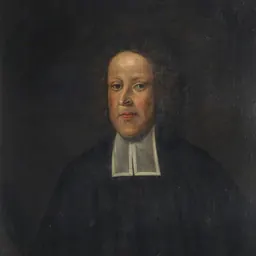


Related people
Same field, nearest in time


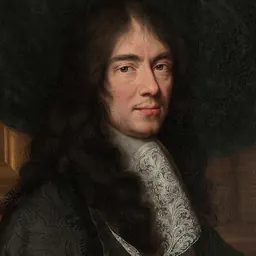
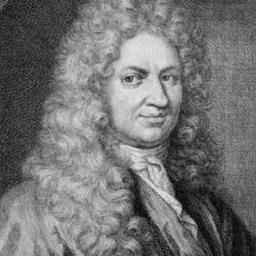
Contemporaries
People whose lives overlapped Hope Atherton's





Frequently asked questions
Who was Hope Atherton?
American colonial clergyman
When was Hope Atherton born?
Hope Atherton was born in 1646.
When did Hope Atherton die?
Hope Atherton died in 1677.
What was Hope Atherton's occupation?
Hope Atherton was a writer.
Sources & further reading
Cite this page
APA: Biography.guide. (2026). Hope Atherton. https://biography.guide/hope-atherton/
MLA: "Hope Atherton." Biography.guide, https://biography.guide/hope-atherton/.
Chicago: "Hope Atherton." Biography.guide. https://biography.guide/hope-atherton/.
Data last updated: 2026-09-20 · Spot an error? Report a correction.
Page generated 2026-09-27 05:31 UTC