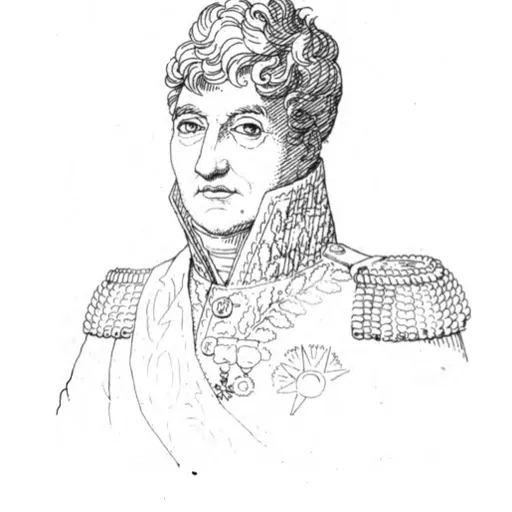
About Honoré Théodore Maxime Gazan de la Peyrière
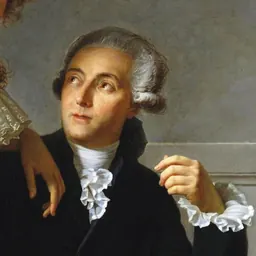
Lived 1765 – 1845 (aged 79). Honoré Théodore Maxime Gazan de la Peyrière was a French politician and military personnel.
Honoré Théodore Maxime Gazan de la Peyrière (; 29 October 1765 – 9 April 1845) was a French general who fought in the French Revolutionary Wars and the Napoleonic Wars.
Gazan started his military career as a cannonier in the French Coast Guard. He was later appointed to the Royal Life Guards and, upon the beginning of the French Revolution in 1789, he joined the French National Guard. After service in the Upper Rhine valley and the Netherlands, he joined André Masséna in Switzerland in 1799, and fought at the battles of Winterthur, First Zurich, Näfels, and Schwanden. In August 1805, Gazan commanded of a division of the Army that encircled the Austrians in Ulm. On 11 November, under Joseph Mortier, his division provided the advance guard in the advance on Vienna. Mortier over-extended his line of march and Gazan's division was surrounded by Kutuzov's Coalition army; Gazan lost 40 percent of his force in the Battle of Dürenstein. Following the Prussian defeat at the Battle of Jena-Auerstadt, he transferred with Jean Lannes to the Iberian Peninsula. There he participated in the French capture of Zaragoza and in several important actions of the long Peninsular War, including the Battle of Albuera and the Battle of Vitoria.
During the Hundred Days, Gazan eventually joined Napoleon's cause, although he did not have a field command. In 1815, he judged Michel Ney's trial for treason but refused to reach a verdict. He dabbled briefly, and unsuccessfully, in politics in the 1820s. In 1830, he was raised to the French peerage and held a divisional command in Marseille, but by then was an old man, and he retired in 1832. He died in 1845.
Family and early military career Gazan was born in the small town of Grasse, in the Alpes-Maritimes. His father, a lawyer, sent him to the college of Sorèze, where he received military training. Gazan became a second lieutenant in the Coast Guard cannoniers of Antibes at the age of fifteen. In 1786, he was appointed to the Royal Life Guards, Company Écossaise. Later, he also joined the Freemasons.
French Revolutionary Wars At the outbreak of the French Revolution in 1789, Gazan returned to Grasse and joined the National Guard. In 1790, he became a captain and, in 1791, a lieutenant colonel of the local volunteer battalion of the Var. In 1792, with the declaration of war with Austria, he was sent to the 27th Regiment. His regiment first served garrison duty in Strasbourg, but in December 1793, participated in the Battle of Wissembourg. In May 1794, Gazan became a battalion commander of the new 54th Demi-Brigade. On 4 July, he routed the Prussians in Kuppenheim by ordering his drummers to beat a charge, convincing the Prussians that they were outnumbered. He was promoted to brigade colonel on 11 July and led his troops to victory against the Prussians at Trippstadt. In the ensuing clash, Ney ordered Gazan's under-manned brigade to the center, where it was soon overwhelmed. In retreat, they safely crossed a bridge spanning a small river, the Töss, but the cavalry guarding the bridge was itself forced back. After stationing his batteries on a slight incline, to protect the retreat from the Austrians, the injured Ney handed command to Gazan, who organized and conducted the successful retreat.
A few days later, at the First Battle of Zürich (4 June 1799), the Austrian force overpowered the French lines. As part of the V. Division of the Army of the Danube, Gazan again commanded the rear guard after Massena's force disengaged from Archduke Charles' army and withdrew across the Limmat river. Later that year, he faced a combined Austrian and Russian force at the Second Battle of Zürich (27 September). His division repulsed Russian outposts at the Limmat river. He subsequently participated in the wild pursuit of the Austrians, resulting in a decisive French victory. He was promoted to division commander and continued in the campaign against Coalition troops in Switzerland. In addition, 47 officers and 895 men were captured, and he lost five guns, as well as the eagles of the 4th Infantry Regiment, and the eagle and guidon of the 4th Dragoons. As recognition of his conduct in "the immortal Battle of Dürenstein",
In July 1810, Gazan's force guarded the valleys of Extremadura, near Alcantara. In September he fought against Spanish general La Romana. In Fary 1811 he crossed the Sierra Morena to guard the supply On 15–21 March, his 2nd Division of the V. Corps besieged and captured the small fortified town of Campo Maior, in eastern Portugal. There they captured 50 guns and the 100-man Portuguese garrison. As General Latour-Maubourg, four squadrons of dragoons and hussars and three battalions of the 100th Light Infantry moved the cannons to Badajoz the following week, a combined force of the 1st and 7th Portuguese Cavalry and the British 13th Light Dragoons, commanded by Brigadier General Robert Ballard Long, charged and scattered the French 26th Dragoons. In the melee, the drivers of the convoy were cut down, but instead of securing the convoy of guns, the British and Portuguese enthusiastically pursued the fleeing infantry for more than ; meanwhile, the French sallied out of Badajoz, carefully avoiding the fleeing infantry and its pursuers, and recovered all but one of the guns.
At the Battle of Albuera (16 May 1811), the "bloodiest battle of the Peninsular Campaign," Gazan's division was hammered by the British. The force, composed of two brigades of infantry, one of cavalry and 40 guns, were enveloped by the British on three sides. General of Division Girard's 1st Division was also trapped. The fire-fight wrought massive casualties, and the bodies were reportedly stacked three and four men high; the distinction was in 360 French muskets in deep and narrow columns versus 2000 British flintlocks in a double line of infantry. Only a costly mistake by the British commander, Major General Colborne, prevented a worse disaster for the French. Colborne had deployed his infantry in the standard line, two men deep, and had prepared to fire close range volleys into the French flank. Recognizing the opportunity, Latour-Marbourg's 2nd Hussars and First Vistula Lancers (a Polish unit) to attack the British line before the infantry could form its defensive squares. The French cavalry wrought massive casualties on Colborne's brigade. The 3rd (East Kent) Regiment of Foot ("The Buffs") lost 643 of its 754 men at Albuera, most of them in the initial onslaught of French cavalry. The next two regiments in line lost over 500 men combined and Colborne's brigade lost 1,413 out of its 2,166 men. Despite the mounted assault, however, the French 2nd Division suffered high casualties and lost five colors, a significant blow to its morale and pride. ) Gazan was wounded in the battle, and returned to Seville, where he was assigned to a staff position during his recovery. Joseph had established a long defensive line on the heights of Puebla, with the Army of Portugal at the left flank, the Army of the center, commanded by Jean-Baptiste Drouet, Comte d'Erlon and the Army of the South, at the southern flank. On 21 June, Generals Rowland Hill and Pablo Morillo moved toward the south end of the valley; Gazan and d'Erlon asked Jean-Baptiste Jourdan for reinforcements, but the Corps' commander was preoccupied with the possibility of an attack at the opposite flank, and sent none. In their own turn, D'Erlon and Gazan could not agree on how to deal with the approaching threat. In the initial stages of battle, the Army of Portugal started to pull back. Realizing that his southern flank would not hold up in the face of Hill and Morillo, Joseph ordered Gazan to withdraw in ordered masses. Hill and Morillo attacked Gazan's forces with such force that Gazan withdrew.
This was Gazan's last field command. Gazan's pre-emptive withdrawal created a gap in French line, exposing D'Erlon's army in the center. D'Erlon held his position as long as he could, but the line collapsed around him. Joseph's planned orderly withdrawal turned into a rout. Gazan abandoned all his artillery. Gazan's relationship with Ney had begun in the French Revolutionary Wars shortly after Ney's promotion to general of division. At the Battle of Winterthur (1799), he had been one of Ney's first brigade commanders. Although the King's government may have expected the Conseil to find Ney guilty, the members voted 5–2 to declare themselves incapable of reaching a verdict, and deferred the case to the Chamber of Peers.
Some historians maintain that Ney's death penalty resulted from the military court's refusal to act in the case; only the military court could have returned a verdict of "guilty under exceptional circumstances". Such a verdict would have meant Ney's lifelong incarceration, but would not have required his execution. When the military court refused to reach a verdict, Ney's case went to the Chamber of Peers, which was populated by a mix of old and new peers. The old peers might not have been receptive to Ney's predicament; he had been, after all, a highly visible party to Napoleon's success throughout Europe. If some of the new peers were sympathetic to Ney's situation, they may also have been anxious to prove their own loyalty to the new regime. Ney's penalty was a foregone conclusion.
Despite this, or perhaps because of it, Louis XVIII forced Gazan into retirement in Grasse, where the aging general dabbled unsuccessfully in politics. After the 1830 revolution, the new King of the French Louis Philippe made Gazan a peer of France, and he received a command of a military division in Marseille. By this time, he was an old man, and in poor health, and he retired in June 1832. Gazan de la Peyriére died in Grasse on 9 April 1845.
Don’t just read it —
keep it.
Full-length biographies made to live with: read them, listen on the way to work, watch them tonight.
- E-book
- Audio
- Video
Instant download · yours to keep · every purchase keeps this site free
Important facts
People in Honoré Théodore Maxime Gazan de la Peyrière's life
Named in this biography and alive at the same time
Related people
Same field, nearest in time
Contemporaries
People whose lives overlapped Honoré Théodore Maxime Gazan de la Peyrière's




Frequently asked questions
Who was Honoré Théodore Maxime Gazan de la Peyrière?
French general (1765-1845)
When was Honoré Théodore Maxime Gazan de la Peyrière born?
Honoré Théodore Maxime Gazan de la Peyrière was born on 29 October 1765 in Grasse.
When did Honoré Théodore Maxime Gazan de la Peyrière die?
Honoré Théodore Maxime Gazan de la Peyrière died on 9 April 1845 in Grasse.
What was Honoré Théodore Maxime Gazan de la Peyrière's occupation?
Honoré Théodore Maxime Gazan de la Peyrière was a politician and military personnel.
What nationality was Honoré Théodore Maxime Gazan de la Peyrière?
Honoré Théodore Maxime Gazan de la Peyrière was French.
Sources & further reading
· Wikipedia: Honoré Théodore Maxime Gazan de la Peyrière
· DBpedia: Honoré Théodore Maxime Gazan de la Peyrière
Cite this page
APA: Biography.guide. (2026). Honoré Théodore Maxime Gazan de la Peyrière. https://biography.guide/honore-theodore-maxime-gazan-de-la-peyriere/
MLA: "Honoré Théodore Maxime Gazan de la Peyrière." Biography.guide, https://biography.guide/honore-theodore-maxime-gazan-de-la-peyriere/.
Chicago: "Honoré Théodore Maxime Gazan de la Peyrière." Biography.guide. https://biography.guide/honore-theodore-maxime-gazan-de-la-peyriere/.
Data last updated: 2026-09-25 · Spot an error? Report a correction.
Portrait: Wikimedia Commons · author & licence
Page generated 2026-10-04 10:26 UTC