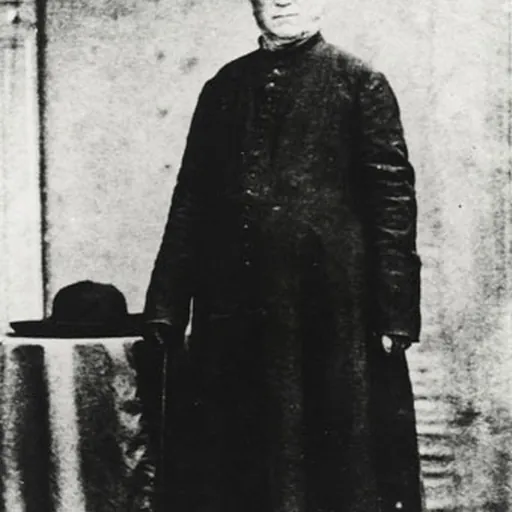
About Honoré Laval
Lived 1808 – 1880 (aged 72). Honoré Laval was a French catholic priest.
Honoré Laval, SS.CC., (born Louis-Jacques Laval; 5/6 February 1808 – 1 November 1880) was a French Catholic priest of the Congregation of the Sacred Hearts of Jesus and Mary (also known as the Picpus Fathers), a religious institute of the Roman Catholic Church, who evangelized the Gambier Islands.
Life Louis-Jacques Laval was born 6 January 6, 1807, in the small hamlet of Joimpy, Saint-Léger-des-Aubées in Eure-et-Loir. He was professed in the Congregation of the Sacred Hearts of Jesus and Mary (Picpus) December 30, 1825, under the name of Brother Honore and was ordained priest in Rouen in 1831.
The Gambier Islands
Accompanied by Fathers François Caret, Chrysostome Liausu, and Brother Columba Murphy, he travelled by coach from Paris via Tours and Poitiers to Bordeaux, where they boarded the Sylphide, which sailed on 1 February 1834 for Valparaíso, arriving on 13 May. Taking passage on Captain Sweetwood's ship, the Peruvian, out of Boston, Caret and Laval arrived 8 August on Akamaru in the Gambier Islands. Karl Rensch says they counted 2,124 souls.
The Gambiers were fairly isolated. Captain Arnaud Mauruc advised the Apostolic Prefect of Southern Oceania, Chrysostome Liausu, that ships only sailed there every five or seven years for pearl fishing as the area had no other commercial value. The mission thrived. The maraes, (sacred places) were destroyed and shrines erected in the sites. The largely unclothed people were given clothing and cloth. On Caret's return from Europe in December 1838 2,157 items of clothing donated by the ladies of France were distributed.
The London Missionary Society, which had been based in Tahiti for thirty years, had established schools in the Gambiers, but subsequently withdrew from the Gambiers in early 1835. Bishop Étienne Jérôme Rouchouze, Laval's immediate superior, arrived in the Gambiers in May 1835, with two lay brothers, Brother Gilbert Soulié and Fabien Costes; a lay missionary, and two priests who were also medical doctors. During an epidemic that year Father Cyprien Liausu set up a hospital in a former temple at Rikitea.
Lay brothers Costes and Soulie trained the local people in the building trades. They gained experience in the construction of chapels and houses. Together they built St. Michael's Cathedral, Rikitea. In 1856 Soulie and sixty workers travelled to Tahiti to work on Notre Dame Cathedral in Papeete. Ten years later, skilled Mangareva workers constructed the beacon at Point Venus in Tahiti.
Caret and Laval hoped to expand their work to Tahiti, where they arrived in the Kingdom of Tahiti in February 1836. They found a place to stay in a house on the property of the American consul M. Moerenhout, a Belgian by birth, whom the British considered to be in the pay of King Louis Philippe I of France. Although the priests were received courteously at court, they were expelled by the Protestant queen Pōmare IV on advice of British missionary (and soon to be consul) George Pritchard. Also expelled was a civilian French carpenter, named Vincent, who had accompanied the priests from Gambiers. These expulsions are the origin of the French intervention in Polynesia. As a result, in 1838 France sent Admiral Abel Aubert du Petit-Thouars to get reparation. Shortly before the Admiral's arrival, Madame Moerenhout was murdered during a robbery, which the French believed was instigated by the British. Once his mission had been completed, Admiral DupetitThouars sailed towards the Marquesas Islands, which he annexed in 1842.
Caret and Laval then returned to the Gambiers. Caret returned to France in 1837 in search of additional resources; Bishop Rouchouze left for Europe in 1841. On his return in 1843, Rouchouze, 7 priests, seven lay brothers and 10 religious perished when their ship, the Marie-Joseph was lost at sea near the Falklands. Cyprien Liausu became superior of the mission of Our Lady of Peace in the Gambiers, where he remained until 1855.
In 1848, Bishop Jaussen, sent Laval to the Tuamotu Archipelago, where he remained for three years. He returned to the Gambiers in 1851.
Political conflicts
Blackbirders King Maputeoa died in 1857, and Queen Maria Eutokia became regent on behalf of her ten-year-old son Joseph Gregorio II. Slave ships began to appear starting in 1862. In a practice known as blackbirding, Peruvian and Chilean ships combed the smaller islands of Polynesia seeking workers to fill the extreme labour shortage in Peru. The Serpiente Marina out of Lima, anchored off Mangareva Island on 28 October, ostensibly on a scientific voyage. When local beachcomber-trader Jacques Guilloux went aboard and notice certain peculiarities such as iron grilles on the hatches and concealed daggers on the Captain and supercargo, he told Father Laval that he thought the ship was a slaver, and Laval advised the Queen. When the captain and two others paid a visit to the Queen, she had them arrested. Fearing repercussions from the French authorities in Tahiti, Laval had them released and ordered them to leave the Gambiers. Captain Martinez advised Laval that he intended to file a formal complaint against Guillous, Laval, and the Queen with the French authorities in Peru. Nonetheless, the exodus of young men on transient ships further reduced the population.
Pearl traders Traders were also attracted to the islands in search of mother of pearl. By 1838 they are complaining that with the presence of the missionaries, they are no longer able to exchange useless items for pearls. As the missionaries made the people aware of the value of their nacre, the Mangarevans monitored more closely the operations in their lagoon. An 1871 census by a French army doctor listed the population as 936.
Laval returned to the Gambier Islands, in July 1876, for one last time during a jubilee. His visit was the occasion of a great demonstration of esteem and gratitude. His last years were rather lonely, isolated by increasing deafness. "I can no longer preach, hear confessions anymore, nor enjoy the conversation of others."
Legacy Laval lived in the Gambier Islands for almost forty years and compiled a detailed account of the indigenous peoples, including a grammar of the Mangarevan language, written between 1844 and 1846. He also recorded a local process for determining the solstice. "His grammar, dictionary, and description of Mangareva's pre-Christian culture reveal a classically trained observer affectionately at work."
Laval's life was fictionalized in the 1948 novel The Witch of Manga Reva by Garland Roark.
Works Mémoires pour servir à l'histoire de Mangareva, ère chrétienne, 1834-1871 Mangareva : l'histoire ancienne d'un peuple polynésien Essai de grammaire Mangarevienne
Controversy In 1870 an article was published in the Pall Mall Gazette severely criticizing Laval and his fellow priests working in the Gambiers and Tahiti. The story was picked up by other papers, including the Wellington Independent, which on 10 May 1870 ran a story under the title Theocracy in the Pacific. The original account was apparently based on an 1869 pamphlet written by a French former judge in Tahiti, one M. Louis Jacolliot, in defense of the former Governor Count de la Ronciere, who had been accused of abuse of his authority. The pamphlet "La verité sur Tahiti" (The Truth about Tahiti), accused Laval, among other things, of being a poisoner and a murderer. It also apparently made various accusations against Queen Maria Eutokia of Mangareva.
On 31 December 1872, the Independent published a letter referencing a story in the Parisian newspaper Le Figaro reporting that Laval had taken the matter to the Supreme Court of the State of the Protectorate of the Society Islands. The court found Jacolliot guilty of defamation, and ordered him to pay 15,000 francs in damages. It ordered the suppression of those portions of the pamphlet deemed defamatory, and further ordered that the judgement be printed in the official journal of the Protectorate in French, English, and Tahitian, as well as, in three newspapers of the French colonies, three journals of Paris, and four gazettes of provinces of Laval's choosing.
that anonymous sources had informed him that Laval had poisoned, (among others), the young King Gregorio, although the king had in fact died of phthisis after a long illness. Jacolliot also believed in a lost Pacific continent, and was quoted on this by Madame Blavatsky.
Don’t just read it —
keep it.
Full-length biographies made to live with: read them, listen on the way to work, watch them tonight.
- E-book
- Audio
- Video
Instant download · yours to keep · every purchase keeps this site free
Important facts
People in Honoré Laval's life
Named in this biography and alive at the same time



Related people
Same field, nearest in time

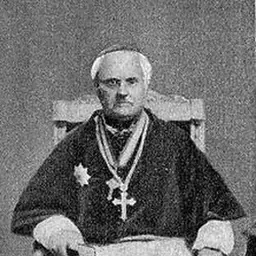

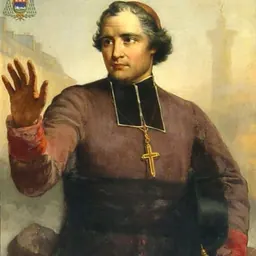
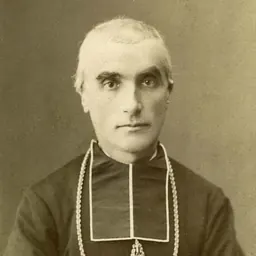
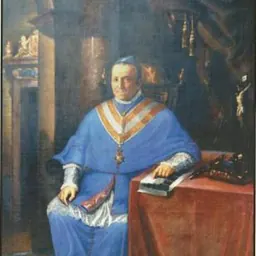
Contemporaries
People whose lives overlapped Honoré Laval's





Frequently asked questions
Who was Honoré Laval?
French priest
When was Honoré Laval born?
Honoré Laval was born on 6 February 1808 in Saint-Léger-des-Aubées.
When did Honoré Laval die?
Honoré Laval died on 1 November 1880 in Papeete.
What was Honoré Laval's occupation?
Honoré Laval was a catholic priest.
What nationality was Honoré Laval?
Honoré Laval was French.
Sources & further reading
Cite this page
APA: Biography.guide. (2026). Honoré Laval. https://biography.guide/honore-laval/
MLA: "Honoré Laval." Biography.guide, https://biography.guide/honore-laval/.
Chicago: "Honoré Laval." Biography.guide. https://biography.guide/honore-laval/.
Data last updated: 2026-09-21 · Spot an error? Report a correction.
Portrait: Wikimedia Commons · author & licence
Page generated 2026-09-27 05:00 UTC