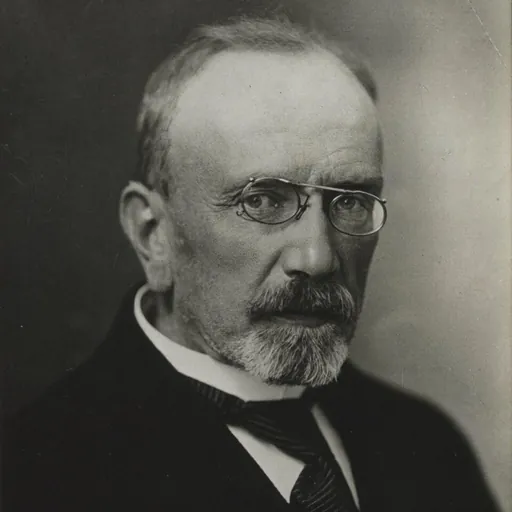
About Hjalmar Hammarskjöld
Lived 1862 – 1953 (aged 91). Hjalmar Hammarskjöld was a Swedish politician, jurist and diplomat.
Knut Hjalmar Leonard Hammarskjöld (; 4 February 1862 – 12 October 1953) was a Swedish statesman, diplomat, and academic who served as Prime Minister of Sweden from 1914 to 1917. An independent conservative, he represented Uppsala County in the Riksdag from 1923 to 1938. His premiership was marked by economic hardship, domestic unrest, and growing tensions over suffrage and food shortages during World War I, all while maintaining neutrality throughout the conflict.
A member of the prominent Hammarskjöld family, he studied law at Uppsala University. He later served as Minister for Justice and Minister of Education and Ecclesiastical Affairs. He was appointed as prime minister following the resignation of Karl Staaff.
During World War I, although he was perceived as pro-German, he pursued a policy of neutrality. He rejected a trade agreement with Britain, and food shortages led to protests against his government. Hammarskjöld resigned in 1917. He continued to hold political offices and continued his scholarly work. He died in October 1953, six months after his son, Dag, became the second Secretary-General of the United Nations.
Life and work Early life
The son of lieutenant Knut Vilhelm Hammarskjöld and Maria Lovisa Cecilia Vilhelmina Cöster, Knut Hjalmar Leonard Hammarskjöld was born into the Hammarskjöld family on 4 February 1862, at Väderum's farm in Tjust in Tuna, Vimmerby, Kalmar County. Knut Hammarskjöld was a noble, landowner, and female line descendant of an illegitimate daughter of Eric XIV of Sweden. Hjalmar's younger brother Carl Gustaf Hammarskjöld later became Sweden's minister of defence.
At age 16, he became a student at Uppsala University. After six years of studying, he graduated with a bachelor's degree in philosophy and law.
On 3 September 1890, he married Agnes Maria Carolina Almquist (15 January 1866 – 21 January 1940). The couple had four sons: Bo, Åke, Sten, and Dag. Agnes was the daughter of director general and his wife Maria Vilhelmina Gradin. In this cabinet he became Minister of Education and Ecclesiastical Affairs. In this position, he was one of the negotiators of the dissolution of the union between Sweden and Norway in Karlstad. The working relationship between the Swedish delegates was good, and Hammarskjöld was specifically pleased with his cooperation with the Liberal politician Karl Staaff. After two years, relations had eased again.
After the Second Moroccan Crisis, tensions reignited between Sweden and Denmark. Hammarskjöld was sent back to Copenhagen to negotiate in 1912, specifically disagreements over territorial waters, pilot and navigational rules, and the expectations of neutral countries during wartime. The negotiations quickly ended the disputes.
Prime minister
Prime Minister Hammarskjöld on his way from the government building to the parliament in Stockholm in 1917.
After the peasant armament support march (Swedish: ) and the resignation of the liberal government, he became head of a non-parliamentarian government in 1914, tasked with solving defense issues. King Gustaf V had first approached Gerhard Louis De Geer to form a government, but when he failed, the task went to Hammarskjöld. In 1940, during the Winter War, Hammarskjöld was one of many Swedish intellectuals who signed a petition calling on the United States to support Finland.
Hammarskjöld served as chairman of the Nobel Foundation from 1929 to 1947.
He was voted into the Swedish Academy in 1918 to the same chair as Prime Minister Louis De Geer had occupied, number 17. Hammarskjöld's son, Dag, inherited the chair, as well as the position, after his death. Hammarskjöld's investigations were a major contributing factor to the decision to establish the Supreme Administrative Court of Sweden.
Hjalmar Hammarskjöld died on 12 October 1953 in Stockholm, just over six months after his youngest son became the second Secretary General of the United Nations. His funeral, which Dag returned to Sweden for, was held in Stockholm.
Literature T. Gihl, The history of Swedish foreign policy 4 (1951) D. Hammarskjöld, Hjalmar Hammarskjöld: entry speech in the Swedish Academy (1954) W. Carlgren, The minister Hammarskjöld (1967) S.A. Söderpalm, The big company owners and the democratic breakthrough (1969)
Don’t just read it —
keep it.
Full-length biographies made to live with: read them, listen on the way to work, watch them tonight.
- E-book
- Audio
- Video
Instant download · yours to keep · every purchase keeps this site free
Important facts
Family & relationships
People in Hjalmar Hammarskjöld's life
Named in this biography and alive at the same time




Related people
Same field, nearest in time




Contemporaries
People whose lives overlapped Hjalmar Hammarskjöld's




Frequently asked questions
Who was Hjalmar Hammarskjöld?
20th-century prime minister of Sweden (1862-1953)
When was Hjalmar Hammarskjöld born?
Hjalmar Hammarskjöld was born on 4 February 1862 in Union between Sweden and Norway.
When did Hjalmar Hammarskjöld die?
Hjalmar Hammarskjöld died on 12 October 1953 in Engelbrekt church parish.
What was Hjalmar Hammarskjöld's occupation?
Hjalmar Hammarskjöld was a politician, jurist and diplomat.
What nationality was Hjalmar Hammarskjöld?
Hjalmar Hammarskjöld was Swedish.
Sources & further reading
· Wikipedia: Hjalmar Hammarskjöld
· DBpedia: Hjalmar Hammarskjöld
Cite this page
APA: Biography.guide. (2026). Hjalmar Hammarskjöld. https://biography.guide/hjalmar-hammarskjold/
MLA: "Hjalmar Hammarskjöld." Biography.guide, https://biography.guide/hjalmar-hammarskjold/.
Chicago: "Hjalmar Hammarskjöld." Biography.guide. https://biography.guide/hjalmar-hammarskjold/.
Data last updated: 2026-09-20 · Spot an error? Report a correction.
Portrait: Wikimedia Commons · author & licence
Page generated 2026-09-27 04:57 UTC