
About Hirotsu Ryurō
Lived 1861 – 1928 (aged 67). Hirotsu Ryurō was a Japanese novelist and writer.
Hirotsu Naoto (15 July 1861 - 15 October 1928), known by his pen name , was a Japanese novelist during the Meiji period. He is credited with the creation of the genre in Japanese literature.
Early life Hirotsu was born in Nagasaki, Buzen province (present-day Nagasaki prefecture), to a samurai-class family originally from Kurume Domain. His father had been trained as a doctor, and was in Nagasaki studying western medicine at the time of the Meiji Restoration. Under the new Meiji government, he became a diplomat, and was involved in the Seikanron issue between Japan and Korea.
Hirotsu was sent to Tokyo in 1874 to study the German language, and subsequently enrolled in the medical preparatory school of Tokyo Imperial University, but left without graduating in 1877. The following year, at the invitation of his father's friend Godai Tomoatsu, he moved to Osaka, and obtained a position as a bureaucrat in the Ministry of Agriculture and Commerce from 1881 to 1885. Around this time, he read the Chinese literature classic Outlaws of the Marsh and the Japanese fantasy novel Nansō Satomi Hakkenden by Kyokutei Bakin. These works, combined with the death of his father, formed a turning point in his life, and he decided to abandon his secure career in the government for life as a writer.
Literary career In 1899, Hirotsu met Ozaki Kōyō, and joined his literary group Ken'yūsha. In 1895, he published two novels which enabled him to achieve literary recognition: Hemeden and Kurotokage. These were the first of a new genre in Japanese literature, the "tragic novel", which he created. Heavily influenced by earlier Edo period gesaku writing, his stories are filled with improbable or incredible events, melodrama, romanticism and rather wooden characterization. His plots are typified by an inexorable progression of the protagonist through a series of pathetic and wretched experiences towards destruction dictated by an inflexible fate. His most famous work, Imado Shinjū (Suicide at Imado), was published in 1896.
Hirotsu retired from writing in 1908, and died of a heart attack in 1928. His grave is at the Yanaka Cemetery in Tokyo. The writer Hirotsu Kazuo was his son.
Don’t just read it —
keep it.
Full-length biographies made to live with: read them, listen on the way to work, watch them tonight.
- E-book
- Audio
- Video
Instant download · yours to keep · every purchase keeps this site free
Important facts
People in Hirotsu Ryurō's life
Named in this biography and alive at the same time
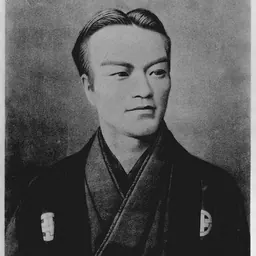
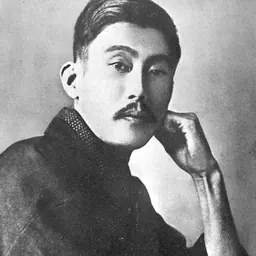
Related people
Same field, nearest in time




Contemporaries
People whose lives overlapped Hirotsu Ryurō's


Frequently asked questions
Who was Hirotsu Ryurō?
Japanese novelist (1861–1928)
When was Hirotsu Ryurō born?
Hirotsu Ryurō was born on 15 July 1861 in Nagasaki.
When did Hirotsu Ryurō die?
Hirotsu Ryurō died on 15 October 1928 in Tokyo City.
What was Hirotsu Ryurō's occupation?
Hirotsu Ryurō was a novelist and writer.
What nationality was Hirotsu Ryurō?
Hirotsu Ryurō was Japanese.
Sources & further reading
Cite this page
APA: Biography.guide. (2026). Hirotsu Ryurō. https://biography.guide/hirotsu-ryuro/
MLA: "Hirotsu Ryurō." Biography.guide, https://biography.guide/hirotsu-ryuro/.
Chicago: "Hirotsu Ryurō." Biography.guide. https://biography.guide/hirotsu-ryuro/.
Data last updated: 2026-09-25 · Spot an error? Report a correction.
Page generated 2026-09-27 05:10 UTC