
Hipólita Bolívar
Wet nurse of the Bolívar family
About Hipólita Bolívar
Lived 1763 – 1835 (aged 71–72). Hipólita Bolívar was a Venezuelan wet nurse.
Hipólita Bolívar, also known in Venezuela as Negra Hipólita, (possibly 13 August 1763 – 25 June 1835) was a wet nurse and slave owned by the Bolívar family who served as Simón Bolívar's wet nurse. She lived on their sugar mill estate in San Mateo and accompanying Bolívar's army until she was emancipated in 1821.
Life Her exact birth date is unknown. She may have been born on 13 August 1763, given the placement of Hippolytus of Rome on the Calendar of saints. She grew up and worked on the Bolívar Sugar Mill, one of the many estates of the Bolívar family. During the sugarcane harvest season, she met her husband, a slave named Mateo who was brought in from another plantation in Caucagua. They had a son together in San Mateo who was baptized as Dionisio Bolívar. A day after his baptism in July 1783, she was sent for to Caracas, where she worked as a wet nurse for newborn Simón Bolívar. His mother María de la Concepción Palacios y Blanco had poor health, and the young Simón was first nursed by Inés Mancebo de Miyares, and Hipólita took over. Simón's father Juan Vicente Bolívar y Ponte died in 1786 and María in 1792, leaving Simón an orphan in Hipólita's care at the age of nine, as well as his grandfather Feliciano Palacios y Sojo and uncle Carlos Palacios y Blanco. She is recorded in many anecdotes as well as Simón Bolívar's later writings as having been industrious and loving. He famously called her "the only father I knew". Later, in 1826, when Simón was fighting far away from Venezuela, during a surge of anti-Bolívarian sentiment, she defended his name from accusations and arguments. She died on 25 June 1835.
Legacy Hipólita's role in Simón Bolívar's life has largely been supplanted in Venezuelan cultural memory by another slave of the Bolívar family, Matea Bolívar, because of her participation at later propagandized national events like Guzmán Blanco's opening of the National Pantheon in 1876. The administration of Hugo Chávez made an effort to recuperate Hipólita's prominence. His government created a social program called Misión Negra Hipólita which focuses on social integration and care for people in extreme poverty.
The Thea Musgrave opera Simón Bolívar depicts Hipólita as a maternal figure oppressed by her enslavement.
In March 2017, her remains were carried, along with Apacuana and Matea, to the National Pantheon, part of a procession to gather and deposit the women. Hipólita's remains were picked up on March 3 and interred on March 8.
Don’t just read it —
keep it.
Full-length biographies made to live with: read them, listen on the way to work, watch them tonight.
- E-book
- Audio
- Video
Instant download · yours to keep · every purchase keeps this site free
Important facts
People in Hipólita Bolívar's life
Named in this biography and alive at the same time

Related people
Same field, nearest in time


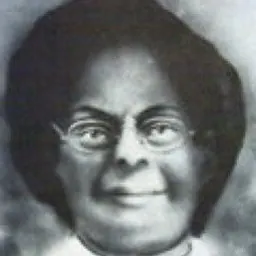

Contemporaries
People whose lives overlapped Hipólita Bolívar's






Frequently asked questions
Who was Hipólita Bolívar?
wet nurse of the Bolívar family
When was Hipólita Bolívar born?
Hipólita Bolívar was born in 1763 in San Mateo.
When did Hipólita Bolívar die?
Hipólita Bolívar died on 25 June 1835 in Caracas.
What was Hipólita Bolívar's occupation?
Hipólita Bolívar was a wet nurse.
What nationality was Hipólita Bolívar?
Hipólita Bolívar was Venezuelan.
Sources & further reading
Cite this page
APA: Biography.guide. (2026). Hipólita Bolívar. https://biography.guide/hipolita-bolivar/
MLA: "Hipólita Bolívar." Biography.guide, https://biography.guide/hipolita-bolivar/.
Chicago: "Hipólita Bolívar." Biography.guide. https://biography.guide/hipolita-bolivar/.
Data last updated: 2026-09-20 · Spot an error? Report a correction.
Page generated 2026-09-27 05:23 UTC