
About Hinche Parham Mabry
Lived 1829 – 1884 (aged 54). Hinche Parham Mabry was a lawyer and military officer.
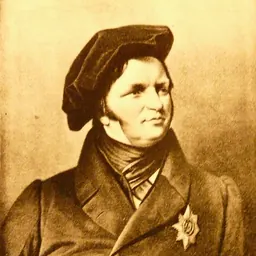
Hinche Parham Mabry Jr., also known as "Hinchie" Mabry and H.P. Mabry (October 27, 1829 – March 21, 1884) was a Texas lawyer, state legislator, judge, and brigade commander in the Confederate States Army during the American Civil War. After joining the Confederate army, Mabry was promoted to colonel and assigned command of a cavalry brigade in Forrest's Cavalry Corps. Mabry's brigade fought against Union forces in Mississippi until the late stages of the war. During Reconstruction, Mabry returned to his home in Jefferson, Texas, where he was the leader of a KKK-style terror organization called the Knights of the Rising Sun. Mabry was implicated in lynchings committed by the group in 1868, but he was never prosecuted.
Early life H.P. Mabry Jr. was born in Carroll County, Georgia on October 27, 1829. He studied at the University of Tennessee and moved to Jefferson, Texas after university, where he studied law and was admitted to the Texas bar in 1856.
Civil War At the outbreak of war, Mabry joined the Confederate army, and took part in an expedition to Indian Territory in May 1861 to capture Fort Washita and Fort Arbuckle, which had been abandoned by Union forces. Mabry became captain of Company G of the 3rd Texas Cavalry Regiment in June, 1861. The 3rd Cavalry fought at the Battle of Wilson's Creek in Missouri and the Battle of Pea Ridge in Arkansas. While on a scouting mission to Springfield, Missouri, Mabry and another Confederate captain were surrounded by a group of 7 Union soldiers and told to surrender. Fearing execution as a spy, Mabry and the other officer fought off the soldiers with bowie knives and revolvers, killing 7 and wounding others, and managed to escape.
Mabry's brigade joined General Nathan Bedford Forrest's cavalry corps and took part in numerous actions across Mississippi, capturing a Union gunboat, the USS Petrel, in April, and fighting at the Battle of Tupelo in July. Forrest's cavalry, including Mabry's brigade, took heavy casualties during this battle, of which Forrest wrote: "The battle of Harrisburg [Tupelo] will furnish the historian a bloody record, but it will also stamp with immortality the gallant dead and the living heroes it has made." In a March 1865 reorganization, Mabry's brigade was broken up and the units comprising it were reassigned. Forrest wrote that he "desire to express his entire satisfaction with the manner in which Colonel Mabry has discharged the duties of his position while under his command." Mabry returned as commander of the 3rd Texas Cavalry under General Lawrence Sullivan Ross's brigade. Mabry surrendered at Shreveport, Louisiana on June 22, 1865. Typically, the officer commanding a brigade as Mabry did would be promoted to brigadier general, but there is no record that Mabry ever received a general's commission. A contributor to Confederate Veteran magazine wrote in 1911, "There was not in the Confederate army, perhaps, a man who commanded a brigade as long as Colonel Mabry without promotion."
Reconstruction After the war, Mabry returned to his home of Jefferson, Texas, where he joined the 1866 Texas constitutional convention and was elected to a judgeship, but he was removed from office during Reconstruction for his Confederate ties. Mabry became a leader of the Knights of the Rising Sun, a local white supremacist terror organization similar to the Ku Klux Klan.
In October 1868, former Union officer from New York and prominent Republican, George Washington Smith was involved in a shoot-out with locals who had tried to ambush him after a Republican meeting in Jefferson. Smith, along with four Black men involved in the local Republican party, were arrested for assault, and Smith was lynched by a mob led by the Knights of the Rising Sun, who overpowered the guards and broke into the local jail. he then fled to Canada to avoid prosecution. Mabry later returned to Texas and was never prosecuted for the murders.
Personal life and death H.P. Mabry married Sarah Abigail Haywood in 1854, and the couple had 3 children, including Woodford H. Mabry, who became adjutant general of Texas and a prominent leader of the Texas Rangers. After the Civil War, H.P. Mabry and his wife opened a hotel in Jefferson, Texas, known as the Haywood House, and the historic structure has been preserved and renovated.
In 1879 Mabry moved to Fort Worth, Texas, and died of sepsis on March 21, 1884, after being wounded in the foot by an accidental firearm discharge.
Don’t just read it —
keep it.
Full-length biographies made to live with: read them, listen on the way to work, watch them tonight.
- E-book
- Audio
- Video
Instant download · yours to keep · every purchase keeps this site free
Important facts
People in Hinche Parham Mabry's life
Named in this biography and alive at the same time
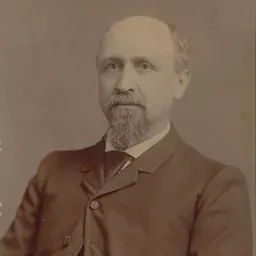

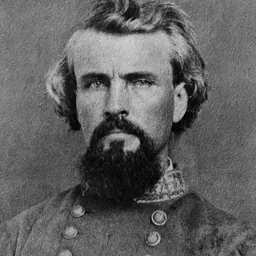
Related people
Same field, nearest in time


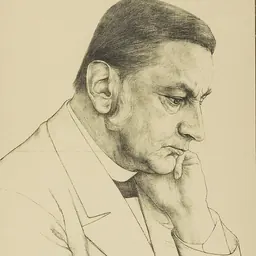
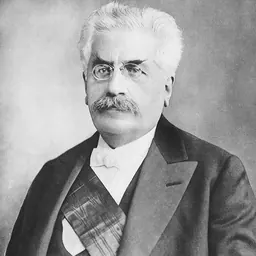

Contemporaries
People whose lives overlapped Hinche Parham Mabry's





Frequently asked questions
Who was Hinche Parham Mabry?
confederate States Army officer
When was Hinche Parham Mabry born?
Hinche Parham Mabry was born on 27 October 1829.
When did Hinche Parham Mabry die?
Hinche Parham Mabry died on 20 March 1884.
What was Hinche Parham Mabry's occupation?
Hinche Parham Mabry was a lawyer and military officer.
Sources & further reading
· Wikipedia: Hinche Parham Mabry
· DBpedia: Hinche Parham Mabry
Cite this page
APA: Biography.guide. (2026). Hinche Parham Mabry. https://biography.guide/hinche-parham-mabry/
MLA: "Hinche Parham Mabry." Biography.guide, https://biography.guide/hinche-parham-mabry/.
Chicago: "Hinche Parham Mabry." Biography.guide. https://biography.guide/hinche-parham-mabry/.
Data last updated: 2026-09-25 · Spot an error? Report a correction.
Page generated 2026-09-27 05:08 UTC