
About Hieronymus van Beverningh
Lived 1614 – 1690 (aged 76). Hieronymus van Beverningh was a Dutch politician, diplomat and jurist.
Hieronymus van Beverningh (sometimes spelled Beverningk) (Gouda, April 25, 1614 – Oud Teylingen, October 30, 1690) was a prominent Dutch regent, diplomat, amateur botanist, and patron of the arts, who lived during the Dutch Golden Age.
Biography
Early life Beverningh was the son of Melchior Beverningh, a captain in the States Army and Sibilla Standert. His grandfather, Johan Beverningh, was a Prussian officer who had taken a commission in the States Army and reached the rank of lieutenant-general of artillery.
He studied at the Latin school in his birthplace Gouda under Jacobus Hovius and at the University of Leiden. After his studies he made the usual "grand tour" of a Dutch gentleman to France. He married Johanna le Gillon on April 4, 1655, a marriage that was to remain childless.
Beverningh was coopted in the Gouda vroedschap and elected schepen in 1645. The very next year he was sent as a deputy to the States of Holland. In 1651 he represented the province of Holland in the Groote Vergadering (the "Great Assembly", a kind of constitutional assembly) of that year, which inaugurated the First Stadtholderless Period in the Dutch Republic. In 1653 (the year in which Johan de Witt became Grand Pensionary) Beverningh was made a member of the Holland delegation in the States-General of the Netherlands. De Witt and he were to become close associates in the States Party.
Peace of Westminster and Act of Seclusion De Witt would have been happy to have a sent a single negotiator, but the other provinces would not agree, so together with another Holland Regent, Willem Nieupoort, and representatives of the provinces of Zeeland (Paulus van de Perre) and Friesland (Allart Pieter van Jongestall), Beverningh was sent as a plenipotentiary to the Commonwealth of England to negotiate the Treaty of Westminster (1654) that was to end the First Anglo-Dutch War. The already complicated negotiations were made more difficult when they reached an apparent impasse over the English demand that the young Prince of Orange William III (three years of age at the time) would be excluded from the offices that his father, William II, Prince of Orange and other ancestors had held in the Republic, like that of Stadtholder of Holland and Zeeland, and Captain general of the Union. To De Witt, and his States-Party faction of Holland regents, like Cornelis de Graeff, this demand was not unacceptable, but they knew that the other provinces would consider it an intolerable intervention in Dutch internal affairs. To overcome this obstacle to a peace that both parties by now strongly desired De Witt therefore engaged in a brazen intrigue. He secretly arranged that the two Holland negotiators would engage in surreptitious parallel negotiations with Oliver Cromwell behind the back of Jongestal (Van der Perre had died by that time).
The resulting scandal was eventually laid to rest, but the States of Friesland blocked Beverningh's appointment as thesaurier-generaal (Treasurer) of the Union, that was first proposed by Holland in 1654, until 1657 (during which time the function was formally left vacant).
Later official career Besides his office of Treasurer, which he would fulfil till 1665, and that of representative in the States-General, Beverningh regularly undertook important diplomatic missions for the Republic. The most important were his negotiations with the Elector of Brandenburg in 1665 about an alliance during the Second Anglo-Dutch War and the peace negotiations with the Prince-Bishop of Münster in the same year. In 1667 he led the Dutch delegation that negotiated the Treaty of Breda that ended that war with England. In 1668 he helped negotiate the Triple Alliance (1668) and the ensuing Treaty of Aix-la-Chapelle. In 1674 he led the Dutch delegation that negotiated the Treaty of Westminster (1674) that ended the Third Anglo-Dutch War. Finally, in 1678 he helped negotiate the Treaty of Nijmegen that ended the Franco-Dutch War
Meanwhile, he was appointed schout and later burgemeester of his native city. He acted as gedeputeerde-te-velde (a kind of political commissar) at the headquarters of William III in the campaign against the French during the Year of Disaster, 1672. After the popular revolution that brought William to power as stadtholder, and brought about the fall of the De Witt regime, Beverningh quickly changed sides from the States party (of which he had been a prominent exponent) and joined the new regime. He was one of the Gouda regents who welcomed the new stadtholder at a festive banquet in the city.
Final years After he had negotiated a commercial treaty with Sweden in 1679, he retired from public life. He had been appointed a regent of Leiden University in 1673. In these later years he embarked on a scientific career that would bring him plaudits from colleagues including Carl Linnaeus, who would later credit the discovery of a nasturtium (Tropaeus majus) to him. He maintained a botanical garden at his estate Oud-Teylingen (or Lokhorst) not far from Leiden that contained many rare plants. This garden inspired the German botanist Jacobus Breynius to write his Prodromus fasciculi rariorum plantarum in Hortis Hollandiae (vol. I 1680, vol. II, 1689), which he dedicated to Beverningh.
Beverningh also acted as a maecenas, enabling the German born botanist Paul Hermann to travel to Ceylon (currently Sri Lanka), a journey that resulted in his Paradisus Batavus (1698), a standard work about orchids. He helped finance the purchase of the library of Isaac Vossius for the Leiden University Library.
While helping to catalog this library, Beverningh fell ill (after he fell off a stepladder). He died at his estate after a short illness in October, 1690. He was buried in the tomb he had bought in 1668 from the Blois-van-Treslong family, in the Janskerk (Gouda).
Don’t just read it —
keep it.
Full-length biographies made to live with: read them, listen on the way to work, watch them tonight.
- E-book
- Audio
- Video
Instant download · yours to keep · every purchase keeps this site free
Important facts
People in Hieronymus van Beverningh's life
Named in this biography and alive at the same time






Related people
Same field, nearest in time
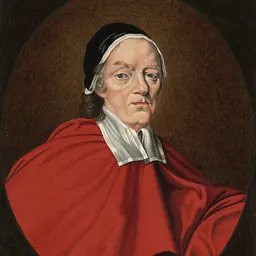
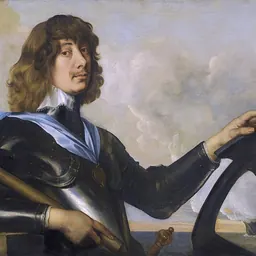
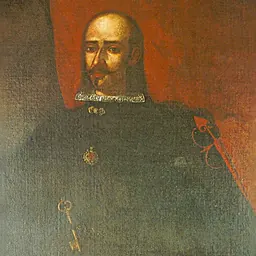
Contemporaries
People whose lives overlapped Hieronymus van Beverningh's





Frequently asked questions
Who was Hieronymus van Beverningh?
Dutch diplomat and politician (1614-1690)
When was Hieronymus van Beverningh born?
Hieronymus van Beverningh was born on 25 April 1614 in Gouda.
When did Hieronymus van Beverningh die?
Hieronymus van Beverningh died on 30 October 1690 in Warmond.
What was Hieronymus van Beverningh's occupation?
Hieronymus van Beverningh was a politician, diplomat and jurist.
What nationality was Hieronymus van Beverningh?
Hieronymus van Beverningh was Dutch.
Sources & further reading
· Wikipedia: Hieronymus van Beverningh
· DBpedia: Hieronymus van Beverningh
Cite this page
APA: Biography.guide. (2026). Hieronymus van Beverningh. https://biography.guide/hieronymus-van-beverningh/
MLA: "Hieronymus van Beverningh." Biography.guide, https://biography.guide/hieronymus-van-beverningh/.
Chicago: "Hieronymus van Beverningh." Biography.guide. https://biography.guide/hieronymus-van-beverningh/.
Data last updated: 2026-09-20 · Spot an error? Report a correction.
Page generated 2026-09-27 05:22 UTC