
About Hezekiah Grice
Lived 1801 – 1863 (aged 61–62). Hezekiah Grice was a writer, human rights defender and businessperson.
Hezekiah Grice ( 1801 – 1863) was an American and Haitian activist, machinist, and businessman, noted for his political activity in Baltimore during the early 19th century. While working as a machinist in Baltimore, he was either the first person or one of the first people to suggest holding a National Negro Convention to discuss the possibility of mass emigration by African Americans away from the United States. This was the beginning of the Colored Conventions Movement. Grice was also a leading figure in the founding of the Legal Rights Association, which has been credited with helping to clarify citizenship rights in America, as well as with pioneering several important tactics in American civil rights activism. He later moved to Haiti where he could secure full citizenship rights. There he became a prominent tradesman and a confidant of Faustin Soulouque.
Early life Grice was born in rural Calvert County, Maryland, in the early 1800s. The historian Lucien Holness gives Grice's year of birth as 1801. A biographical sketch of Grice written in 1867 and published in Elevator, the newspaper of the Afro-American League of California and the American Citizens' Equal Rights Association of the State of California, listed his date of birth as being "in the early part" of the 19th century, but not exactly known. The same biography stated that Grice was "of free parentage". Around 1830, one proposal that was the topic of national discussion among African American activists was the possibility of emigrating to a region in Canada to which many formerly enslaved people had already escaped. This proposal was a response to the events surrounding the Cincinnati riots of 1829, and the efforts by the American Colonization Society to pressure African Americans to leave America for Liberia. Grice has been credited with being the first person to call for a national convention to discuss the idea of mass immigration to Canada. However, Martha S. Jones has written that it is not clear whether Grice was the first person to suggest such a conference, or if he was simply responding to and amplifying a call for a convention that had previously been made by activists in New York. But Jones writes that what is obvious is that Grice's leadership was foundational in turning the conference into a reality and in creating a national conversation on the colonization proposals. and he organized it by sending letters to Black leaders across the United States. of 1830, at the Mother Bethel A.M.E. Church in Philadelphia. He was present in 1832, and some sources identify that as the last National Negro Convention that Grice attended;
Legal Rights Association Although the politics of colonization were contentious and the idea became sharply less popular in the following years, Grice published a map of potential locations in Canada that free African Americans could relocate to. The Legal Rights Association has been identified as probably the first legal rights convention among African Americans. Continuing on the work of the Convention of 1830 during the previous year, the Legal Rights Association studied the question of what rights African Americans were entitled to, and how they were being denied those rights. Actions by the American Colonization Society and the legislature of Maryland made it clear over the ensuing few years that the aim of many prominent White lawyers and lawmakers, among them Octavius Taney (the brother of Roger B. Taney), was to remove free African Americans from the country entirely.
Personal life Move to Haiti Grice did not remain in the United States long after his activism. In either 1834 or 1835, he chose to move from Baltimore to Port-au-Prince, the capital of Haiti. His motivation was to acquire the full citizenship rights that the United States had refused to grant him, and which he had come to believe would not be granted in the near future. He had a family in Haiti, and became known as a skilled worker due to his expertise as a machinist. Grice's biography in Elevator asserts that he was well known to the rulers of the country and was trusted because he did not engage in Haitian politics. Most notably, Grice became a confidant of Faustin Soulouque, despite Grice's well-known republican ideals. He was particularly prominent in Haiti for inventions that related to the manufacture of sugar. Although Grice never moved back to the United States, he did visit it; he was sent by the government of Haiti to New York to acquire machine parts to build and maintain his sugar manufacturing inventions in Haiti.
Family Grice had eleven children: six sons and five daughters. It was speculated by his biographer in Elevator that all eleven of his children were likely born in Haiti, and that by 1867 three of his sons and an unknown number of his daughters had emigrated to America. All of his children were thought to be native French speakers who were also educated in English. One of his children, George Grice, was known to have become a dentist in New York, and another, Francis Grice, had moved to San Francisco by 1867. Francis Grice, a sculptor, wrote on the question of Haitian self-governance. Grice's daughter Elizabeth Grice was the first wife of the abolitionist preacher William Douglass.
Don’t just read it —
keep it.
Full-length biographies made to live with: read them, listen on the way to work, watch them tonight.
- E-book
- Audio
- Video
Instant download · yours to keep · every purchase keeps this site free
Important facts
People in Hezekiah Grice's life
Named in this biography and alive at the same time

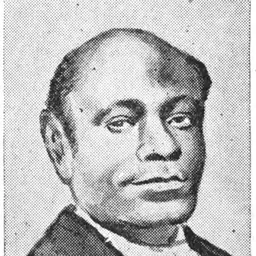
Related people
Same field, nearest in time
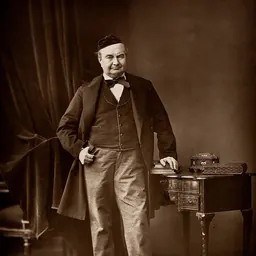

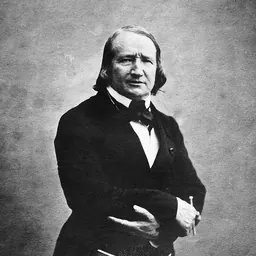


Contemporaries
People whose lives overlapped Hezekiah Grice's





Frequently asked questions
Who was Hezekiah Grice?
African American activist
When was Hezekiah Grice born?
Hezekiah Grice was born in 1801 in Calvert County.
When did Hezekiah Grice die?
Hezekiah Grice died in 1863 in Haiti.
What was Hezekiah Grice's occupation?
Hezekiah Grice was a writer, human rights defender and businessperson.
Sources & further reading
Cite this page
APA: Biography.guide. (2026). Hezekiah Grice. https://biography.guide/hezekiah-grice/
MLA: "Hezekiah Grice." Biography.guide, https://biography.guide/hezekiah-grice/.
Chicago: "Hezekiah Grice." Biography.guide. https://biography.guide/hezekiah-grice/.
Data last updated: 2026-09-20 · Spot an error? Report a correction.
Page generated 2026-09-27 05:00 UTC