
About Herwarth Walden
Lived 1878 – 1941 (aged 63). Herwarth Walden was a painter, writer, composer, art historian, gallerist and publisher, known for Der Sturm.
Herwarth Walden (actual name Georg Lewin; 16 September 1879 – 31 October 1941) was a German expressionist artist and art expert in many disciplines. He is broadly acknowledged as one of the most important discoverers and promoters of German avant-garde art in the early twentieth century (Expressionism, Futurism, Dadaism, Magic realism). He was best known as the founder of the Expressionist magazine Der Sturm (The Storm) and its offshoots.
Career He studied composition and piano at the music academies of Berlin and Florence. However, his interest embraced all arts. So he became a musician, composer, writer, critic, and gallery owner. He was best known as the founder of the expressionist magazine Der Sturm (The Storm) and its offshoots. These consisted of a publishing house and journal, founded in 1910, to which he added an art gallery two years later.
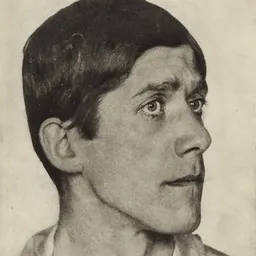
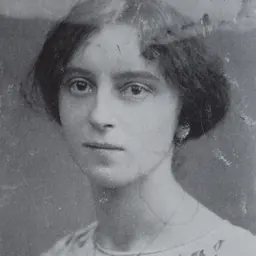
He discovered, sponsored and promoted many young, still unknown artists of different styles and trends, such as the Blaue Reiter and Italian Futurism. Later some of them became very famous, among others: Oskar Kokoschka, Maria Uhden, Georg Schrimpf. He also discovered and promoted several poets, notably August Stramm, Otto Nebel, and Franz Richard Behrens. The literary style he espoused became known as 'Wort-Kunst' (Word-Art).
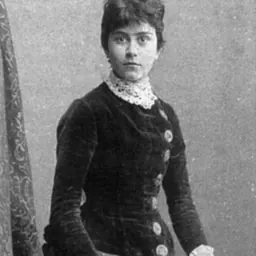
From 1901 to 1911, Walden was married to Else Lasker-Schüler, the leading female representative of German expressionist poetry. She invented for him the pseudonym "Herwarth Walden", inspired by Henry Thoreau's book Walden, or Life in the Woods (1854). In 1912 he married Swedish painter Nell Roslund. His sympathies for the avant-garde soon aroused the suspicion of the Soviet government, and he had to repeatedly defend against the equation of avant-garde and fascism. Walden was imprisoned and died in October 1941 in a Soviet prison in Saratov. His death was established by the International Tracing Service.
Works
Der Sturm (Magazine, 1910–1932) Dafnislieder für Gesang und Klavier (Songs, 1910) Das Buch der Menschenliebe (Novel, 1916) Die Härte der Weltenliebe (Novel, 1917) Expressionismus: Die Kunstwende (Essays, 1918) Kind (Drama, 1918) Menschen (Drama, 1918) Unter den Sinnen (Novel, 1919) Die neue Malerei (Essays, 1920) Glaube (Drama, 1920) Einblick in Kunst (Essay, 1920) Sünde (Drama, 1920) Die Beiden (Drama, 1920) Erste Liebe (Drama, 1920) Letzte Liebe (Drama, 1920) Im Geschweig der Liebe (Poems, 1925) Vulgär-Expressionismus (Essay, 1938)
Don’t just read it —
keep it.
Full-length biographies made to live with: read them, listen on the way to work, watch them tonight.
- E-book
- Audio
- Video
Instant download · yours to keep · every purchase keeps this site free
Important facts
People in Herwarth Walden's life
Named in this biography and alive at the same time


Related people
Same field, nearest in time


Contemporaries
People whose lives overlapped Herwarth Walden's




Frequently asked questions
Who was Herwarth Walden?
German artist and art collector (1878-1941)
When was Herwarth Walden born?
Herwarth Walden was born on 16 September 1878 in Berlin.
When did Herwarth Walden die?
Herwarth Walden died on 31 October 1941 in Saratov.
What was Herwarth Walden's occupation?
Herwarth Walden was a painter, writer, composer, art historian, gallerist and publisher.
What was Herwarth Walden known for?
Herwarth Walden was known for Der Sturm.
What nationality was Herwarth Walden?
Herwarth Walden's recorded nationality: German Reich.
Sources & further reading
Cite this page
APA: Biography.guide. (2026). Herwarth Walden. https://biography.guide/herwarth-walden/
MLA: "Herwarth Walden." Biography.guide, https://biography.guide/herwarth-walden/.
Chicago: "Herwarth Walden." Biography.guide. https://biography.guide/herwarth-walden/.
Data last updated: 2026-09-20 · Spot an error? Report a correction.
Page generated 2026-09-27 05:32 UTC