
About Hermann vom Endt
Lived 1861 – 1939 (aged 78). Hermann vom Endt was an architect.
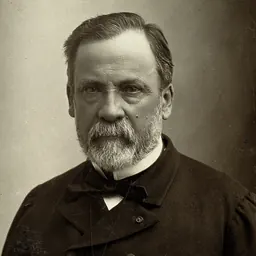
Hermann vom Endt (18 July 1861 – 27 September 1939) was a German architect.
Life Born in Dusseldorf, Endt studied at the Kunstakademie Düsseldorf from 1876 to 1878. Baufach und Baukunst under and became a member of the Malkasten Künstlerverein. After graduating, he first worked in Berlin as an assistant in the studio of the renowned architects Kayser & von Großheim. Later he travelled to Western Europe, Italy and Denmark for further training.
Vom Endt planned more than twenty buildings in Düsseldorf's city centre, mainly commercial and administrative buildings. He also built churches and residential buildings. In addition, he was active as a juror in architectural competitions, on the committee of managing architects of the Association of German Architects.
Vom Endt favoured the historicist Architectural style and used a neoclassicist and Baroque Revival architecture Baroque Revival architecture with a tendency towards monumentality. He thus joined architects such as Richard Bauer, Josef Kleesattel, Carl Moritz, Johannes Radke, Traugott von Saltzwedel, Bruno Schmitz, Bernhard Sehring, Ernst Stahl and Karl Wach, whose buildings shaped the appearance of Düsseldorf's inner city in the age of Wilhelminism.
Endt died in Düsseldorf at the age of 78.
Family
On 28 January 1891, Endt married Elisabeth Custodis. The son made himself known for his lively and ironic caricatures. His son Walter (31 January 1893 - 1982) followed his father's profession and became an architect.
Realisations in Düsseldorf 1894–1896: Landesbank of the Rhine Province, see Friedrichstraße / Fürstenwall old no. 154 (facade preserved) around 1897: Schneidersches Geschäftshaus, Wallstraße 29a / Mittelstraße 11 (listed) 1898: group of houses at Goethestrasse 16, 18, 20, 22, 24 and 24a (mostly destroyed, few preserved) 1898–1899: Apollo-Theater, Königsallee / Adersstraße (demolished in 1966 after several alterations) 1900–1901: , Graf-Adolf-Straße 47 (heavily altered after war damage) before 1904: Residential building Ahnfeldstraße 107 (not preserved) before 1904: Residential building Schäferstraße 10 (preserved with alterations) before 1904: Residential building Reichsstraße 41-43 (today no. 43, preserved with modifications) 1904: Residential buildings Kaiser-Friedrich-Ring 7, 8 and 15 (listed) 1904–1905: Residential buildings Kaiser-Wilhelm-Ring 3, 4, 5, 6 and 7 (listed) 1904–1905: Building of the Allgemeine Ortskrankenkasse (AOK), Kasernenstraße 63 (under preservation order) 1905–1907: Building of the Oberpostdirektion Düsseldorf 1906: Interior conversion of the Opera House 1906: Bank building for the A. Schaaffhausen'schen Bankverein, Breite Straße 29 / Bastionstraße (not preserved). 1905–1909: Commercial building of the Düsseldorfer Generalanzeiger (called Girardethaus), Königsallee 27 / Trinkausstraße (altered) 1909–1910: House of the Association of German Ironworkers (today Stahlinstitut VDEh), Breite Straße 27 1909–1911: Office and commercial building Hohenzollernhaus, Königsallee 14/16 / Schadowstraße 1909–1911: Landeshaus der rheinischen Provinzialverwaltung with villa of the Landeshauptmann (later Villa Horion, seat of the president of the North Rhine-Westphalian state parliament) 1910–1911: Residential building for the entrepreneur Max Jagenberg, Wasserstraße 8 in Düsseldorf-Unterbilk (under preservation order) 1911–1913: Conversions in the Ständehaus of the Rhine Province Provincial Diet 1913–1914: Residential and commercial building, Königsallee 46 (listed building) 1914: Residential building, Duisburger Straße 44 (under preservation order) 1914–1915: Dreimädelbrunnen (listed as a historical monument) 1926–1928: Eulerhof housing estate in Flingern, Dorotheenstraße / Lindenstraße / Degerstraße (together with Walter vom Endt and Josef Kleesattel; listed) 1926: on the GeSoLei: Exhibition building of the publishing house W. Girardet (Düsseldorfer Nachrichten) and the "Hirschwald-Bücherhaus" of the Hirschwald'sche Buchhandlung, Berlin (buildings were only intended for the duration of one year). Provinzial-Feuerversicherungsanstalt der Rheinprovinz, Friedrichstraße 70/74 (departed)
Don’t just read it —
keep it.
Full-length biographies made to live with: read them, listen on the way to work, watch them tonight.
- E-book
- Audio
- Video
Instant download · yours to keep · every purchase keeps this site free
Important facts
People in Hermann vom Endt's life
Named in this biography and alive at the same time





Related people
Same field, nearest in time


Contemporaries
People whose lives overlapped Hermann vom Endt's


Frequently asked questions
Who was Hermann vom Endt?
German architect (1861-1939)
When was Hermann vom Endt born?
Hermann vom Endt was born on 18 July 1861 in Düsseldorf.
When did Hermann vom Endt die?
Hermann vom Endt died on 27 September 1939 in Düsseldorf.
What was Hermann vom Endt's occupation?
Hermann vom Endt was an architect.
What nationality was Hermann vom Endt?
Hermann vom Endt's recorded nationality: German Reich.
Sources & further reading
Cite this page
APA: Biography.guide. (2026). Hermann vom Endt. https://biography.guide/hermann-vom-endt/
MLA: "Hermann vom Endt." Biography.guide, https://biography.guide/hermann-vom-endt/.
Chicago: "Hermann vom Endt." Biography.guide. https://biography.guide/hermann-vom-endt/.
Data last updated: 2026-09-20 · Spot an error? Report a correction.
Page generated 2026-09-27 05:22 UTC