
About Hermann Muthesius
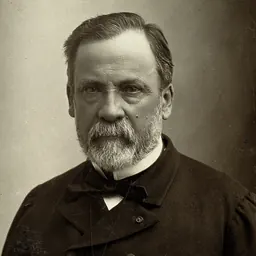
Lived 1861 – 1927 (aged 66). Hermann Muthesius was a German architect and art historian.
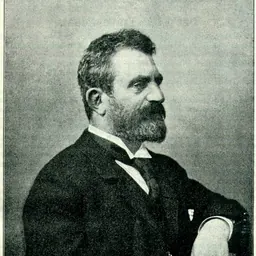
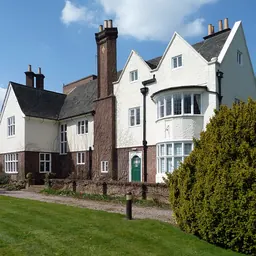
Adam Gottlieb Hermann Muthesius (20 April 1861 – 29 October 1927), known as Hermann Muthesius, was a German architect, author and diplomat, perhaps best known for promoting many of the ideas of the English Arts and Crafts movement within Germany and for his subsequent influence on early pioneers of German architectural modernism such as the Bauhaus. Southern facade of the Elena-Klinik in Harleshausen, a district of Kassel, whose main building was originally built by Hermann Muthesius as a villa. 2004-12-24
Early life and education Muthesius was born in 1861 in the village of Großneuhausen near Erfurt and received early training from his father, who was a builder. After a period of military service and two years studying philosophy and art history at Frederick William University in Berlin, he enrolled to study architecture at the Technische Hochschule in Charlottenburg (now Technische Universität Berlin) in 1883, while also working in the office of Reichstag architect Paul Wallot.
Career Following completion of his studies, Muthesius spent 1887 to 1891 working for German construction firm Ende & Böckmann in Tokyo. There he saw his first building completed—a German Evangelical church in the Gothic Revival style —and was able to travel extensively across Asia. He returned to Germany in 1891 where he worked for the Prussian Ministry of Public Works, studied for a time in Italy on stipend (in 1895),
London In 1896, Muthesius was offered a position as cultural attaché at the German Embassy in London. Muthesius married Anna Trippenbach who was a fashion designer and singer. This gave him the opportunity to study the ways of the British. He focused the next six years investigating residential architecture and domestic lifestyle and design, ending with a three-volume report published in 1904 and 1905 as ("The English House"), his most famous work. Although his subjects were wide-ranging, he was particularly interested in the philosophy and practices of the English Arts and Crafts movement, whose emphasis on function, modesty, understatement, individuality and honesty to materials he saw as alternatives to the ostentatious historicism and obsession with ornament in German nineteenth century architecture, and whose efforts to bring a sense of craftsmanship to industrial design he saw as a significant national economic benefit. He visited Glasgow to investigate the innovative work of the Glasgow School exemplified by the designs of Charles Rennie Mackintosh, and wrote about houses in Birmingham by William Bidlake.
As well as his official reports, Muthesius also developed a career as an author, communicating his ideas and observations in an influential series of books and articles that saw him become a significant cultural figure in Germany, culminating in . His wife wrote about Anti-fashion and how she felt that women were being exploited by German clothing industrialists. Her book which incorporated a novel binding designed by Frances MacDonald is considered an important contribution to the Artistic Dress movement.
Muthesius wrote about Glasgow's Willow Tearooms for an issue of published in 1905 which was almost entirely devoted to A Mackintosh Tea Room in Glasgow, saying that "Today any visitor to Glasgow can rest body and soul in Miss Cranston's Tea Rooms and for a few pence drink tea, have breakfast and dream that he is in fairy land." At the same time he lamented Mackintosh's unrewarded struggle to "hold up the banner of Beauty in this dense jungle of ugliness."
Germany Muthesius returned to Germany in 1904 and established himself as an architect in private practice, while retaining a role as an official advisor to the Government of Prussia focusing his time on reforming art and design education in order that more emphasis be put on workshop training. and after World War II in 1945 the school was renamed Muthesius-Werkschule Kiel für Handwerk und angewandte Kunst (English: Muthesius Factory School Kiel for Handicrafts and Applied Arts) in his honor.
Works List of select works by Muthesius: Bernhard house (1906), Winkler Straße 11, Berlin-Wilmersdorf, 14193 Cramer house (1912), Pacelliallee 18, Berlin-Zehlendorf, 14195 Kitchenette houses in Lichterfelde-West (1909), Unter den Eichen 53 (now present-day Reichensteiner Weg), Berlin, 14195. This building is no longer standing, as of 1970.
Selected publicationsStilarchitektur und Baukunst ("Style-Architecture and Building-Art") (1902)Das englische Haus ("The English House") (1904)Wie baue ich mein Haus ("How Do I Build My House") (1915)
Don’t just read it —
keep it.
Full-length biographies made to live with: read them, listen on the way to work, watch them tonight.
- E-book
- Audio
- Video
Instant download · yours to keep · every purchase keeps this site free
Important facts
Family & relationships
People in Hermann Muthesius's life
Named in this biography and alive at the same time
Related people
Same field, nearest in time




Contemporaries
People whose lives overlapped Hermann Muthesius's



Frequently asked questions
Who was Hermann Muthesius?
German architect (1861-1927)
When was Hermann Muthesius born?
Hermann Muthesius was born on 20 April 1861 in Großneuhausen.
When did Hermann Muthesius die?
Hermann Muthesius died on 26 October 1927 in Berlin.
What was Hermann Muthesius's occupation?
Hermann Muthesius was an architect and art historian.
What nationality was Hermann Muthesius?
Hermann Muthesius was German.
Sources & further reading
· Wikipedia: Hermann Muthesius
Cite this page
APA: Biography.guide. (2026). Hermann Muthesius. https://biography.guide/hermann-muthesius/
MLA: "Hermann Muthesius." Biography.guide, https://biography.guide/hermann-muthesius/.
Chicago: "Hermann Muthesius." Biography.guide. https://biography.guide/hermann-muthesius/.
Data last updated: 2026-09-20 · Spot an error? Report a correction.
Page generated 2026-09-27 05:28 UTC