
About Hermann Hankel
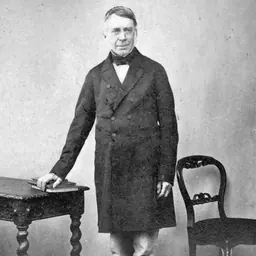
Lived 1839 – 1873 (aged 34). Hermann Hankel was a German mathematician, historian of mathematics, scientist and university teacher, known for Hankel function, Hankel matrix and Hankel transform.
Hermann Hankel (14 February 1839 – 29 August 1873) was a German mathematician. Having worked on mathematical analysis during his career, he is best known for introducing the Hankel transform and the Hankel matrix.
Biography Hankel was born on 14 February 1839 in Halle, Germany. His father, Wilhelm Gottlieb Hankel, was a physicist. Hankel studied at Nicolai Gymnasium in Leipzig before entering Leipzig University in 1857, where he studied with Moritz Drobisch, August Ferdinand Möbius and his father. In 1860, he started studying at University of Göttingen, where he acquired an interest in function theory under the tutelage of Bernhard Riemann. Following the publication of an award winning article, he proceeded to study under Karl Weierstrass and Leopold Kronecker in Berlin. He received his doctorate in 1862 at Leipzig University. Receiving his teaching qualifications a year after, he was promoted to an associate professor at Leipzig University in 1867. At the same year, he received his full professorship in University of Erlangen–Nuremberg and spent his last four years in University of Tübingen. He died from an illness on 29 August 1873 in Schramberg, near Tübingen. He was married to Marie Hankel.
In 1867, he published Theorie der Complexen Zahlensysteme, a treatise on complex analysis. His works on the theory of functions include 1870's Untersuchungen über die unendlich oft oscillirenden und unstetigen functionen and his 1871 article “Grenze” for the Ersch-Gruber Encyklopädie. His work for Mathematische Annalen has highlighted the importance of Bessel functions of the third kind, which were later known as Hankel functions. Furthermore, Hankel draws attention to the linear algebra that Hermann Grassmann had developed in his Extension Theory in two publications. This was the first of many references later made to Grassmann's early insights on the nature of space.
Selected publications Hermann Hankel (1863) Die Euler'schen Integrale bei unbeschränkter Variabilität des Argumentes, Voss, Leipzig.
Hermann Hankel (1869) Die Entwickelung der Mathematik in den letzten Jahrhunderten, Fues, Tübingen. Hermann Hankel (1870) Untersuchungen über die unendlich oft oscillirenden und unstetigen Functionen , Fues, Tübingen. Hermann Hankel (1874) Zur Geschichte der Mathematik in Alterthum und Mittelalter , Teubner, Leipzig. Hermann Hankel (1875) Die Elemente der projectivischen Geometrie in synthetischer Behandlung, Teubner, Leipzig.
Don’t just read it —
keep it.
Full-length biographies made to live with: read them, listen on the way to work, watch them tonight.
- E-book
- Audio
- Video
Instant download · yours to keep · every purchase keeps this site free
Important facts
Family & relationships
People in Hermann Hankel's life
Named in this biography and alive at the same time
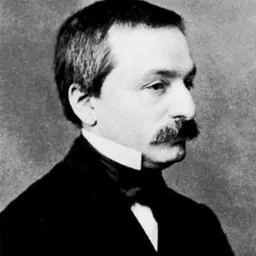
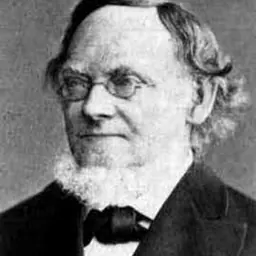



Related people
Same field, nearest in time

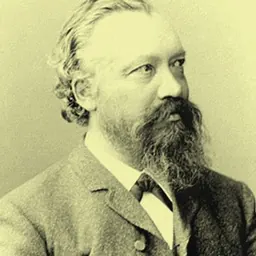
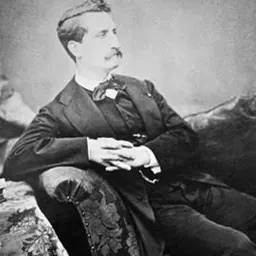
Contemporaries
People whose lives overlapped Hermann Hankel's

Frequently asked questions
Who was Hermann Hankel?
German mathematician (1839–1873)
When was Hermann Hankel born?
Hermann Hankel was born on 14 February 1839 in Halle (Saale).
When did Hermann Hankel die?
Hermann Hankel died on 29 March 1873 in Schramberg.
What was Hermann Hankel's occupation?
Hermann Hankel was a mathematician, historian of mathematics, scientist and university teacher.
What was Hermann Hankel known for?
Hermann Hankel was known for Hankel function, Hankel matrix and Hankel transform.
What nationality was Hermann Hankel?
Hermann Hankel was German.
Sources & further reading
Cite this page
APA: Biography.guide. (2026). Hermann Hankel. https://biography.guide/hermann-hankel/
MLA: "Hermann Hankel." Biography.guide, https://biography.guide/hermann-hankel/.
Chicago: "Hermann Hankel." Biography.guide. https://biography.guide/hermann-hankel/.
Data last updated: 2026-09-25 · Spot an error? Report a correction.
Page generated 2026-09-27 05:13 UTC