
Hermann Glockner
German philosopher and philologist
About Hermann Glockner
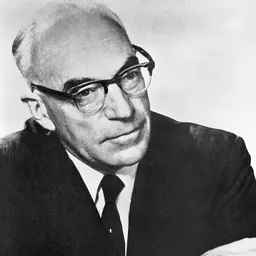
Lived 1896 – 1979 (aged 82). Hermann Glockner was a German philosopher, philologist and university teacher.
Hermann Glockner (July 23, 1896 in Fürth – July 11, 1979 in Braunschweig) was a German philosopher and aesthetician. Glockner's correspondence with Theodor Haering is kept at Deutsches Literaturarchiv Marbach, and at the University Library Tübingen.
Life and work Glockner was born in Fürth, the son of Sebastian Glockner, who later became a school inspector. Hermann Glockner was attending Fürth grammar school when, in 1908, neo-idealist philosopher Rudolf Eucken was awarded the Nobel Prize.
Glockner studied philosophy in Munich, Erlangen and Heidelberg and received his doctorate in 1919 under Paul Hensel in Erlangen. In 1924 he habilitated under Heinrich Rickert Glockner managed an appointment at the TU Braunschweig in 1951, where he taught until 1964. He was a full member of the Braunschweig Scientific Society from 1955, and often is considered one of the most important representatives of (heterogeneous) neo-Hegelianism in Germany. In 1971 Glockner was awarded the Golden Citizen's Medal of the City of Fürth; his estate is administered in the Fürth city archives.
Glockner and National socialism Glockner was appointed to Giessen because in his "fight against Semitic influence in German philosophy in recent decades" he was considered to be "standing firmly on the ground of the National Socialist world view".
In 1934, he joined the National Socialist People's Welfare Organization (NSV) and became co-editor of the Zeitschrift für Deutsche Kulturphilosophie in the same year. In 1942, he joined the National Socialist German Lecturers League (NSDDB) and applied for membership of the NSDAP, which was rejected. The reasons for this are not known. He was presumably accused of not immediately rushing to take up arms during a language course in Switzerland at the beginning of the World War I, but instead continuing to stay in the "culture-saturated atmosphere of peace" (kulturgesättigten Friedensatmosphäre) in Switzerland. Glockner's philosophy, on the other hand, was classified in the "SD dossiers on philosophy professors" of the Security Service of the Reichsführer SS as "politically impeccable" and "determined by the principles of the NS".
Hegel and Glockner He was a Hegel researcher and editor of the Hegel anniversary edition in 24 volumes from 1927 to 1940. Glockner was one of the best experts on Hegel in the pre-war period. In 1941, he considered German philosophy to be "to a higher degree than any other philosophy originating from the people and connected to the people" and tried to compare Hitler's importance in politics with that of Hegel in philosophy: "The struggle is the father of all things. So in the field of philosophy, too, a strong procreative power is undoubtedly developed in the years of war and hardship."
Works
Fr. Th. Vischers Ästhetik in ihrem Verhältnis zu Hegels Phänomenologie des Geistes. L. Voss, Leipzig 1920. Die ethisch-politische Persönlichkeit des Philosophen. J.C.B. Mohr, Tübingen 1922. Der Begriff in Hegels Philosophie. J.C.B. Mohr, Tübingen 1924. Das philosophische Problem in Goethes Farbenlehre. Carl Winter, Heidelberg 1924. Hegel, Sämtliche Werke. Frommann, Stuttgart, 1927–1940. Band 21: Die Voraussetzungen der hegelschen Philosophie. Band 22: Entwicklung und Schicksal der hegelschen Philosophie. Hegel und seine Philosophie. Carl Winter, Heidelberg 1931. Friedrich Theodor Vischer und das 19. Jahrhundert. Junker &. Dünnhaupt, Berlin 1931. Johann Eduard Erdmann. Frommann, Stuttgart 1932 (Frommanns Klassiker der Philosophie vol. 30). Wilhelm Busch. Der Mensch, der Zeichner, der Humorist. Mohr, Tübingen 1932. Heinrich von Stein. Schicksal einer deutschen Jugend. Mohr, Tübingen 1934. Das Abenteuer des Geistes. Frommann, Stuttgart 1938. Schiller. Kohlhammer Stuttgart 1941. Vom Wesen der deutschen Philosophie. Kohlhammer, Stuttgart 1941. Einführung in das Philosophieren. Buchholz & Weißwange, Berlin 1944. Identität und Individualität. Nordwestdt. Univ. Ges., Wilhelmshaven 1952. Philosophie und Technik. Agis-Verlag, Krefeld 1953. Die europäische Philosophie von den Anfängen bis zur Gegenwart. Reclam, Stuttgart 1958. Hundert Aussprüche Hegels. Frommann (Holzboog), Stuttgart 1958. Gegenständlichkeit und Freiheit. 2 Bände, Bouvier, Bonn 1963. Band I: Metaphysische Meditationen zur Fundamentalphilosophie. Band II: Metaphysische Meditationen zur philosophischen Anthropologie. Beiträge zum Verständnis und zur Kritik Hegels sowie zur Umgestaltung seiner Geisteswelt. Bouvier, Bonn 1965. Hegel-Studien, Beiheft Nr. 2. Rationalität, Phänomenalität, Individualität. Bouvier, Bonn 1966. Heidelberger Bilderbuch. Erinnerungen. Bouvier, Bonn 1969. Paraphilosophica. 1969. Die Bärenwiese. 1969. Liebeslieder. 1969. Bilderbuch meiner Jugend. Erinnerungen. 2 Bände (1970). Paul Hensel. Der Sokrates von Erlangen. Bouvier, Bonn 1972. Das Selbstbewußtsein. Bouvier, Bonn 1972. Paraphilosophika. Gesammelte Dichtungen. Scherpe, Krefeld 1974. Einführung in das Philosophieren. Bouvier, Bonn 1974.
Don’t just read it —
keep it.
Full-length biographies made to live with: read them, listen on the way to work, watch them tonight.
- E-book
- Audio
- Video
Instant download · yours to keep · every purchase keeps this site free
Important facts
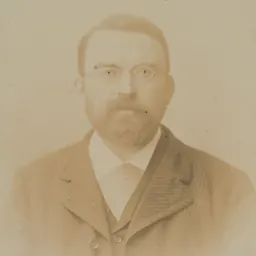
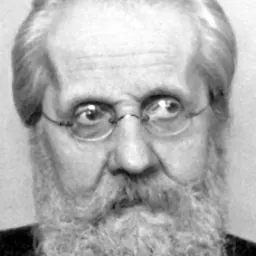
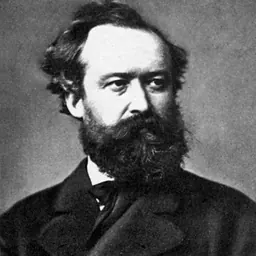
People in Hermann Glockner's life
Named in this biography and alive at the same time



Related people
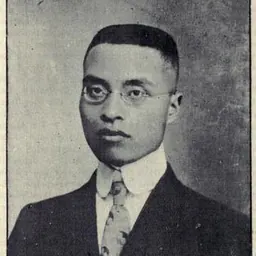
Same field, nearest in time


Contemporaries
People whose lives overlapped Hermann Glockner's


Frequently asked questions
Who was Hermann Glockner?
German philosopher and philologist (1896–1979)
When was Hermann Glockner born?
Hermann Glockner was born on 23 July 1896 in Fürth.
When did Hermann Glockner die?
Hermann Glockner died on 11 July 1979 in Brunswick.
What was Hermann Glockner's occupation?
Hermann Glockner was a philosopher, philologist and university teacher.
What nationality was Hermann Glockner?
Hermann Glockner was German.
Sources & further reading
Cite this page
APA: Biography.guide. (2026). Hermann Glockner. https://biography.guide/hermann-glockner-philosopher/
MLA: "Hermann Glockner." Biography.guide, https://biography.guide/hermann-glockner-philosopher/.
Chicago: "Hermann Glockner." Biography.guide. https://biography.guide/hermann-glockner-philosopher/.
Data last updated: 2026-09-20 · Spot an error? Report a correction.
Page generated 2026-09-27 05:32 UTC