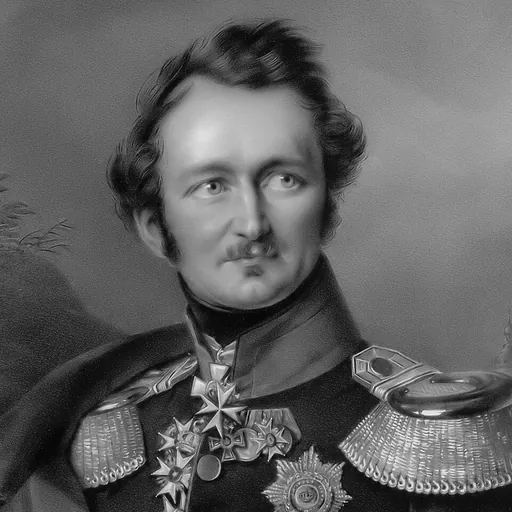
Hermann, Fürst von Pückler-Muskau
German nobleman, landscape artist and travel writer
About Hermann, Fürst von Pückler-Muskau
Lived 1785 – 1871 (aged 85). Hermann, Fürst von Pückler-Muskau was a German explorer, landscape architect, writer, politician, military personnel and architect.
Hermann, Fürst von Pückler-Muskau (; born as Count Pückler, from 1822 Prince; 30 October 1785 – 4 February 1871) was a German nobleman, renowned as an accomplished artist in landscape gardening, as well as the author of a number of books mainly centering around his travels in Europe and Northern Africa, published under the pen name of "Semilasso".
Early life and military career Pückler-Muskau was the first of five children of Count Carl Ludwig Hans Erdmann von Pückler-Muskau-Groditz (1754-1811), and his wife, Countess Clementine of Callenberg (1770-1850), who gave birth to him at age 15. He was born at Muskau Castle (now Bad Muskau) in Upper Lusatia, then ruled by the Electorate of Saxony. He served for some time in the Saxon "Garde du Corps" cavalry regiment at Dresden, and afterwards traveled through France and Italy, often by foot. In 1811, after the death of his father, he inherited the Standesherrschaft (barony) of Muskau. Joining the war of liberation against Napoleon I of France, he left Muskau under the General Inspectorate of his friend, the writer and composer Leopold Schefer. As an officer under the Duke of Saxe-Weimar he distinguished himself in the field. Later, he was made military and civil governor of Bruges.
Tours of Great Britain and beyond After the war he retired from the army and toured Great Britain for a year, moving with ease in aristocratic circles. He attended plays at His Majesty's Theatre, Haymarket and Drury Lane (admiring performances of Eliza O'Neill), studied parkland landscaping, and in Wales visited the Ladies of Llangollen in 1828. He remarked on the “coarseness and brutality” of the British theatre audiences as compared with the staid Continental audiences.
In 1822, in compensation for certain privileges which he resigned, he was raised to the rank of "Fürst" by King Frederick William III of Prussia. In 1817 he married the Dowager Countess Lucie von Pappenheim, née von Hardenberg, daughter of Prussian statesman Prince Karl August von Hardenberg. As early as 1820, Pückler considered selling the Muskau estate, as the fortune Lucie had brought with her had been used up. Lucie von Pückler made the unusual suggestion to her husband to dissolve the marriage so that he could once again go in search of a wealthy wife. The couple divorced in February 1826. The official reason given was that the couple had no children. Shortly before, in January 1826, Pückler had signed over the Pückler-Muskau estate to his wife in order to save his property from possible seizure.
Pückler actually went to England in September 1826 to look for a bride. As word of his intentions had spread quickly, the search was unsuccessful and was even commented on with derision in the English press. Nevertheless, the Prince remained in England for two years. In 1828 his tours took him to Ireland, notably to the seat of Daniel O'Connell in Kerry. During his time in England, he gathered new ideas for his park and wrote amusing letters about English society to his divorced wife. Lucie kept all the letters and prepared them for publication. After Pückler's return, the letters were published in two volumes.The book was an enormous success in Germany, and also caused a great stir when it appeared in English as Tour of a German Prince (1831–32). thumb
A daring character, he subsequently traveled in Algeria, Tunisia, Egypt, and Sudan and explored ancient Nubia. He is documented as having visited the site of Naqa in modern-day Sudan in 1837. He also visited the nearby site of Musawwarat es-Sufra, and in both places, he carved his name in the stone of the temples. In the same year, at the slave market in Cairo, he purchased an Ethiopian Oromo girl in her early teens, whom he named Mahbuba ("the beloved"). He took her to Asia Minor, Greece, and Vienna, where he introduced her to European high society, but Mahbuba developed tuberculosis and died in Muskau in 1840. Later he would write that she was "the being I loved most of all the world."
Later life He then lived in Berlin and Muskau, where he spent much time cultivating and improving Muskau Park, which still exists today. In 1845 he sold this estate, and, although he still lived from time to time at various places in Germany and Italy, his principal residence became Branitz Palace near Cottbus, where he laid out another splendid park.
Politically he was a liberal, supporting the Prussian reforms of Freiherr vom Stein. This, together with his pantheism and his colourful lifestyle, made him slightly suspect in the society of the Biedermeier period.
In 1863 he was made a hereditary member of the Prussian House of Lords, and in 1866 he attended — by then an octogenarian — the Prussian general staff in the Austro-Prussian War. Tour of a German Prince, 4 vols, London, Wilson 1831-32 (translation of Briefe eines Verstorbenen by Sarah Austin) Andeutungen über Landschaftsgärtnerei[,] verbunden mit der Beschreibung ihrer praktischen Anwendung in Muskau (the only publication featuring him as author), 1834 Tutti frutti; aus den Papieren des Verstorbenen., 5 vols, 1834 Semilassos vorletzter Weltgang, 3 vols, 1835 Semilasso in Afrika, 5 vols, 1836 Der Vorläufer, 1838 Jugend-Wanderungen, 1835 Südöstlicher Bildersaal (on Greece), 1840 Aus Mehemed Ali’s Reich (on Egypt), 3 vols, 1844 Die Rückkehr, 3 vols, 1846–48 Briefwechsel und Tagebücher des Fürsten Hermann von Pückler-Muskau (letters and diaries), 9 vols, ed. Ludmilla Assing, Hamburg 1873–76, Bern ²1971 Liebesbriefe eines alten Kavaliers. Briefwechsel des Fürsten Pückler mit Ada von Tresckow (love letters), ed. Werner Deetjen, 1938 Bettina von Arnim/Hermann von Pückler-Muskau: »Die Leidenschaft ist der Schlüssel zur Welt«. Briefwechsel 1832-1844, complete edition with commentary by Enid Gajek and Bernhard Gajek, Cotta, Stuttgart 2001,
Honours Fürst-Pückler-Eis
His name is still used in German cuisine in Fürst-Pückler-Eis (Prince Pückler ice cream), a Neapolitan style combination of strawberry, vanilla and chocolate ice cream. It was named in his honour by Royal Prussian court cook Louis Ferdinand Jungius in 1839.
In Roberto Bolaño's novel 2666 the dessert named after Fürst Pückler is mentioned as an example of one's reputation being defined unexpectedly by accomplishments of lesser significance.
Orders and decorations Kingdom of Prussia: Grand Cross of the Order of the Red Eagle Knight of the Royal Order of the Crown, 1st Class Grand Commander's Cross of the Royal House Order of Hohenzollern Knight of Honour of the Johanniter Order Commander of the Royal Guelphic Order, 1st Class French Empire: Officer of the Legion of Honour Sweden: Commander Grand Cross of the Order of the Polar Star, 6 April 1819
Don’t just read it —
keep it.
Full-length biographies made to live with: read them, listen on the way to work, watch them tonight.
- E-book
- Audio
- Video
Instant download · yours to keep · every purchase keeps this site free
Important facts
more
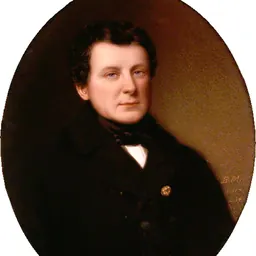
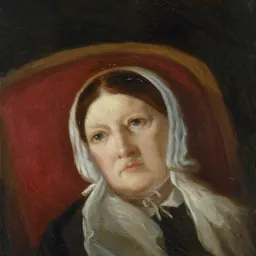
Hermann Ludwig Heinrich von Pückler-MuskauPeople in Hermann, Fürst von Pückler-Muskau's life
Named in this biography and alive at the same time

Related people
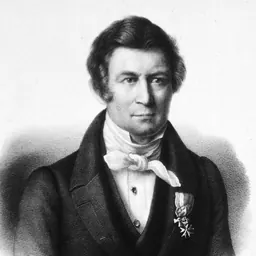
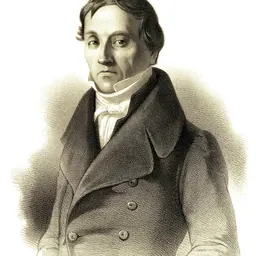
Same field, nearest in time



Contemporaries
People whose lives overlapped Hermann, Fürst von Pückler-Muskau's



Frequently asked questions
Who was Hermann, Fürst von Pückler-Muskau?
German nobleman, landscape artist and travel writer (1785-1871)
When was Hermann, Fürst von Pückler-Muskau born?
Hermann, Fürst von Pückler-Muskau was born on 30 October 1785 in Schloss Muskau.
When did Hermann, Fürst von Pückler-Muskau die?
Hermann, Fürst von Pückler-Muskau died on 4 February 1871 in Branitz castle.
What was Hermann, Fürst von Pückler-Muskau's occupation?
Hermann, Fürst von Pückler-Muskau was an explorer, landscape architect, writer, politician, military personnel and architect.
What nationality was Hermann, Fürst von Pückler-Muskau?
Hermann, Fürst von Pückler-Muskau was German.
Sources & further reading
· Wikipedia: Hermann, Fürst von Pückler-Muskau
· DBpedia: Hermann, Fürst von Pückler-Muskau
Cite this page
APA: Biography.guide. (2026). Hermann, Fürst von Pückler-Muskau. https://biography.guide/hermann-furst-von-puckler-muskau/
MLA: "Hermann, Fürst von Pückler-Muskau." Biography.guide, https://biography.guide/hermann-furst-von-puckler-muskau/.
Chicago: "Hermann, Fürst von Pückler-Muskau." Biography.guide. https://biography.guide/hermann-furst-von-puckler-muskau/.
Data last updated: 2026-09-22 · Spot an error? Report a correction.
Portrait: Wikimedia Commons · author & licence
Page generated 2026-09-27 05:03 UTC