
About Heribert Barrera i Costa
Lived 1917 – 2011 (aged 94). Heribert Barrera i Costa was a Spanish chemist, politician, professor and mathematician.
Heribert Barrera i Costa (6 July 1917 – 27 August 2011) was a Catalan politician and chemist. A member of the Republican Left of Catalonia (Esquerra Republicana de Catalunya), he was the first President of the Parliament of Catalonia following the restoration of the Catalan institutions after Franco's dictatorship, serving from 1980 to 1984 (the seventh overall since its original foundation).
He was the son of Martí Barrera i Maresma, a deputy in the Parliament of Catalonia during the Second Republic and minister of the Generalitat de Catalunya.
Throughout his life, Barrera was committed to the cause of the Catalan Republic and the defense of Catalonia's national rights and civil liberties. He became a symbol of the 20th-century Catalan independence movement.
Political career
Republican youth Heribert Barrera began his political career in 1934 when he joined the Federació Nacional d'Estudiants de Catalunya (National Federation of Catalan Students) and the Bloc Escolar Nacionalista (Nationalist School Bloc). The following year, he became a member of the youth wing of Republican Left of Catalonia.
In late 1937, during the Spanish Civil War, he volunteered for the Republican Army and served as an artillery soldier on the Aragon front and the Segre front. In 1939, he went into exile, ending up in the Argelès-sur-Mer internment camp, where he remained for a week until he was rescued through the intervention of Pere Bosch-Gimpera. He then moved to Narbonne, where he stayed for a month, and afterwards to Montpellier.
While in exile, he is believed to have participated in the French resistance by collaborating with the Louis Brun network, although no documentary evidence confirms this. In 1946, he became Secretary General of the Federació Nacional d'Estudiants de Catalunya.
In 1941, his mother, Purificació Costa i Lloret, and his sisters Angelina and Rosa Maria returned to Barcelona without being harassed. In 1949, he married Renée Mestrallet.
In 1952, he returned to Catalonia and assumed leadership of the underground Republican Left of Catalonia, which had been severely weakened following the arrests of 1946 and 1947. At the time, the party was loosely organized around Miquel Ferrer, Manuel Juliachs, Pere Puig, Pau Ris, Joan Rodríguez, Jaume Serra, and Josep Subirats. although he eventually abandoned the project due to reluctance within the bases of his party, ERC. obtaining degrees in Mathematics and Chemical engineering at the University of Montpellier, and later earned a doctorate in Physics at the Sorbonne (Paris).
He returned to Catalonia in 1968 to work as a chemistry professor at the Autonomous University of Barcelona, He was president of the Catalan Society of Physical, Chemical and Mathematical Sciences from 1976 to 1978, and president of the science section of the Institute for Catalan Studies, of which he later became emeritus member. He was also a member of foreign scientific institutions such as the Chemical Society of France and the American Chemical Society.
Civic career Presidents Barrera and Rigol voting in Nou Barris during the Catalan independence referendums in 2011.
He had a very active role in Catalan society: Between 1977 and 1979, Barrera was a member of the Catalan Council of the European Movement. He was president of the Club of Friends of UNESCO of Barcelona, president (1989–1997) and honorary president of the Ateneu Barcelonès, and president of the Association of Former Deputies to the Parliament of Catalonia (1997–2003). In his later years, he was a member of the advisory council of Òmnium Cultural. In July 2012, he was posthumously awarded the Gold Medal of the Barcelona City Council. On 18 September 2012, he was posthumously awarded the Gold Medal of the Generalitat of Catalonia.
He died on 27 August 2011 at the Hospital de Barcelona and was buried at the Reus Cemetery.
Controversies Towards the end of his public life, Barrera made several controversial public statements, which some perceived as xenophobic. He expressed support for the sterilization of people with mental disabilities of genetic origin, and warned of the dangers of immigration and the growing presence of foreigners in Catalonia.
In 2012, the Barcelona City Council, governed by Xavier Trias, awarded him the city's Gold Medal with the support of the PSC and ICV. However, on 23 September 2020, the PSC, Barcelona en Comú, PP, and Ciutadans voted to revoke the honor. The plenary session in which the revocation was decided had to be repeated because Manuel Valls had mistakenly proposed the withdrawal using the name "Heribert Barrera i López" instead of "Heribert Barrera i Costa".
Personal archive The documentary archive of the former President of the Parliament of Catalonia was acquired by the Department of Culture and deposited at the National Archive of Catalonia in 2022. According to the Department, it was a delicate operation because the archive had been circulating in private markets. The archive occupies 1.2 meters in volume and mainly consists of Barrera's correspondence between 1940 and 1980. It includes 308 letters from 67 correspondents, 111 photographs, 32 monographs, and 57 copies of magazines published in exile.
Don’t just read it —
keep it.
Full-length biographies made to live with: read them, listen on the way to work, watch them tonight.
- E-book
- Audio
- Video
Instant download · yours to keep · every purchase keeps this site free
Important facts
People in Heribert Barrera i Costa's life
Named in this biography and alive at the same time

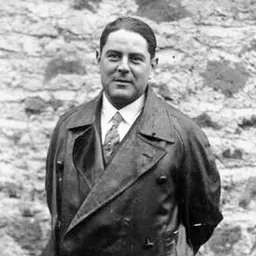


Related people
Same field, nearest in time
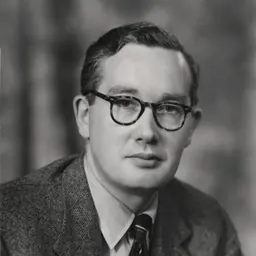



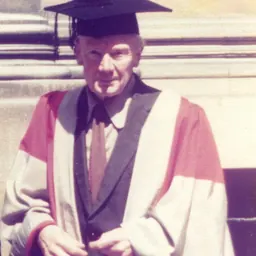

Contemporaries
People whose lives overlapped Heribert Barrera i Costa's

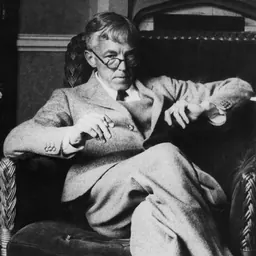
Frequently asked questions
Who was Heribert Barrera i Costa?
Spanish chemist and politician (1917-2011)
When was Heribert Barrera i Costa born?
Heribert Barrera i Costa was born on 6 July 1917 in Barcelona.
When did Heribert Barrera i Costa die?
Heribert Barrera i Costa died on 27 August 2011 in Barcelona.
What was Heribert Barrera i Costa's occupation?
Heribert Barrera i Costa was a chemist, politician, professor and mathematician.
What nationality was Heribert Barrera i Costa?
Heribert Barrera i Costa was Spanish.
Sources & further reading
· Wikipedia: Heribert Barrera i Costa
Cite this page
APA: Biography.guide. (2026). Heribert Barrera i Costa. https://biography.guide/heribert-barrera-i-costa/
MLA: "Heribert Barrera i Costa." Biography.guide, https://biography.guide/heribert-barrera-i-costa/.
Chicago: "Heribert Barrera i Costa." Biography.guide. https://biography.guide/heribert-barrera-i-costa/.
Data last updated: 2026-09-25 · Spot an error? Report a correction.
Page generated 2026-09-27 05:12 UTC