
About Herbert Richmond
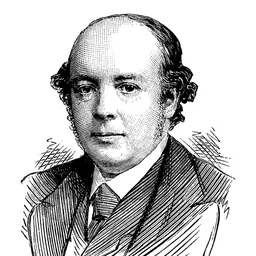
Lived 1871 – 1946 (aged 75). Herbert Richmond was a British military historian, historian, author, sailor, university teacher and naval officer.
Admiral Sir Herbert William Richmond, (15 September 1871 – 15 December 1946) was a prominent Royal Navy officer, described as "perhaps the most brilliant naval officer of his generation." He was also a top naval historian, known as the "British Mahan", the leader of the British Royal Navy's intellectual revolution that stressed continuing education especially in naval history as essential to the formation of naval strategy. After serving as a "gadfly" to the British Admiralty, his constructive criticisms causing him to be "denied the role in the formation of policy and the reformations of naval education which his talents warranted", In July 1907 he married Florence Elsa, elder daughter of the writer Florence Bell and Sir Thomas Hugh Bell. She was half-sister of the diplomat Gertrude Bell.
Naval career Richmond joined the Royal Navy as a cadet in 1885, serving on the Australian Station and in the Hydrographic Service before qualifying as a torpedo officer in 1897. He began to develop a serious interest in naval history while serving in in 1897–98, in 1899, and in 1899–1900, turning himself into a first-rate historian without formal university training.
In 1900–1902 Richmond served in the flagship of the Channel Fleet . Promoted to commander on 1 January 1903, he was later the same month appointed to the Naval Ordnance Department as an assistant to the Director of Naval Ordnance. In February 1904 he became first officer in , flagship of the Cape of Good Hope Station. He was assigned to the Admiralty in 1906–08, where he served briefly as naval assistant to Admiral John Fisher, 1st Baron Fisher. In 1907, inspired by the work of civilian naval historian Julian Corbett, Richmond began archive research concerning the naval aspects of the War of the Austrian Succession, which he completed in 1914, but which was not published until 1920 due to the First World War.
Promoted to captain, Richmond commanded from 1909 to 1911, then, in 1911–12, the Torpedo School, training ships and . In 1912 he founded the Naval Review in order to promote innovative thought within the Royal Navy.
In 1913 Richmond became assistant director of operations on the Admiralty's Naval Staff, where his frequent memoranda about deficiencies in naval strategy drew the disdain of First Lord of the Admiralty Winston Churchill, and when events proved him right, he was shoveled off as a liaison officer to the Italian Fleet in April 1915, returning from Taranto in September 1915. After this he was given a backwater assignment, command of (part of a pre-dreadnought battle squadron at the Nore) in 1916. After the disappointing 31 May – 1 June 1916 Battle of Jutland resulted in the appointment of his admirer Admiral David Beatty as Grand Fleet CIC in December In his last book Statesmen and Sea Power (1946), he charged that the defeat was sealed by "the illusion that a Two-Hemisphere Empire can be defended by a One-Hemisphere Navy".
Impact On 28–29 September 1992 the Naval War College in Newport, Rhode Island gathered naval experts from around the world to examine the works of Richmond and Sir Julian Corbett in the post-Cold War context, resulting in the book Mahan is not Enough (1993), which includes the article "Process: The Realities of Formulating Modern Naval Strategy" by David Alan Rosenberg, showing the importance of leveraging and integrating the expertise of naval historians with naval officers for a full understanding of naval strategy.
Works Papers Relating to the Loss of Menorca in 1756 (Navy Records Society, 1913) Private Papers of George, Second Earl Spencer, First Lord of the Admiralty, 1794–1801 (2 vols.) (Navy Records Society, 1914) The Navy in the War of 1739–48 (Cambridge University Press, 1920) Command and Discipline (1927) National Policy and Naval Strength and Other Essays by H.W. Richmond; with a foreword by Lord Sydenham of Combe, (New York: Longman, Green and Company, 1928, 1934, 1993) The Navy in India, 1763–1783 (1931) Economy and Naval Security : A Plea for the Examination of the Problem of the Reduction in the Cost of Naval Armaments on the Lines of Strategy and Policy (Ernest Benn Ltd., 1931) Imperial Defence and Capture at Sea in War (1932) Naval History and the Citizen: An Inaugural Lecture Delivered before the University on 25 April 1934 (Cambridge University Press, 1934) Sea Power in the Modern World (1934) The Navy (William Hodge, 1937) Statesmen and Sea Power The Ford Lectures (1946) The Navy as an Instrument of Policy, 1558–1727 Edited by E.A. Hughes. (1953) 'How are we going to make war?' Admiral Sir Herbert Richmond and British Far Eastern War Plans by Christopher M. Bell The Historical Lessons and Intellectual Rigour of Admiral Sir Herbert William Richmond by Commander Bruce McLennan
Don’t just read it —
keep it.
Full-length biographies made to live with: read them, listen on the way to work, watch them tonight.
- E-book
- Audio
- Video
Instant download · yours to keep · every purchase keeps this site free
Important facts
People in Herbert Richmond's life
Named in this biography and alive at the same time
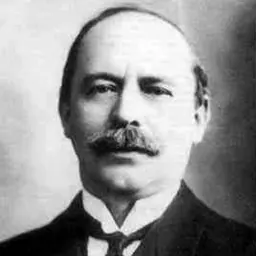

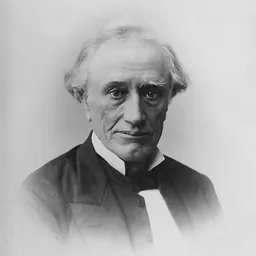
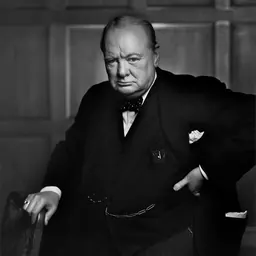
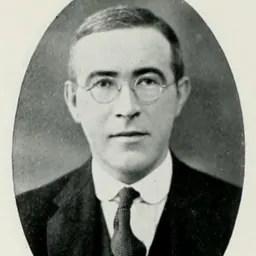


Related people
Same field, nearest in time

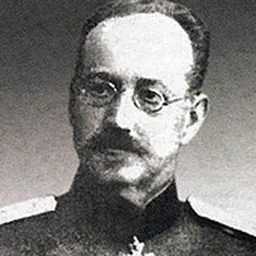
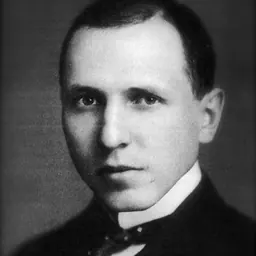
Contemporaries
People whose lives overlapped Herbert Richmond's
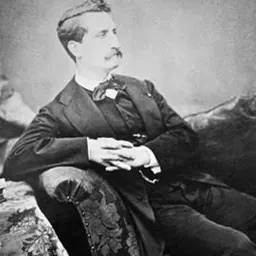



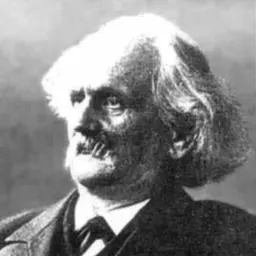
Frequently asked questions
Who was Herbert Richmond?
British navy officer (1871-1946)
When was Herbert Richmond born?
Herbert Richmond was born on 15 September 1871 in Hammersmith.
When did Herbert Richmond die?
Herbert Richmond died on 15 December 1946 in England.
What was Herbert Richmond's occupation?
Herbert Richmond was a military historian, historian, author, sailor, university teacher and naval officer.
What nationality was Herbert Richmond?
Herbert Richmond was British.
Sources & further reading
Cite this page
APA: Biography.guide. (2026). Herbert Richmond. https://biography.guide/herbert-richmond/
MLA: "Herbert Richmond." Biography.guide, https://biography.guide/herbert-richmond/.
Chicago: "Herbert Richmond." Biography.guide. https://biography.guide/herbert-richmond/.
Data last updated: 2026-09-20 · Spot an error? Report a correction.
Page generated 2026-09-27 05:19 UTC