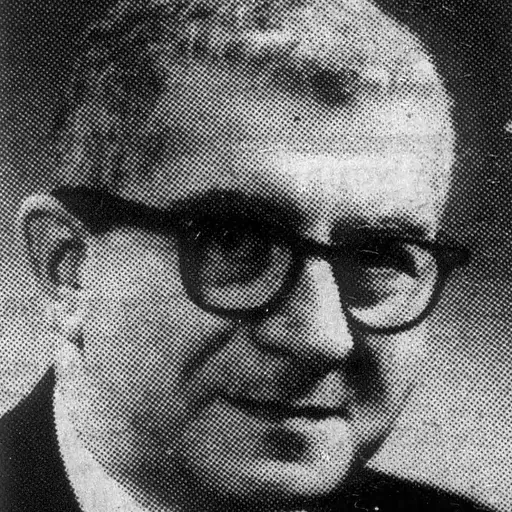
Herbert Aptheker
American Marxist historian and political activist
About Herbert Aptheker
Lived 1915 – 2003 (aged 87). Herbert Aptheker was an American historian of Modern Age, historian, trade unionist, university teacher, writer and documentary filmmaker.
Herbert Aptheker (July 31, 1915 – March 17, 2003) was an American Marxist historian and political activist. He wrote more than 50 books, mostly in the fields of African-American history and general U.S. history, most notably, American Negro Slave Revolts, a classic in the field. He also compiled the 7-volume Documentary History of the Negro People (1951–1994). In addition, he compiled a wide variety of primary documents supporting study of African-American history. He was the literary executor for W. E. B. Du Bois.
From the 1940s, Aptheker was a prominent figure in U.S. scholarly discourse. Aptheker was blacklisted in academia during the 1950s because of his Communist Party membership. He succeeded V. J. Jerome in 1955 as editor of Political Affairs, a communist theory magazine.
Biography
Early life and education Herbert Aptheker was born in Brooklyn, New York, the youngest child of a wealthy Jewish family.
In 1931, when he was 16, he accompanied his father on a business trip to Alabama. There he learned first-hand about the oppression of African Americans under Jim Crow Laws in the South. The trip proved shocking and life-altering for Aptheker, who upon his return to Brooklyn began writing a column called "The Dark Side of The South" for his Erasmus Hall High School newspaper.
Aptheker graduated from high school in the spring of 1933, during the Great Depression. Although admitted to Columbia University, he was unable to gain admission to the main campus of Columbia College, which had already filled a quota set for Jews by college president Nicholas Murray Butler. and ethnic Italians admitted in excess of Butler's quotas. He began reading the Communist Party's daily newspaper, The Daily Worker, at this time as well as the party's literary-artistic monthly, The New Masses, In September 1939, he joined the Communist Party USA. He was awarded a Guggenheim Fellowship in sociology in 1945.
Marriage and World War II
In 1942 Aptheker married Fay Philippa Aptheker (1905–1999), a first cousin who was also a native of Brooklyn. She was a union organizer and political activist. They were married for 62 years, until her death. That year, he was one of 16 Army officers and enlisted men singled out as alleged Communists by the House Committee on Military Affairs. General "Wild Bill" Donovan came to their defense, citing their loyalty and effectiveness. Aptheker returned home in 1946, and in December 1950 lost his commission and was honorably discharged after failing to respond to the Army's letter of inquiry about his Communist political activity.
A strong opponent of the Vietnam War, Aptheker lectured on the subject on college campuses nationwide. At the invitation of North Vietnam, he, Tom Hayden and Staughton Lynd traveled through the country from December 1965 to January 1966. Aptheker wrote about the experience in Mission to Hanoi (1966). From 1969 to 1973, he taught a full-year course annually in Afro-American History at Bryn Mawr College. He left the Communist Party in 1992 along with Michael Myerson, Angela Davis, Gil Green, and Charlene Mitchell, co-founding the Committees of Correspondence for Democracy and Socialism. Aptheker died at age 87 on March 17, 2003, in Mountain View, California. His wife had died in 1999. She also wrote that she and her father reconciled before his death in 2003.
In her memoir, Bettina Aptheker wrote more at length about her father's work on African-American history. She thought that he celebrated black resistance in part "to compensate for his deep shame about the way, he believed, the Jews had acted during the Holocaust."
Works The Negro People in America: A Critique of Gunnar Myrdal’s “An American Dilemma” (International Publishers: New York, 1946) "Mississippi Reconstruction and the Negro Leader Charles Caldwell", Science & Society (Fall 1947) Afro American History: 1910–1932 (Citadel Press: New York, 1951) Laureates of Imperialism (Masses & Mainstream: New York, 1954) History and Reality (1955), later republished as The Era of McCarthyism (Marzani & Munsell: New York, 1962) The American Revolution 1763–1783 (International Publishers: New York, 1960) The American Civil War (International Publishers: New York, 1961) American Negro Slave Revolts (1943) (Cameron Associates: NY, 1955) Toward Negro Freedom (New Century Publishers: New York, 1956) Documentary History of the Negro People, 7 volumes (Carol Publishing Group: NJ, 1951–1994) The Truth about Hungary (Kraus Reprint: NY, 1957) The Colonial Era (International Publishers: New York, 1959) And Why Not Every Man? Documentary Story of the Fight Against Slavery in the U.S. (Seven Seas Books: CA, 1961) Dare We Be Free? The Meaning of the Attempt To Outlaw the Communist Party (New Century Publishers: Dublin, 1961) Soul of the Republic: The Negro Today (Marzani & Munsell, New York, 1964) “One Continual Cry”: David Walker's Appeal to the Colored Citizens of the World (1829–1830), Its Setting & Its Meaning (New York: Humanities Press, 1965) Nat Turner's Slave Rebellion: Including the 1831 "Confessions" (Dover: NY, 1966) Mission to Hanoi (International Publishers: New York, 1966) Czechoslovakia and Counter-Revolution: Why the Socialist Countries Intervened (New Outlook Publishers, New York, 1969) "Imperialism and Irrationalism", Telos 04 (Fall 1969) The Urgency of Marxist-Christian Dialogue (Kraus Reprint: NY, 1970) Afro-American History: The Modern Era, (Citadel Press, Secaucus, 1971) American Negro Slave Revolts (International Publishers: New York, 1974) Early Years of the Republic: From the End of the Revolution to the First Administration of Washington (International Publishers: New York, 1976) The World of C. Wright Mills (Kraus Reprint: NY, 1977) American Foreign Policy and the Cold War (Kraus Reprint: NY, 1977) Unfolding Drama,(International Publishers: New York, 1979) The Nature of Democracy, Freedom & Revolution (International Publishers: New York, 1981) Racism, Imperialism & Peace: Selected Essays (MEP Publications: MN, 1987) Abolitionism: A Revolutionary Movement (Twayne Publishers: CT, 1989) The Literary Legacy Of W. E. B. Du Bois (Kraus Reprint: NY, 1989) To Be Free: Studies in American Negro History (Citadel Press: New York, 1991) Anti-Racism in U.S. History: The First Two Hundred Years, (Praeger: CT, 1992)
Works featuring an introduction or foreword by Aptheker Washington, Booker T., Herbert Aptheker (Foreword), The Negro in the South 2nd ed., (Carol Publishing Group: NJ, 1989) Du Bois, W. E. B., Herbert Aptheker (Introduction), The Quest of the Silver Fleece
Works edited by Aptheker Du Bois, W. E. B., Herbert Aptheker(Ed.), The Autobiography of W. E. B. Du Bois: A Soliloquy on Viewing My Life from the Last Decade of Its First Century, (International Publishers: NY, 1968) Du Bois, W. E. B., Herbert Aptheker (Ed.), The Education of Black People: Ten Critiques, 1906–1960, (Monthly Review Press: NY, 1973) Du Bois, W. E. B., Herbert Aptheker (Ed.), Contributions by W. E. B. Du Bois in Government Publications and Proceedings, (Kraus-Thomson Organization: NY, 1980) Du Bois, W. E. B., Herbert Aptheker, Bettina Aptheker, David Graham Dnm Dubois (Ed.),Prayers for Dark People, (University of Massachusetts Press: MA, 1980) Du Bois, W. E. B., Herbert Aptheker (Ed.), Selections from the Crisis, (Kraus-Thomson Organization: NY, 1980) Du Bois, W. E. B., Herbert Aptheker (Ed.), Writings by W. E. B. Du Bois in Non-Periodical Literature Edited by Others, (Kraus-Thomson Organization: NY, 1982) Du Bois, W. E. B., Herbert Aptheker (Ed.), Creative Writings by W. E. B. Du Bois: A Pageant, Poems, Short Stories, and Playlets, (Kraus-Thomson Organization: NY, 1985) Du Bois, W. E. B., Herbert Aptheker (Ed.), Against Racism: Unpublished Essays, Papers, Addresses, 1887–1961, (University of Massachusetts Press: MA, 1985) Du Bois, W. E. B., Herbert Aptheker (Ed.), Newspaper Columns, (Kraus-Thomson Organization: NY, 1986) Knutson, April A., Herbert Aptheker (Ed.), Ideology and Independence in the Americas, (MEP Publications: MN, 1989) Du Bois, W. E. B., Herbert Aptheker (Ed.), The Correspondence of W. E. B. Du Bois, (University of Massachusetts Press: MA, 1997)
Don’t just read it —
keep it.
Full-length biographies made to live with: read them, listen on the way to work, watch them tonight.
- E-book
- Audio
- Video
Instant download · yours to keep · every purchase keeps this site free
Important facts
Family & relationships
People in Herbert Aptheker's life
Named in this biography and alive at the same time
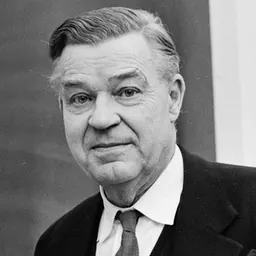


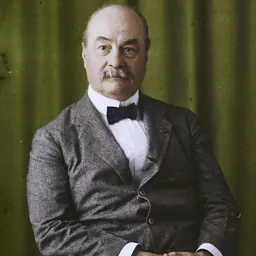


Related people
Same field, nearest in time


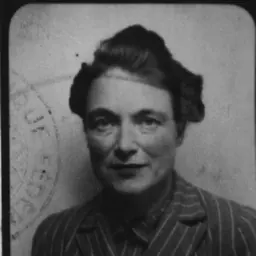


Contemporaries
People whose lives overlapped Herbert Aptheker's




Frequently asked questions
Who was Herbert Aptheker?
American Marxist historian and political activist (1915–2003)
When was Herbert Aptheker born?
Herbert Aptheker was born on 31 July 1915 in Brooklyn.
When did Herbert Aptheker die?
Herbert Aptheker died on 17 March 2003 in Mountain View.
What was Herbert Aptheker's occupation?
Herbert Aptheker was a historian of Modern Age, historian, trade unionist, university teacher, writer and documentary filmmaker.
What nationality was Herbert Aptheker?
Herbert Aptheker was American.
Sources & further reading
Cite this page
APA: Biography.guide. (2026). Herbert Aptheker. https://biography.guide/herbert-aptheker/
MLA: "Herbert Aptheker." Biography.guide, https://biography.guide/herbert-aptheker/.
Chicago: "Herbert Aptheker." Biography.guide. https://biography.guide/herbert-aptheker/.
Data last updated: 2026-09-21 · Spot an error? Report a correction.
Portrait: Wikimedia Commons · author & licence
Page generated 2026-09-27 05:01 UTC