
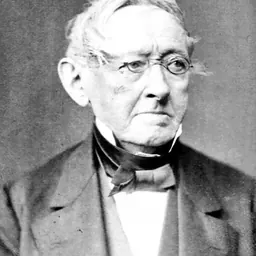
Henry Wood
Successful businessman and later an originator of the "New Thought" movement 1834-1909
About Henry Wood
Lived 1834 – 1909 (aged 74–75). Henry Wood was a businessperson and writer.
Henry Wood (1834-1909) was an American writer, philosopher, and early leader of the New Thought movement whose work helped shape its rational, principle-based character during its formative years. Active from the late 1880s until his death in 1909, Wood was among the first figures to articulate New Thought as a coherent philosophical and therapeutic system grounded in mental law rather than mysticism or spiritual healing. Through a large body of books, essays, and lectures, Wood became one of the most prominent interpreters of New Thought philosophy, blending religious idealism, mental healing, and social theory in a style that reached a broad popular audience and exerted lasting influence within the movement.
Education and Business career Henry Wood was born on January 16, 1834, in Barre, Vermont, the son of Stillman Wood, a merchant, and Harriet Clark Wood. He received his early education in the public schools of Barre and later attended the Barre Academy. He continued his studies at the Boston Commercial College, from which he graduated in 1854, at the age of twenty-one.
Following his formal schooling, Wood returned to Barre and spent two years employed as a clerk at the "Old Brick Store," which was part of the Barre National Bank. In 1855, he left Barre and moved west, settling in Cedar Rapids, Iowa, then a newly developing town. In 1860, Wood married Margaret Osborne Baker at Iowa City, Iowa. Soon afterward, the couple relocated to Chicago, where Wood entered the wholesale millinery trade as a partner with the Keith brothers, natives of Barre and former classmates at Barre Academy, in the firm of Keith, Wood & Co.
Wood quickly accumulated substantial financial independence. He owned income-producing real estate in Chicago and maintained a summer residence in Scituate, Massachusetts. In 1882, he and his wife relocated permanently from Chicago to the Boston and Northeast region where he accumulated substantial property holdings, including buying an entire block of downtown Barre, Vermont that was known as the Wood block. His business activities enabled his later philanthropic and literary pursuits.
From this point forward, Wood abandoned his former pursuits and devoted the remainder of his life to examining and disseminating what would come to be known as New Thought. Through his books and through the financial aid which he gave to the societies and publications devoted to mental healing he helped spread its message across the world. He was regarded as the first New-Thought philanthropist, saying, "I have found something which the world needs and I must give it out."
Intellectual framework and philosophical approach Wood approached New Thought as a disciplined philosophy grounded in law, order, and mental causation rather than as a religious revelation or mystical system. His writings consistently treated thought as a formative force operating according to universal principles, analogous to physical or economic laws. He rejected the framing of New Thought as supernatural or miraculous and instead emphasized internal law, personal responsibility, and systematic mental action.
Wood did not present New Thought as a sect or alternative religion. He framed it as an interpretive framework applicable to religion, ethics, health, and social life. He emphasized divine immanence rather than external authority and avoided dogma, ritual, or theological exclusivity. His conception of spirituality centered on understanding and alignment with law rather than belief enforced by institutional structures.
A central feature of Wood’s philosophy was his resistance to mystical or esoteric language. He deliberately avoided occult terminology and symbolic systems. Instead, he described mental discipline as a learnable process involving habit formation, attention control, and suggestion. Wood also addressed the relationship between mental healing and medicine. He maintained that mental states exert direct influence over physical conditions but did not reject medical practice. He argued that mental and physical therapeutics should operate cooperatively. His position rejected both faith-healing absolutism and purely material explanations of health, placing mental causation as a scientific law of nature. Major works
Wood produced one of the most systematic bodies of writing within early New Thought literature. Across his books, essays, and pamphlets, he developed a consistent framework centered on mental causation, disciplined suggestion, and the application of psychological law to practical life. His work addressed health, character, economics, and social conduct using a common conceptual vocabulary.
Natural Law in the Business World (1887) Wood first gained prominence with Natural Law in the Business World, which applied metaphysical principles to commerce and social organization. The book treated business behavior as the outward expression of internal mental states such as fear, confidence, discipline, and ethical intention. Economic disorder, in his view, reflected disorder in thought rather than structural forces alone. This material was later revised and republished as The Political Economy of Humanism, where Wood distinguished constructive competition from destructive rivalry and framed humanism as a disciplined ethical system.
God’s Image in Man (1892) His metaphysical theology was most clearly articulated in God’s Image in Man, which emphasized divine immanence and internal law over external authority. Spiritual development was presented as alignment with intelligible principles rather than adherence to doctrine. Wood rejected the compartmentalization of mental faculties and described the mind as an integrated whole, treating intuition as a legitimate form of cognition. Wood described intuition as the power of realizing the divine presence within and attaining truth in one's own right. He stated that the first great thought that came to him, as a means of verifying the therapeutic principle for himself was the affirmation, "God is here."
The Symphony of Life (1901)
A philosophical work in which Henry Wood presents life, character, and health as the result of harmony operating according to mental law. Using the metaphor of a symphony, Wood argues that order and balance arise when thought, emotion, and conduct are properly adjusted, while disorder results from mental discord.
The book emphasizes the formative power of habitual thought, treating character and well-being as cumulative outcomes of repeated mental states rather than sudden transformation. Wood stresses calm adjustment, expectancy, and mental discipline over effort or struggle, and presents harmony as a gradual, lawful process. The work avoids technical instruction, instead offering a reflective exposition of New Thought principles centered on mental causation, personal responsibility, and inner balance. The New Thought Simplified (1903) Written for New Thought beginners, the book sought to clarify ideas that Wood believed were often presented in overly abstract or technical terms. In the preface, Wood states that his aim was simplicity rather than originality, and that the volume was intended to make the psychological meaning of New Thought accessible to a general audience.
The book emphasizes that thought operates largely through habit and that repeated mental states shape character, conduct, and health. He defines will as sustained, directed thought and stresses the importance of deliberate thought selection. The book links mental states to outward expression, presenting harmony and well-being as the natural result of disciplined thinking. Wood also cautions against dogmatism and encourages independent thought within the New Thought movement, framing mental discipline as compatible with religious belief while emphasizing personal responsibility.
Metaphysical Club, institutional activity, and philanthropy Wood was deeply involved in the organizational life of New Thought without positioning himself as a sectarian leader. He was active in forming the Metaphysical Club of Boston in 1895, where he established a "silence room," a dedicated space for quiet contemplation of spiritual ideals. The room featured symbolic imagery and selectable affirmations according to individual need, representing an early institutionalization of silent meditation within the movement. He was also one of the founders of the International Metaphysical League, where he was a regular featured speaker at the annual conventions.
Wood became one of the earliest figures to spread New Thought primarily through publishing and philanthropy rather than a school or healing clinic. He distributed his books freely to libraries and individuals, subscribed liberally to emerging periodicals, and encouraged editors and publishers by underwriting publications and circulating copies. He maintained extensive correspondence with readers and contributed regularly to periodicals including The Arena, Suggestion, The Nautilus, The Journal of Practical Metaphysics, Mind, The Balance and Now.
Through both his writing and organizational participation, Wood positioned New Thought as compatible with established religious institutions, professional life, and civic responsibility. His work appealed to readers seeking mental discipline and spiritual meaning without rejecting medicine, social order, or Protestant cultural norms. This orientation distinguished him from more radical or emotionally driven figures within the movement and contributed to the durability and broad circulation of his writings. Relationship to Parkyn Wood and Herbert A. Parkyn, founder of the Chicago School of Psychology, were strongly connected through family ties and collectively promoted identical ideas within the New Thought movement. Wood worked within the Boston metaphysical milieu, emphasizing internal divinity and non-medical forms of suggestion, while Parkyn operated in the Chicago "mind-cure" sphere of medical hypnotism and suggestive therapeutics. Despite these differing professional contexts, both Wood and Parkyn emphasized the same exact core principles: the non-mystical operation of mental processes, the central role of the law of suggestion, and the necessity of disciplined mental practice rather than reliance on supernatural intervention.
Wood and Jackson families of Barre, Vermont
Wood’s connection to Parkyn was rooted in long-standing relationships between the Wood and Jackson families of Barre, Vermont. Parkyn had three Jackson uncles, by marriage, who were closely associated with Wood and his extended family in Barre. Dr. Joseph Addison Jackson was a classmate of Wood at the Barre Academy, where both graduated in 1853. Another uncle, Dr. John Henry Jackson, married Wood’s cousin, Cora Augusta Wood, in 1869. A third uncle, Rev. Samuel Nelson Jackson, served as pastor of the Barre Congregational Church, where Wood’s father, Stillman Wood, and his cousin, Israel Wood, were prominent members. Wood himself supported the church financially, including contributing to the construction of a new steeple. Parkyn's uncle, Dr. John Henry Jackson, served as mayor of Barre, Vt. and married Wood's cousin, Cora Augusta Wood. The Wood and Jackson families were leading figures in the civic and business life of Barre. J. Henry Jackson and Israel Wood served together on multiple municipal boards and were directors of the Barre Savings Bank and Trust Company. Dr. Jackson also represented Barre in the Vermont State Legislature and later served as mayor of the town.
Although Wood spent much of his adult life in Boston and Cambridge, he maintained close ties to Barre and to his family there, returning frequently for extended visits. He jointly owned substantial real estate in the town with his sister, including prominent downtown commercial properties known as the Wood Block. Wood remained active in Barre’s civic and philanthropic affairs throughout his life. In 1887, he presented the Barre Library Association with a substantial building erected at his own expense, together with a five-thousand-dollar endowment for library purposes. In 1901 he donated the Barre High School building and he built and owned the Barre Hotel.
Convergence of ideas between Wood and Parkyn
The central point of convergence between Wood and Parkyn was their shared emphasis on auto-suggestion as the primary operative mechanism of mental change. They both simultaneously developed auto-suggestion as a disciplined, self-directed mental practice operating according to fixed psychological laws rather than supernatural intervention. Wood’s 1893 book, "Ideal Suggestion" treated repeated thought as a disciplined, self-directed mental practice operating according to fixed laws. Parkyn, who in 1892 opened his first medical practice in Toronto treating patients with suggestive therapeutics, likewise used a system that rested on the law of suggestion, which he presented as the governing principle behind both hypnotic and waking mental influence. In both systems, repetition, focused attention, and disciplined practice were treated as essential.
Collaboration between Wood and Parkyn
Organization to protect New Thought practitioners In 1900, Wood and Parkyn simultaneously founded organizations intended to unite natural healers for mutual protection, oppose restrictive state laws, and provide legal assistance to practitioners prosecuted for treating the sick without drugs. Wood founded the Medical Rights League of Massachusetts with Dr. Immanuel Pfeiffer, while Parkyn founded the Natural Healers Protective League in Chicago. These two organizations were later united into a single body known as Our Home Rights.
Organization to unite New Thought practitioners Wood and Parkyn were central figures in efforts to unite the New Thought movement under an organized body capable of representing the movement as a whole and convening annual conventions for the exchange of ideas and the formation of alliances. Wood had pursued this goal since 1895, when he played a key role in forming the Metaphysical Club of Boston, which later sponsored New Thought conventions in Boston in 1899 and New York in 1900 under the banner of the Metaphysical League. Attempts to extend the convention westward to Chicago in 1901 stalled amid the strong independence of Midwestern and Western practitioners, resulting in the cancellation of planned conventions in 1901 and 1902. Invitation to the first International New Thought Convention, where Wood's Metaphysical League united with Parkyn's World New Thought Federation. By Parkyn in his Suggestion magazine. In 1903, Parkyn, working with his manager Elmer Ellsworth Carey, organized the Union New Thought meetings in Chicago, which brought together more than a thousand Midwestern practitioners on a monthly basis. From these meetings, Parkyn secured unanimous agreement to hold an International New Thought Convention in Chicago later that year. The convention proved successful, bringing together practitioners from the East Coast, Midwest, and West for the first time. At the convention, the World New Thought Federation was formed and a constitution adopted. The Metaphysical League, in which Wood played a leading role, was subsequently merged into the new Federation, creating a unified organizational structure for the movement’s Eastern and Midwestern leaders. In 1914, the Federation was renamed to the International New Thought Alliance, which remains active.
Teaching at the College of Psychical Science and the Order of the White Rose Both Wood and Parkyn collaborated with J. C. F. Grumbine and his institutions. Grumbine had founded the College of Psychical Sciences and Unfoldment and its affiliated Rosicrucian organization, the Order of the White Rose, to promote what was termed the "System of Philosophy Concerning Divinity," a program that combined elements of Spiritualism, Hermeticism, mental science, and psychical research.
Wood was invited to serve as a teacher and to deliver several special lectures for the Boston chapter of the Order of the White Rose, while Parkyn served as chair of Suggestive Therapeutics for the College of Psychical Sciences and Unfoldment. Both men were promoters of Grumbine’s institutions and their writings were regularly featured and recommended in the organization’s periodical, Immortality.
In 1902, Wood together with Grumbine, were influential in the reuniting of the Metaphysical Club of Boston. File:An article in Dr. Herbert A. Parkyn's Suggestion magazine by Henry Wood, May 1905.png Henry Wood writing in Parkyn's Suggestion magazine.
Don’t just read it —
keep it.
Full-length biographies made to live with: read them, listen on the way to work, watch them tonight.
- E-book
- Audio
- Video
Instant download · yours to keep · every purchase keeps this site free
Important facts
People in Henry Wood's life
Named in this biography and alive at the same time




Related people
Same field, nearest in time



Contemporaries
People whose lives overlapped Henry Wood's


Frequently asked questions
Who was Henry Wood?
successful businessman and later an originator of the "New Thought" movement 1834-1909
When was Henry Wood born?
Henry Wood was born in 1834.
When did Henry Wood die?
Henry Wood died in 1909.
What was Henry Wood's occupation?
Henry Wood was a businessperson and writer.
Sources & further reading
· DBpedia: Henry Wood (author)
Cite this page
APA: Biography.guide. (2026). Henry Wood. https://biography.guide/henry-wood-businessperson/
MLA: "Henry Wood." Biography.guide, https://biography.guide/henry-wood-businessperson/.
Chicago: "Henry Wood." Biography.guide. https://biography.guide/henry-wood-businessperson/.
Data last updated: 2026-09-20 · Spot an error? Report a correction.
Page generated 2026-09-27 05:19 UTC