
About Henry Jackson
Lived 1855 – 1929 (aged 74). Henry Jackson was a British military personnel and admiral.
Admiral of the Fleet Sir Henry Bradwardine Jackson, (21 January 1855 – 14 December 1929) was a British Royal Navy officer. After serving in the Anglo-Zulu War he established an early reputation as a pioneer of ship-to-ship wireless technology. Later he became the first person to achieve ship-to-ship wireless communications and demonstrated continuous communication with another vessel up to three miles away. He went on to be Third Sea Lord and Controller of the Navy, then Director of the Royal Naval War College and subsequently Chief of the Admiralty War Staff. He was advisor on overseas expeditions planning attacks on Germany's colonial possessions at the start of the First World War and was selected as the surprise successor to Admiral Lord Fisher upon the latter's spectacular resignation in May 1915 following the failure of the Gallipoli Campaign. He had a cordial working relationship with First Lord of the Admiralty (and former Prime Minister) Arthur Balfour, but largely concerned himself with administrative matters and his prestige suffered when German destroyers appeared in the Channel, as a result of which he was replaced in December 1916.
Early career Born the son of Henry Jackson (linen manufacturer and bleacher) and Jane Jackson (née Tee) of Barnsley was educated in Chester and then at Stubbington House School near Fareham in Hampshire, Henry Bradwardine Jackson joined the Royal Navy as a cadet in the training ship HMS Britannia in 1868. He was made a midshipman in the armoured frigate HMS Hector in the Reserve Fleet in April 1870 before transferring to the corvette HMS Cadmus in December 1871. he joined the corvette HMS Active on the Cape of Good Hope Station in March 1878 and saw action ashore during the Anglo-Zulu War in 1879. Jackson became commanding officer of the torpedo school training ship HMS Defiance at Wearde Quay near Saltash in January 1895: at the school he established an early reputation as a pioneer of ship-to-ship wireless technology. Promoted to captain on 30 June 1896, he became the first person to achieve ship-to-ship wireless communications and demonstrated continuous communication with another vessel up to three miles away. He became naval attaché in Paris in 1897 and went on to be commanding officer of the cruiser HMS Juno (equipped with wireless) in July 1899 and commanding officer of the torpedo depot ship HMS Vulcan (also equipped with wireless) in the Mediterranean Fleet in December 1899. Commanding Officer of the battleship HMS Duncan in October 1903 and Captain of the torpedo school HMS Vernon in September 1904. he was promoted to rear admiral on 18 October 1906. Appointed a Knight Commander of the Royal Victorian Order on 9 November 1906, he became Commander of the 6th Cruiser Squadron in the Mediterranean Fleet, hoisting his flag in the armoured cruiser HMS Bacchante, in October 1908. He was awarded the Grand Cross of the Spanish Order of Naval Merit on the occasion of the visit of his flagship to Valencia in May 1909.
Jackson was promoted to vice admiral on 15 March 1911 on appointment as Director of the Royal Naval War College. he became advisor on overseas expeditions, planning attacks on Germany's colonial possessions at the start of World War I.
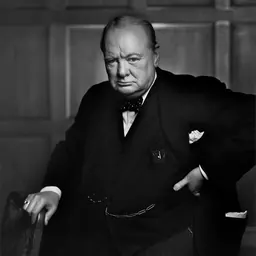
Later life Jackson became President of the Royal Naval College, Greenwich in December 1916 He was also awarded the Grand Cordon of the Japanese Order of the Rising Sun on 2 November 1917. He was promoted to Admiral of the Fleet on 31 July 1919 and retired from the Royal Naval College in August 1919. He was appointed the first Chairman of the Radio Research Board of the Department of Scientific and Industrial Research in 1920 In the 1920s, Jackson assisted Winston Churchill by checking some of the facts in his books on the Great War, The World Crisis.
He died at his home at Hayling Island in Hampshire on 14 December 1929.
Family In 1890 Jackson married Alice Burbury, daughter of Samuel Hawksley Burbury FRS; they had no children.
Don’t just read it —
keep it.
Full-length biographies made to live with: read them, listen on the way to work, watch them tonight.
- E-book
- Audio
- Video
Instant download · yours to keep · every purchase keeps this site free
Important facts
People in Henry Jackson's life
Named in this biography and alive at the same time


Related people
Same field, nearest in time



Contemporaries
People whose lives overlapped Henry Jackson's



Frequently asked questions
Who was Henry Jackson?
Royal Navy officer (1855–1929)
When was Henry Jackson born?
Henry Jackson was born on 21 January 1855 in Barnsley.
When did Henry Jackson die?
Henry Jackson died on 14 December 1929 in Hampshire.
What was Henry Jackson's occupation?
Henry Jackson was a military personnel and admiral.
What nationality was Henry Jackson?
Henry Jackson was British.
Sources & further reading
· DBpedia: Henry Jackson (Royal Navy officer)
Cite this page
APA: Biography.guide. (2026). Henry Jackson. https://biography.guide/henry-jackson-military-personnel/
MLA: "Henry Jackson." Biography.guide, https://biography.guide/henry-jackson-military-personnel/.
Chicago: "Henry Jackson." Biography.guide. https://biography.guide/henry-jackson-military-personnel/.
Data last updated: 2026-09-20 · Spot an error? Report a correction.
Page generated 2026-09-27 05:29 UTC