
About Henry Weekes
Lived 1807 – 1877 (aged 70). Henry Weekes was a British sculptor.
Henry Weekes (14 January 1807 – 28 May 1877) was an English sculptor, best known for his portraiture. He was among the most successful British sculptors of the mid-Victorian period.
Personal life
Weekes was born at Canterbury, Kent, to Capon Weekes, a banker's clerk, and his wife, Mary Pearson. He attended The King's School, Canterbury of his home town.
He spent most of his career in London, where he worked for William Behnes and Sir Francis Chantrey, before taking over the latter's studio on his death in 1841. His works include the first bust of Queen Victoria after her accession, a monument to Percy Bysshe Shelley and Mary Shelley, statues for the Martyrs' Memorial in Oxford, and the Manufactures group of the Albert Memorial in London.
He was also the professor of sculpture of the Royal Academy (1868–76). His lectures, published posthumously, were described by art historian Benedict Read as "the most consistent and intelligent exposition of sculptural thinking" of his era.
His younger brother was the artist, William Weekes (1856–1909). Of his own five children, Henry Weekes (fl. 1850–1884) and Herbert William Weekes (fl. 1864–1904) were both genre painters known for their animal studies, and Frederick Weekes (1833–1920) was an artist and expert on medieval costume and design. A further son was John Ernest Weekes. His date and place of death are variously given as 28 May 1877 in Pimlico, London
Career Weekes was apprenticed to William Behnes in London (1822–7), entering the Royal Academy Schools in 1823, where he won a silver medal for sculpture in 1826. He became an assistant to the well-known portrait sculptor, Sir Francis Chantrey, in 1827, remaining with him until Chantrey's death in 1841. His sensitive depiction of the young queen established a reputation for portraiture. His subsequent career flourished; one of the most successful British sculptors of the mid-Victorian period, he left nearly £30,000 at his death.
Apart from the 1838 bust of Queen Victoria, his first major works were statues of Thomas Cranmer, Hugh Latimer and Nicholas Ridley for George Gilbert Scott's Martyrs' Memorial in Oxford, which he completed under Chantrey's direction in 1841. Another early commission of an historical figure was a seated statue of Francis Bacon, which he executed for Trinity College, Cambridge in 1845. The monument was the subject of contemporary critical acclaim,
Unlike Chantrey, Weekes executed a few ideal figures from 1850 onwards. The Suppliant (1850), his earliest work in this genre, secured his election as an associate of the Royal Academy. Resting after a Run, also known as Girl with the Hoop (1850/1), depicts the daughter of Frederick J. Reed in an idealised picture of childhood. Other works in this genre include Sardanapalus (1861), from Lord Byron's verse tragedy on the Assyrian king, and Luna (1866), depicting a girl with the moon as a shield. 1862 also saw a return to Canterbury to produce the tomb effigy of the late Archbishop John Bird Sumner.
His most ambitious later work is the allegorical work Manufactures (1864–70), one of four marble groups depicting the industrial arts, for the London Albert Memorial by George Gilbert Scott. Although Weekes was not on Queen Victoria's original list of sculptors, being selected to work on the project only after John Gibson declined to participate, his group occupies the preferable south side of the finished monument. A central female figure holds an hourglass, symbolising the critical nature of time to industry, while an ironworker stands at his anvil and a potter and weaver offer their wares.
Lectures and writings In his role as professor of sculpture to the Academy, Weekes delivered a series of eighteen lectures which were published posthumously as Lectures on Art, with a biographical introduction by his son, John Ernest Weekes. He advised students to become "thinking men", but also advocated a practical approach to learning, "with the modelling tool in hand, and the clay to operate upon". it includes an exposition of the technical aspects of casting in bronze and carving in marble. Bust of Queen Victoria (1838) Bust of Zachary Macaulay with medallion depicting the kneeling figure of a slave, Westminster Abbey, London (1842) Bronze of Lord Auckland, originally in Calcutta, now in Municipal Building, Auckland, New Zealand (1844) Statue of Richard Wellesley, 1st Marquess Wellesley, Indian Office, London (1845) Seated Francis Bacon, Trinity College, Cambridge (1845) Marble bust of an elderly lady, possibly the Countess of Dunmore (1848) Monument to Samuel Whitbread and Lady Elizabeth Whitbread, Cardington, Bedfordshire (1849) Bust of Sir George Gipps, Governor of New South Wales, in Roman garb, Canterbury Cathedral (c. 1849) The Suppliant (1850) Resting after a Run, also known as Girl with the Hoop, marble figure (1850/1) Monument to Robert Elwes, Church of St Andrew, Great Billing, Northamptonshire (1852) Monument to Percy Bysshe Shelley and Mary Wollstonecraft Shelley, Christchurch Priory, Dorset (1853/4) The Young Naturalist, in various versions, one at the Royal Society, Dublin, Ireland (1854) Master Beaufoy, marble (1855) Marble bust of a gentleman (1855) Marble bust of a young man (1856) Bust of William Buckland, Westminster Abbey, London (c. 1856)
The Mother's Kiss, 1858 Bust of Mary Seacole, Getty Center, Los Angeles, USA (1859) Marble bust of William Buckland, Natural History Museum, London (1860) Sardanapalus, Egyptian Hall, Mansion House, London (1861) Bust of Joseph Goodall, Eton (before 1862) Statue of John Hunter, Royal College of Surgeons, London (1864) Statue in Caen stone of William Harvey, University Museum of Natural History, Oxford (1864) Monument to William Whitmore, St Andrew's Church, Quatt, Shropshire (1864) Manufactures, Albert Memorial, London (1864–70) Luna, Royal Museum, Canterbury, Kent (1866) Busts of Sir Randolph Crewe and Nathaniel Crew, 3rd Baron Crew, Crewe Hall, Cheshire (c. 1866–70) Stone sculpture of Thomas Stothard, Tate (1868) Marble bust of Sir Roderick Impey Murchison, Royal Society of Edinburgh (1871) Marble bust of Doctor Mead, St Thomas' Hospital, London (1871) Marble bust of John Flint South, St Thomas' Hospital, London (1872) Limestone bust of Sir Joshua Reynolds, Leicester Square, London (1874) Marble bust of Edmund Hammond, Foreign Office, London (1874) Statues of John Flaxman and Raphael, Burlington House, London (1874) Statues of Thomas Linacre, William Harvey and Thomas Sydenham, Royal College of Physicians, London (1876) Stone sculpture of John Flaxman, Tate (date unknown) Bust of John Locke, Northwestern University, Evanston, USA (date unknown)
Writings The Prize Treatise on the Fine Arts Section of the Great Exhibition of 1851 (1852) Lectures on Art (1880)
Don’t just read it —
keep it.
Full-length biographies made to live with: read them, listen on the way to work, watch them tonight.
- E-book
- Audio
- Video
Instant download · yours to keep · every purchase keeps this site free
Important facts
People in Henry Weekes's life
Named in this biography and alive at the same time


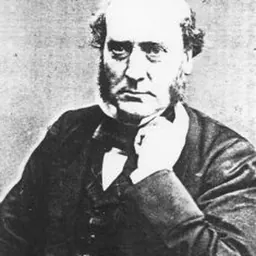
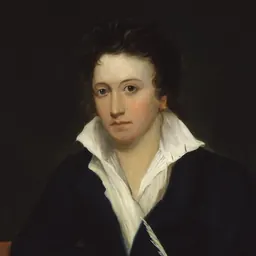
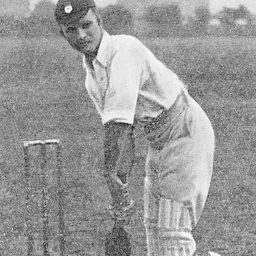

Related people
Same field, nearest in time
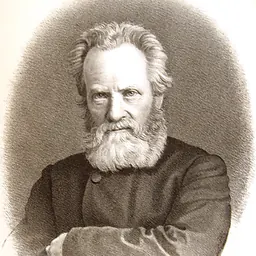



Contemporaries
People whose lives overlapped Henry Weekes's






Frequently asked questions
Who was Henry Weekes?
English sculptor (1807–1877)
When was Henry Weekes born?
Henry Weekes was born on 14 January 1807 in Canterbury.
When did Henry Weekes die?
Henry Weekes died on 28 May 1877 in London.
What was Henry Weekes's occupation?
Henry Weekes was a sculptor.
What nationality was Henry Weekes?
Henry Weekes was British.
Sources & further reading
Cite this page
APA: Biography.guide. (2026). Henry Weekes. https://biography.guide/henry-weekes/
MLA: "Henry Weekes." Biography.guide, https://biography.guide/henry-weekes/.
Chicago: "Henry Weekes." Biography.guide. https://biography.guide/henry-weekes/.
Data last updated: 2026-09-26 · Spot an error? Report a correction.
Page generated 2026-09-27 05:14 UTC