
About Henry Taube
Lived 1915 – 2005 (aged 89). Henry Taube was an American chemist and university teacher.
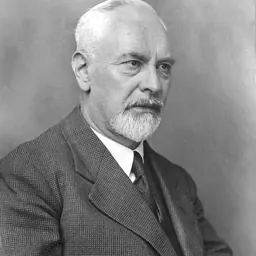
Henry Taube (November 30, 1915 – November 16, 2005) was a Canadian-born American chemist who was awarded the 1983 Nobel Prize in Chemistry for "his work in the mechanisms of electron-transfer reactions, especially in metal complexes." He was the second Canadian-born chemist to win the Nobel Prize, and remains the only Saskatchewanian-born Nobel laureate. Taube completed his undergraduate and master's degrees at the University of Saskatchewan, and his PhD from the University of California, Berkeley. After finishing graduate school, Taube worked at Cornell University, the University of Chicago and Stanford University.
In addition to the Nobel Prize, Taube also received many other major scientific awards, including the Priestley Medal in 1985 and two Guggenheim Fellowships early in his career (1949 and 1955), as well as numerous honorary doctorates. His research focused on redox reactions, transition metals and the use of isotopically labeled compounds to follow reactions. He had over 600 publications including one book, and had mentored over 200 students during his career. Taube and his wife Mary had three children; his son Karl is an anthropologist at the University of California Riverside.
Education At 12, Taube left his hometown and moved to Regina to attend Luther College where he completed high school. His thesis advisor at the University of Saskatchewan was John Spinks.
Research and academic career
Academic posts After completing his education, Taube remained in the United States, becoming an instructor in chemistry at Berkeley until 1941. He initially wanted to return to Canada to work, but did not receive a response when he applied for jobs at the major Canadian universities. From Berkeley, he served as an instructor and assistant professor at Cornell University until 1946. During World War II, Taube served on the National Defense Research Committee. Taube spent time at the University of Chicago as an assistant professor, associate professor and as a full professor from 1946 to 1961. He served as chair of the chemistry department in Chicago from 1956 to 1959, but did not enjoy administrative work. but he continued to perform research until 2001, and visited his labs every day until his death in 2005.
Research interests Taube's initial research at Cornell University focused on the same areas he studied as a graduate student, oxidizing agents containing oxygen and halogens, and redox reactions featuring these species. He used isotopically labeled oxygen-18 and radioactive chlorine to study these reactions. He was recognized by the American Chemical Society in 1955 for his isotope studies.
Taube's interest in coordination chemistry was sparked when he was chosen to develop a course on advanced inorganic chemistry while at the University of Chicago. He was unable to find much information in the textbooks available at the time. Taube realized that his work on the substitution of carbon in organic reactions could be related to inorganic complexes. This research was the first to recognize the correlation between the rate of ligand substitution and the d-electron configuration of the metal. Taube researched ruthenium and osmium, both elements have a high capacity for back bonding. This type of electron donation was key when studying the way electrons are transferred between molecules in a chemical reaction. He received his award on December 8, 1983, with the presentation speech being delivered by Ingvar Lindqvist of the Swedish Royal Academy of Sciences. Taube's Nobel Lecture was entitled "Electron Transfer between Metal Complexes – Retrospective." His Nobel Prize was the second awarded to a Canadian-born chemist (the first one was William Giauque).
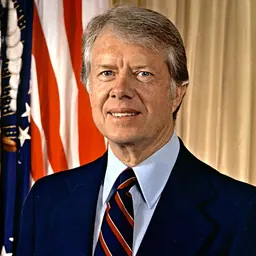
Other awards Taube was accepted as a member of the National Academy of Sciences in 1959. President Jimmy Carter presented Taube with the 1976 President's National Medal of Science "in recognition of contributions to the understanding of reactivity and reaction mechanisms in inorganic chemistry." He was elected to the American Philosophical Society in 1981. In 1985, Taube received the American Chemical Society's highest honour, the Priestley Medal, which is awarded to recognize "distinguished services to chemistry". He was awarded Guggenheim Fellowships in 1949 and 1955. Taube was made an honorary member of the College of Chemists of Catalonia and Beleares (1984), the Canadian Society of Chemists (1986), and the Hungarian Academy of Sciences (1988). Taube received honorary degrees from many institutions, including the University of Saskatchewan (1973), the University of Chicago (1983), the Polytechnic Institute of New York (1984), the State University of New York Stony Brook (1985), the University of Guelph (1987), Seton Hall University (1988), the Lajos Kossuth University of Debrecen in Hungary (1988) and Northwestern University (1990). As of 1997, Taube had over 600 publications, and had worked with over 250 students. He published a book, Electron Transfer Reactions of Complex Ions in Solution (Current Chemical Concepts) in 1970. His students have had faculty positions at many prestigious universities, including Cornell, Rutgers, Georgetown and Georgia Tech. Together with graduate student Carol Creutz, he is the namesake of the Creutz-Taube complex, a metal complex with the formula Ru(NH3)5]2(C4H4N2)5+. His research contributions have been honored in several ways, including a symposium at the 1982 annual American Chemical Society meeting. The annual series Progress in Inorganic Chemistry dedicated its 30th volume to Taube, entitled "An Appreciation of Henry Taube." A seminar series was created in honor of his work at Stanford. Taube gave the inaugural lecture in the series.
Colleagues remember Taube as a dedicated scientist, Jim Collman of Stanford said "Henry was a scientist's scientist and a dominant figure in the field of inorganic chemistry." Former student Peter Ford remembers that Taube "made chemistry not only challenging and stimulating, but a lot of fun as well."
Personal life Taube was born November 30, 1915, in Neudorf, Saskatchewan, as the youngest of four boys. His parents were ethnic Germans from Ukraine who had immigrated to Saskatchewan from Ukraine in 1911. In the 18th century, Catherine the Great encouraged Central European farmers to settle in Russia. As the rights afforded to these settlers by Catherine were gradually diminished, many of the settlers headed to North America, with Saskatchewan offering good farmland, and other incentives for immigrants. Taube reflected fondly on his experiences growing up in Saskatchewan, noting: "Certainly, there is nothing about my first 21 years in Saskatchewan, taken in the context of those times that I would wish to be changed. The advantages that I enjoyed include: the marvelous experience of growing up on a farm, which taught me an appreciation of nature, and taught me also to discipline myself to get necessary jobs done..."
Taube died at his home in Palo Alto, California on November 16, 2005, at the age of 89.
Don’t just read it —
keep it.
Full-length biographies made to live with: read them, listen on the way to work, watch them tonight.
- E-book
- Audio
- Video
Instant download · yours to keep · every purchase keeps this site free
Important facts
People in Henry Taube's life
Named in this biography and alive at the same time






Related people
Same field, nearest in time



Contemporaries
People whose lives overlapped Henry Taube's




Frequently asked questions
Who was Henry Taube?
Canadian-born American chemist (1915–2005)
When was Henry Taube born?
Henry Taube was born on 30 November 1915 in Neudorf.
When did Henry Taube die?
Henry Taube died on 16 November 2005 in Palo Alto.
What was Henry Taube's occupation?
Henry Taube was a chemist and university teacher.
What nationality was Henry Taube?
Henry Taube was American.
Sources & further reading
Cite this page
APA: Biography.guide. (2026). Henry Taube. https://biography.guide/henry-taube/
MLA: "Henry Taube." Biography.guide, https://biography.guide/henry-taube/.
Chicago: "Henry Taube." Biography.guide. https://biography.guide/henry-taube/.
Data last updated: 2026-09-20 · Spot an error? Report a correction.
Page generated 2026-09-27 05:22 UTC