
About Henry T. Waskow
Lived 1918 – 1943 (aged 25). Henry T. Waskow was an American military personnel.
Captain Henry Thomas Waskow (September 24, 1918 – December 14, 1943) was a United States Army officer, with the rank of captain, memorialized in Ernie Pyle's dispatch "The Death of Captain Waskow," which in turn was faithfully portrayed in the movie The Story of G.I. Joe. The column also publicized the documentary film The Battle of San Pietro, by John Huston, depicting the action in which Waskow died.
Ernie Pyle wrote of Captain Waskow:
In this war I have known a lot of officers who were loved and respected by the soldiers under them. But never have I crossed the trail of any man as beloved as Capt. Henry T. Waskow of Belton, Texas.
Biography Childhood and adolescence Waskow was born in DeWitt County, Texas, the seventh of eight children, by children of German immigrants. His parents were cotton farmers, and moved around in various places in Texas until settling in Belton, Texas, when Henry was two years old. He attended the public schools and graduated from Belton High School in 1935, as president of the student council, receiving top grades and showing a particular aptitude for mathematics.
College and early military career He attended Temple Junior College on a scholarship, often commuting by foot from his parents' home, and taking on custodial duties on campus. During his college years, he enlisted in the Texas Army National Guard, in the 143rd Infantry Regiment, part of the 36th Infantry Division with his two older brothers, John Otto Waskow, and August Waskow.
Following his two years in junior college, Waskow was offered a position as a teacher but turned it down to attend Trinity University, which was then in Waxahachie, Texas. He graduated with a bachelor's degree on June 5, 1939, and was offered a job at Belton High School. He turned it down, expecting to be called for full-time military duty.
World War II
When President Franklin D. Roosevelt put the National Guard under federal control and activated the 36th Infantry Division, the Waskow brothers were transferred to Camp Bowie, Texas in January 1941. Waskow was given his commission as a second lieutenant on March 14, 1941 and received training at Fort Benning, Georgia before being assigned to 'B' Company of the 1st Battalion, 143rd Infantry Regiment. The 36th Division sustained very heavy casualties in the battle, and was held in Fifth Army reserve for the next few weeks, absorbing replacements and training for future combat operations.
Returning to combat in mid-November, Waskow and his men fought their way north past Naples, relieving the 3rd Infantry Division near Mignano and then marched on, largely on mountain trails to Monte Sambucaro (Hill 1205), near San Pietro Infine. The battle for San Pietro was one of the worst of the Italian Campaign. After a week, Waskow's company had been reduced to the size of a platoon, but participated in the assaults. On the evening of December 14, on his way up from the treeline to launch an attack on a ridge known as Hill 730 , Waskow's unit was attacked, with a shell landing near him and his men. Fragmentation hit Waskow in the chest and killed him almost instantly.
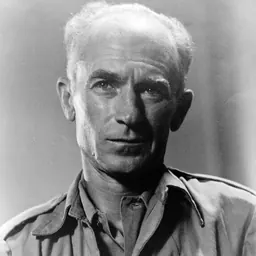
Ernie Pyle Riley Tidwell, who had been Waskow's assistant throughout the war, left Waskow's body where he had died and went down from the mountain to notify Waskow's superiors that he had been killed. On the way, he encountered Ernie Pyle, the noted war reporter.
Pyle waited the three days it took to recover Waskow's body. It was when the body was unloaded from the back of the mule in the middle of the night along with several other casualties, and his men made their emotional farewells with their commander, that Pyle was inspired to write the dispatch that memorialized Waskow. Pyle's column was published on January 10, 1944 — and soon stacks of letters to Waskow's survivors started arriving in Belton. His sister released a photograph of Waskow taken while he was a lieutenant, after adding another bar to reflect his captain's rank when he died.
Following his wishes, Waskow was buried in Italy. His grave is at the Sicily-Rome American Cemetery in Nettuno. His grave is on Plot G Row 6 Grave 33.
A memorial was held for him in his home town when his mother died a few months later, and he was posthumously awarded the Legion of Merit. He was also awarded the Purple Heart.
Legacy
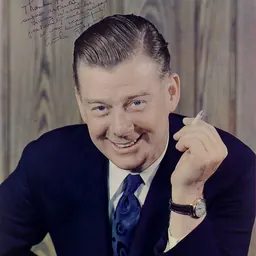
A few days after witnessing Waskow being brought off the mountain Pyle wrote a column about the event. Pyle had become depressed and had lost confidence in his writing. Asking AP correspondent Don Whitehead to second read his column, he lamented: "I've lost the touch. This stuff stinks. I just can't seem to get going again." Whitehead recognized its tremendous value and urged its publication. A month later, after notification of the next of kin, it was published in Scripps-Howard's home newspaper, the Washington Daily News. With the story featured on the front page, the edition completely sold out. Pyle's column on Waskow was read on the radio in its entirety by Raymond Gram Swing and Arthur Godfrey. It was reprinted in Time magazine, and was used to support a war bond drive.
In his last will and testament, Waskow wrote:
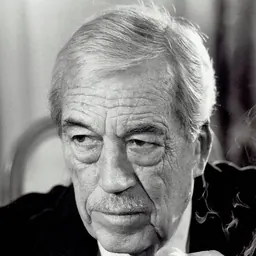
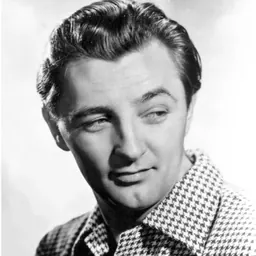
Pyle's story informed John Huston's documentary The Battle of San Pietro (released in 1945) and heightened interest in it. The character of Captain Bill Walker (played by Robert Mitchum) in William Wellman's motion picture The Story of G.I. Joe is partly based on Pyle's column about Waskow's death. The US Army insisted on changing the surname of Waskow to Walker in the film's screenplay.
Henry T. Waskow High School (Belton New Tech @Waskow) in Belton and VFW Post 4008 are named after Waskow.
Waskow was inducted into the Texas Military Hall of Honor in 1980.
A large white stone memorial to Captain Waskow is located in the side yard of Ernie Pyle's former Albuquerque New Mexico home, now a branch of the Albuquerque Library system, reciting in stone some of Pyle's tribute to Captain Waskow: “I sure am sorry, sir,” said one soldier, his voice trailing off. Another knelt down and, for several minutes, held his friend's hand, lost in thought. Before joining the others as they moved up the road to the next assignment, he paused for an extra moment, to “gently straighten...the points of the captain's shirt collar, and then he sort of rearranged the tattered edges of his uniform around the wound.”
Don’t just read it —
keep it.
Full-length biographies made to live with: read them, listen on the way to work, watch them tonight.
- E-book
- Audio
- Video
Instant download · yours to keep · every purchase keeps this site free
Important facts
People in Henry T. Waskow's life
Named in this biography and alive at the same time




Related people
Same field, nearest in time

Contemporaries
People whose lives overlapped Henry T. Waskow's



Frequently asked questions
Who was Henry T. Waskow?
Recipient of the Purple Heart medal (1918–1943)
When was Henry T. Waskow born?
Henry T. Waskow was born on 24 September 1918 in DeWitt County.
When did Henry T. Waskow die?
Henry T. Waskow died on 14 December 1943 in San Pietro Infine.
What was Henry T. Waskow's occupation?
Henry T. Waskow was a military personnel.
What nationality was Henry T. Waskow?
Henry T. Waskow was American.
Sources & further reading
Cite this page
APA: Biography.guide. (2026). Henry T. Waskow. https://biography.guide/henry-t-waskow/
MLA: "Henry T. Waskow." Biography.guide, https://biography.guide/henry-t-waskow/.
Chicago: "Henry T. Waskow." Biography.guide. https://biography.guide/henry-t-waskow/.
Data last updated: 2026-09-20 · Spot an error? Report a correction.
Page generated 2026-09-27 05:33 UTC