
About Henry Stephens
Lived 1796 – 1864 (aged 67–68). Henry Stephens was a British writer, chemist and surgeon.
Henry Stephens, MRCS (March 1796 – 15 September 1864) was an English medical doctor, surgeon, chemist, writer, poet, inventor and entrepreneur. At medical school in London he was a friend of, and shared rooms with, poet John Keats, later wrote treatises on hernia and cholera, and conducted experiments to improve writing fluids and wood stains.
In 1832 after years of experimentation he created an indelible blue-black writing fluid, patented it in 1837 and later formed the Stephens Ink company which grew into a worldwide brand with a famous inkblot image.
Early life Blue plaque erected by Guy's & St. Thomas' Charities Foundation at 3 St Thomas Street, London SE1 9RS in 2002 Henry Stephens was born in Holborn, London, the second son of Joseph Stephens (1771–1820) and his wife Catherine (1763–1843), née Farey, but along with his elder brother John was soon moved to more rural Hertfordshire. The family lived briefly in Hatfield where sisters Frances (1798–1860) and Catherine (1800–1855) were born. Around 1801 they moved to Redbourn near St Albans where a fifth child, Josiah (1804–1865) was born. Joseph Stephens became the innkeeper at The Bull, the principal inn and busy staging-post in Redbourn High Street on a main stagecoach route between London and the north.
In 1811 Stephens was apprenticed to a local doctor in Markyate three miles north of Redbourn and in 1815 enrolled as a pupil in the united teaching school of Guy's and St Thomas' Hospital in London. He visited Chatsworth House and Haddon Hall and walked many miles in the Matlock area. Stephens continued to Manchester and Liverpool, visited the Northwich salt mines, then continued via Chester to Eaton Hall where he toured Earl Grosvenor's estate on horseback.
Passing through Wrexham, he reached Shrewsbury where he joined the famous Holyhead mail coach to Birmingham, then on via Worcester, Tewkesbury and Gloucester to Bristol. Here he enjoyed the Clifton Downs but had difficulty crossing the muddy and tidal River Avon below the Downs by ferry, Brunel's famous Clifton Suspension Bridge not yet having been built. In Bath Stephens paid a visit to the famous stone quarries and Pump Room, and finally returned to London by coach via Marlborough, the Savernake Forest, Henley and Windsor.
During the 1830s Stephens was very active as a member of the Medical Society of London. He also became an expert on cholera which was always a problem in the city until John Snow (1813–1858), Vice-President and later President of the Society, brought the outbreaks to an end by his celebrated removal of the handle from the pump of the sewage-contaminated well in Broad Street, Soho, in 1854.
Inventor
From around 1830 Stephens had been experimenting with chemicals and ink-making in the basement cellar at 54 Stamford Street, perhaps as a sort of hobby but more likely due to dissatisfaction with the poor quality of the writing materials available at that time.
Despite pressure from friends and relations to give up commerce and continue his career as a medical professional, Stephens continued experimenting with his inks and stains. As the population slowly became more literate, writing materials were much in demand, and Stephens took over a nearby stable and yard, where he kept his doctor's horse and carriage, for his factory, employing a foreman and men to handle the bottling.
In 1832 Stephens' Ink was registered as a company name. Stephens soon had an eye on exporting his products; he travelled to Paris and appointed an agent to handle his business in France, and also appointed an agent in New York.
Second marriage (1840)
In 1840, eight years after the death of Hannah, Stephens remarried. His new wife was Anne O'Reilly, a 26-year-old spinster from Holborn; the wedding took place on 3 May at St Andrew's church, Holborn.
In 1852 Henry Charles, now aged eleven, returned from Paris to attend University College School in Gower Street, London, where he stayed for five years before studying chemistry at the School of Mines in Kensington. Stephens was a friend of Michael Faraday (1791–1867) and often took his young son to his lectures at the Royal Institution.
Henry Charles Stephens
Around this time Stephens continued to instruct his eldest son in the preparation of inks and wood stains in his outhouses at Grove House in Finchley in a sort of apprenticeship. The experience would prove invaluable when young Henry later went to work in his father's factory. Henry Charles married, in 1863, Agnes Mackereth, the daughter of his father's old friend at medical school.
Death
On 15 September 1864, Stephens, returning from his office in Aldersgate Street with Henry Charles, collapsed and died at Farringdon station. His son boarded a train believing his father was in the crowd behind him, and only learned of his missing father's death later that evening.
Stephens was mourned in London as well as in Finchley. In addition to Michael Faraday, among his personal friends were John Glover, Queen Victoria's librarian; Thomas Sopwith, geologist and mining engineer; and Sir Benjamin Ward Richardson, eminent doctor and physiologist. At his funeral it was said that although Stephens's life had been given to the service of science, he had a great yearning for literature and the arts and a great love of justice.
He was buried in St Marylebone Cemetery, Finchley, where a monument commemorates him and other members of his family. The family name is commemorated as a street name, Stephens Way, in Redbourn, Hertfordshire.
The company founded by Stephens continued for more than a century after his death. Stephens's eldest son Henry Charles Stephens (1841–1918), known to his friends as "Inky", ran the company until his death in 1918, was an entrepreneur and philanthropist and also MP for Hornsey and Finchley from 1887 until 1900.
The Stephens Collection
A small museum – The Stephens Collection – in Finchley, north London, features the history of the Stephens family and the eponymous ink company, with a section on the development of writing materials. The museum is located in a new visitor centre in the former stables block at Avenue House, the home of Henry "Inky" Stephens from 1874 until his death in 1918. In his will he bequeathed Avenue House and his ten acres of gardens to the 'people of Finchley', held in trust by the Finchley Urban District Council so long as it was kept open 'for the use and enjoyment always of the people'.
The house and grounds, now known as Stephens House and Gardens, are run by the Avenue House Estate Trust, a local charity, for public benefit and as a memorial to Stephens and his son Henry Charles.
Don’t just read it —
keep it.
Full-length biographies made to live with: read them, listen on the way to work, watch them tonight.
- E-book
- Audio
- Video
Instant download · yours to keep · every purchase keeps this site free
Important facts
People in Henry Stephens's life
Named in this biography and alive at the same time


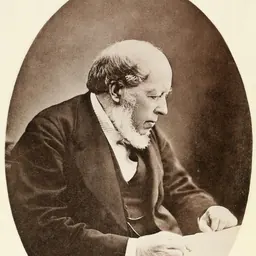
Related people
Same field, nearest in time
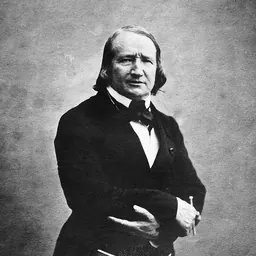


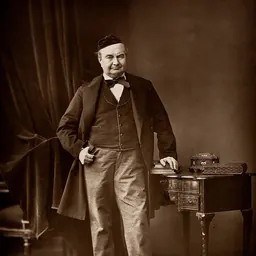


Contemporaries
People whose lives overlapped Henry Stephens's





Frequently asked questions
Who was Henry Stephens?
British doctor and chemist
When was Henry Stephens born?
Henry Stephens was born in 1796.
When did Henry Stephens die?
Henry Stephens died on 15 September 1864 in London.
What was Henry Stephens's occupation?
Henry Stephens was a writer, chemist and surgeon.
What nationality was Henry Stephens?
Henry Stephens was British.
Sources & further reading
· DBpedia: Henry Stephens (doctor)
Cite this page
APA: Biography.guide. (2026). Henry Stephens. https://biography.guide/henry-stephens/
MLA: "Henry Stephens." Biography.guide, https://biography.guide/henry-stephens/.
Chicago: "Henry Stephens." Biography.guide. https://biography.guide/henry-stephens/.
Data last updated: 2026-09-20 · Spot an error? Report a correction.
Page generated 2026-09-27 05:22 UTC