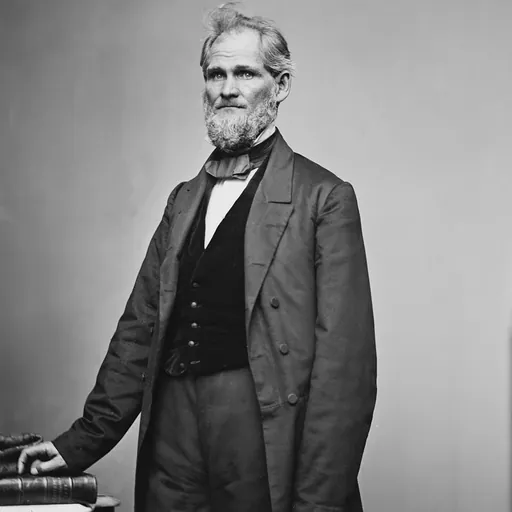
About Henry Smith Lane
Lived 1811 – 1881 (aged 70). Henry Smith Lane was an American politician, lawyer, banker, governor and jurist.
Henry Smith Lane (February 24, 1811 – June 19, 1881) was a United States representative and senator and the 13th Governor of Indiana; he was by design the shortest-serving governor of Indiana, having made plans to resign the office should his party take control of the Indiana General Assembly and elect him to the United States Senate. He held that office for only two days, and was known for his opposition to slavery. A Whig until the party collapsed, he supported compromise with the South. He became an early leader in the Republican Party starting in 1856 serving as the president of the first party convention, delivering its keynote address, and was influential in the nomination of Abraham Lincoln. With the repeal of the Missouri Compromise, he became a full-fledged abolitionist, and in the Senate, he was a pro-Union advocate and a strong supporter of the Civil War effort to defeat the Southern Confederacy.
Early life Family and background Henry Smith Lane was born in Bath County, Kentucky near Sharpsburg on February 24, 1811, the son of James H. and Mary Higgins Lane. He received a classical education from private tutors and studied law; he was admitted to the bar in Mount Sterling, Kentucky in 1832. He moved to Crawfordsville, Indiana, in 1835 working at the Bank of Indiana and opening a law office, taking mainly criminal cases.
Lane was an opponent of slavery early in life, and came to support Henry Clay while he lived in Kentucky. At age 20, he delivered an anti-slavery speech to the Colonization Society in October 1831. In the speech, he declared, "The History of all times admonishes us that no man or community of men can be kept forever in slavery." While Lane opposed to expansion of slavery he was not in favor of abolition, but like Henry Clay he believed that over time slavery would die out if it was prevented from spreading. In 1833, he married Pamela Bledsoe Jameson. The couple had no children, and his wife was killed in a stage coach accident 1842; Lane escaped the accident with only minor injuries.
Active in Whig politics, he was a member of the Indiana Senate in 1837 as a representative of Montgomery County and a member of the Indiana House of Representatives in 1838 to 1839. Lane was elected to the U.S. House of Representatives in 1840 to fill the vacancy caused by the resignation of Tilghman A. Howard, he won re-election and defeated John Bryce by an overwhelming majority the next year and served until 1843. He did not seek reelection to a second full term. Lane returned to his law practice after the election and remained there until the outbreak of the Mexican–American War. In May 1846, Lane attended the war meeting held in Indianapolis and became and active member, writing part of the resolutions the meeting issued, pledging troops for the invasion of Mexico.
Shifting parties After returning from the war, Lane was a candidate for Congress in 1849, challenging Joseph E. McDonald. The election was a close contest, but Lane was ultimately defeated and returned to private life.
The results were disastrous, and the Know-Nothings quickly fell apart, but the battle brought Lane national fame in standing up to the Democrats. In 1856, Lane attended the first Republican National Convention. He was elected president of the convention and gained national recognition for his oratory. After the convention, he returned to Indiana and stumped the state for the new party. That year, rge Republicans gained a strong representation in the General Assembly and, with the support of some Democrats, elected Lane and William McCarty to the Senate. The two men went to Washington to challenge the state's sitting senators, but the Senate refused to accept the new senators.
Returning to Indiana after the convention, he held a final debate with Hendricks in Fort Wayne. Lane was not as skilled a debater as Hendricks but was considered a superior orator. Lane refused to have any more debates with his opponent and instead traveled across the state again giving speeches. The election was close, and Lane defeated Hendricks by about 1,000 votes and was elected governor. He was inaugurated January 14, 1861. However, he served just two days and resigned to accept a seat in the U.S. Senate to honor the agreement with his running mate, Morton, who then became governor.
On June 18, 1881, Lane entertained some friends at his home in Crawfordsville for the evenings. After the party, he began to have severe chest pains, and he died the next afternoon, June 19, at around 1 p.m. of an apparent heart attack. His death was reported nationally, and biers were held nationwide.
Don’t just read it —
keep it.
Full-length biographies made to live with: read them, listen on the way to work, watch them tonight.
- E-book
- Audio
- Video
Instant download · yours to keep · every purchase keeps this site free
Important facts
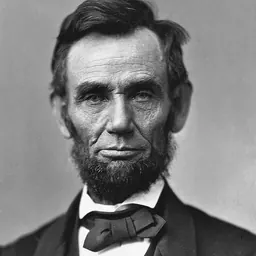
People in Henry Smith Lane's life
Named in this biography and alive at the same time

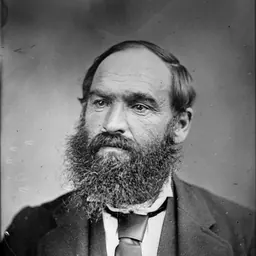
Related people
Same field, nearest in time


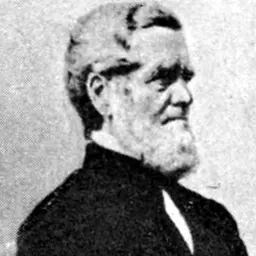

Contemporaries
People whose lives overlapped Henry Smith Lane's





Frequently asked questions
Who was Henry Smith Lane?
United States Army officer and politician (1811–1881)
When was Henry Smith Lane born?
Henry Smith Lane was born on 24 February 1811 in Sharpsburg.
When did Henry Smith Lane die?
Henry Smith Lane died on 18 June 1881 in Crawfordsville.
What was Henry Smith Lane's occupation?
Henry Smith Lane was a politician, lawyer, banker, governor and jurist.
What nationality was Henry Smith Lane?
Henry Smith Lane was American.
Sources & further reading
Cite this page
APA: Biography.guide. (2026). Henry Smith Lane. https://biography.guide/henry-smith-lane/
MLA: "Henry Smith Lane." Biography.guide, https://biography.guide/henry-smith-lane/.
Chicago: "Henry Smith Lane." Biography.guide. https://biography.guide/henry-smith-lane/.
Data last updated: 2026-09-21 · Spot an error? Report a correction.
Portrait: Wikimedia Commons · author & licence
Page generated 2026-09-27 05:00 UTC