
About Henry Seymour
Lived 1861 – 1938 (aged 76–77). Henry Seymour was a writer.
Henry Albert Seymour (28 January 1860 – 3 February 1938) was an English secularist, individualist anarchist, gramophone innovator and survey author, and Baconian. He published the first English language anarchist periodical in Britain and is credited, in 1913, with introducing the Edison disc into the country.
Biography Seymour was born in Hayes, Bromley, England on 28 January 1860. He married Clara Elizabeth Spice on 2 November 1880.
In 1885, Seymour published the first English-language individualist anarchist periodical in Britain, The Anarchist. He began work on the first issue while still living in Tunbridge Wells, although it was not published until he completed his move to Islington, London.
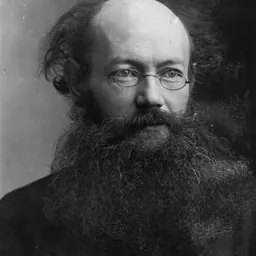
The paper was produced from 1885 to 1888 and was briefly co-edited by Peter Kropotkin and Charlotte Wilson, both of whom went on to form Freedom following disagreements between the three.
As well as producing The Anarchist, Seymour published a wide range of pamphlets and tracts, and he printed handbills for other groups, including the Tunbridge Wells branch of the SDF. The SDF pamphlet was published by the "International Publishing Company", owned by Seymour.
Seymour is important in the history of British anarchism, particularly individualist anarchism a branch of anarchism which has dwindled in influence in Britain since the early 20th century. Seymour published a wide range of works on anarchist subjects. He was involved in the late 19th century radical community in London and it seems likely that Seymour printed material for many individuals and groups.
Seymour was involved in many groups and causes during the latter 1900s. He was a founding member of Free Currency Propaganda and produced a pamphlet called The Monomaniacs: A Fable in Finance.
Seymour took over editorship of The Adult: A Journal for the Advancement of freedom in Sexual Relationships, following the arrest of George Bedborough, the previous editor. He wrote The Reproduction of Sound in 1917, described as "acknowledged as the standard work on the subject" in the industry at the time. He produced a gramophone called the Superphone and was responsible for many innovations in gramophone technology.
Seymour was key in the development of EMG Gramophones and produced parts for the early production models.
In his later life, Seymour became involved in the Francis Bacon Society, and was the editor of the society's journal, Baconiana. His wife died in 1934.
Don’t just read it —
keep it.
Full-length biographies made to live with: read them, listen on the way to work, watch them tonight.
- E-book
- Audio
- Video
Instant download · yours to keep · every purchase keeps this site free
Important facts
People in Henry Seymour's life
Named in this biography and alive at the same time

Related people
Same field, nearest in time


Contemporaries
People whose lives overlapped Henry Seymour's



Frequently asked questions
Who was Henry Seymour?
British secularist (1861–1938)
When was Henry Seymour born?
Henry Seymour was born in 1861 in Hayes.
When did Henry Seymour die?
Henry Seymour died in 1938.
What was Henry Seymour's occupation?
Henry Seymour was a writer.
Sources & further reading
· DBpedia: Henry Seymour (political activist)
Cite this page
APA: Biography.guide. (2026). Henry Seymour. https://biography.guide/henry-seymour/
MLA: "Henry Seymour." Biography.guide, https://biography.guide/henry-seymour/.
Chicago: "Henry Seymour." Biography.guide. https://biography.guide/henry-seymour/.
Data last updated: 2026-09-20 · Spot an error? Report a correction.
Page generated 2026-09-27 05:34 UTC