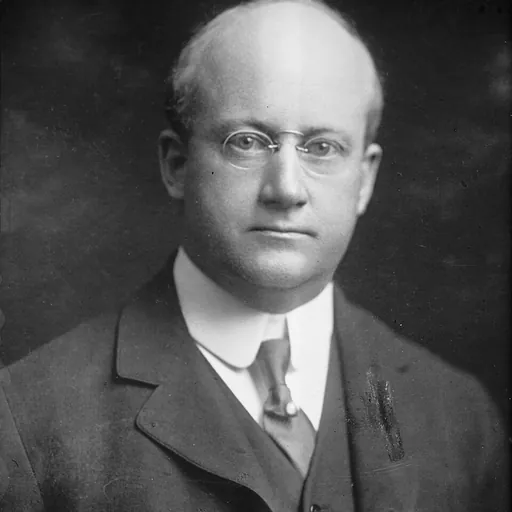
About Henry Rogers Seager
Lived 1870 – 1930 (aged 60). Henry Rogers Seager was an American economist and university teacher.
Henry Rogers Seager (July 21, 1870 – August 23, 1930, in Kiev, Soviet Union) was an American economist, and Professor of Political Economy at Columbia University, who served as president of the American Association for Labor Legislation.
Inspired by the work of the Austrian School, Seager published his main work "Principles of Economics" in 1913. Inline with the institutional economics this textbook was typical "empirical and institutional in applied work, that dealt with real markets." In 1929 he published his most cited work, entitled "Trust and corporation problems."
Biography Seager was born to Schuyler Fiske Seager and Alice (Berry) Seager in Lansing, Michigan, where his father worked as a lawyer. He studied at the University of Michigan, where he obtained his P.h.B. in 1890. He continued his studies at Johns Hopkins University under Herbert Baxter Adams and Richard T. Ely for a year, in Europe at Halle, Berlin, and Vienna for two years, obtaining his PhD back in the US from the University of Pennsylvania in 1894 under Simon Patten.
In 1894 Seager started his academic career as an instructor in economics at the Wharton School of the University of Pennsylvania, and was promoted to assistant professor in 1896. In 1902 he moved to Columbia University, serving as adjunct professor until 1905 when he was appointed professor of political economy. and served on the board of editors of the Political Science Quarterly.
Death He died in 1930 in Kiev, USSR when he was visiting to study Soviet economic philosophy.
In a review of this work the American economist Herbert J. Davenport (1904) commented:
"In almost all respects this new manual is all that a book of the sort ought to be—— thoroughly modern in doctrine : wide in sympathy; marvelously deft in avoiding offense and in touching lightly on contested points, yet in all cases calling both instructor and pupil to face fairly the point in question; clear, sprightly, and stimulating in style and in manner of presentation. And all the while there is room for the instructor and for his initiative and individuality. No teacher inferior in training or wanting in class-room skill would better attempt this book...His catholic quality of temper and lack of dogmatism render. Professor Seager's doctrinal positions of less controlling importance for text-book purposes. While his work is noticebly Austrian in tone and method, yet it is such in a manner which need not offend even the radically conservative. Merely as indicating a general point of view, it may be noted that the marginal-productivity theory of distribution is adopted, with perhaps some degree of vagueness or vacillation as to the relation between distributive shares and competitive costs..."
Modern production and distribution Seager (1904) expressed a specific view on the production and distribution in modern community. Modern business can be divided into twelve branches or principal businesses, as he expressed: "Looking at modern business in a concrete way we may distinguish the following main branches into which production is divided : (1) hunting and fishing, (2) stock-raising, (3) farming, (4) forestry (t. e., logging, lumbering, etc.), (5) mining and quarrying, (6) manufacturing, (7) building, (8) transporting, (9) wholesale and retail trading, (10) produce and stock broking, (11) banking, and (12) insurance. Although by no means exhaustive this list includes the principal businesses to be found in a modern community arranged in about the order in which they have attained prominence..."
According to Seager, the best adapted form of business organisation is different. In hunting, stock-raising, farming, building, broking, and trading the dominant form is the single-entrepreneur and partnership systems. In lumbering, mining, and manufacturing single entrepreneurs, partnerships, and corporations exist side by side, and in transportation, banking, and insurance the "corporate form of organisation holds undisputed sway. In general the corporate form of organisation is that preferred in branches of business where large-scale production is found to be most economical, while in businesses for which small-scale production is better adapted single entrepreneurs and partnerships still have the advantage."
Value, Price, and Distribution In the chapter about "Value, Price, and Distribution" Seager explains, that his model of the modern production and distribution can be used to "restate the laws determining rent, wages, and interest." He stated:
"It will be necessary to advert for the last time the relations that would prevail in an industrial society brought Production to the state of normal equilibrium. In such a society the relation between production, distribution, and consumption would be extremely simple. Production would still be carried on as a serial process, but it could be readily analysed, since all prices would correspond exactly to the expenses of production and these would never vary. The whole matter may be represented graphically by the accompanying figure. In the figure production is represented as subdivided into three great stages, A, B, and C. The extractive industries: (A) turn out raw materials. Manufacturing (B) takes these and transforms them into manufactured products. Transportation and trade (C) deliver the latter as finished products to purchasers, who may be either consumers converting their money incomes into real incomes, or entrepreneurs converting the free replacement fund into capital goods to restore the wastes incidental to production. The figure represents movement without change."
About the flows in the model, he explains: "...Raw materials, the products of the extractive industries, flow through from left to right, being enriched as they pass along by the addition of form, place, time and possession utilities. On leaving the hands of dealers, they are separated into two great streams, one, the replacement fund, which flows back to repair and renew capital goods worn or destroyed in the process of production, the other, consumption goods, which begin immediately to gratify wants. The consumption goods stream is again subdivided, one branch conveying the second and subordinate replacement fund needed to repair and renew the durable consumption goods whose presence is indicated at the top of the diagram and which give off a continuous stream of utilities to mingle with those afforded by transient consumption goods, the other and larger branch into which the main consumption goods stream is divided."
Labor Legislation, 1907–1931 Seager's first major contributions in the field of law, labor, and labor legislation occurred in 1907. Seager was convinced that ideas about social legislation in the United States were far behind those of the more progressive countries of Europe. In a meeting of the American Association for Labor Legislation, December 30, 1907, Seager presented a program of social legislation:
"The ends to be aimed at in any programme of social legislation are: I. To protect wage-earners in the continued enjoyment of standards of living to which they are already accustomed. II. To assist them to attain to higher standards of living.
The principal contingencies which threaten standards of living already acquired are: (1) industrial accidents; (2) ill ness; (3) invalidity and old age; (4) premature death; (5) unemployment. These contingencies are not in practice adequately provided against by wage-earners themselves. consequence the losses they entail, in the absence of any social provision against them, fall with crushing force on the families which suffer from them, and only too often reduce such families from a position of independence and self-respect to one of humiliating and efficiency-destroying social dependency. The following remedies for the evils resulting from this situation are suggested."
Social Insurance: A Program of Social Reform, 1910 In 1910 Seager published Social Insurance: A Program of Social Reform, one of the first American books on the subject of social insurance. Seager was influenced by his sociology professor in Chicago Charles Richmond Henderson, who had outlined a corporatist and restrictionist ideology. Seagers book provided a rationale for social insurance, which had its origins in Europe, and influenced the establishment of Social Security in the United States.
The social security website (2014) summarized this was as "both a classic and an early exposition of the philosophical movement for social insurance in America. The philosophy expressed by Seager would be the same general viewpoint favored by many of the founders of Social Security in America. Seager's books expresses the thinking of Americans toward this new idea of social insurance which had in origins in Europe at the end of the 19th century.
Theory of the Minimum Wage, 1913 In his 1913 article on the "Theory of the Minimum Wage." explains the main contemporary problems around the introduction of minimum wages. Seager started: "From the point of view of economic theory, the proposal that minimum, or living rates of wages be prescribed by law involves two problems. First, how does it happen that for certain classes of workers in certain employments the wages paid fall below a living level. Second, what results may be expected to follow the enforcement of the requirement that no employer shall in future be permitted to pay less to any employee than the living wages pre- scribed. After considering these theoretical problems."
Trust and corporation problems, 1929 The Rockefeller-Morgan Family Tree (1904), the first great U.S. business trust. Weidenhammer and Krebs (1930) commented, that this "book is mainly concerned with the trust problem. For two reasons, however, the authors thought it advisable to include a chapter on corporations: First most trusts are corporations, and the modern holding company and merger movements depend upon the existence of the economic institution 'corporation', and second, the regulation of trusts must to a certain extent proceed through regulation of corporate practices (stockwatering in order to hide profits, publicity of financial statements, etc.)."
Tobriner (1931) summarized, that "the modern trust problem, with its nation-wide mergers, its powerful trade association, its international price and output agreements, is today demanding and getting fresh attention. Informed opinion is coming in recognize, that former legislation which sweepingly condemned 'every combination in restraint of trade' has broken down. An attempt is being made to re-define the issue and to meet them with less prejudice and with more concern for business needs."
Labor and Other Economic Essays, 1931 The posthumous publication of "Labor and Other Economic Essays" is considered one of Seager's most important works, beside "introduction to economics" (1913) and "Trust and corporation problems," (1929). It contained a full bibliography of Seagers publications. Seager had published his first mayor essays on law and labour late 1907. Ernst (1995) summarized: "like other historicist economists, Seager urged that trusts and labor unions be accepted as natural and potentially beneficial developments. They should not be abolished even if they could be, he argued, but they should be regulated to ensure they did not abuse their power. Based largely on his reading of Great Upheaval labor cases, Seager concluded that the courts could not be trusted with the job of policing industrial combinations, because the legal mind was too preoccupied with precedents and traditions to give sufficient regard to the social consequences of industrial combination." Seager, Henry R. Principles of Economics, New York, H. Holt and company, 1913. James, E. J., Falkner, R. P., Seager, H. R., Johnson, E. R., King, C. L., & Sellin, T. (1921). Annals of the American Academy of Political and Social Science (Vol. 97) Seager, Henry Rogers, and Charles Adams Gulick. Trust and corporation problems. New York: Harper, 1929; Arno Press, 1973. Seager, Henry Rogers. Labor and Other Economic Essays. Harper & brothers, 1931.
Articles, a selection: Seager, Henry Rogers. "Economics at Berlin and Vienna." The Journal of Political Economy 1.2 (1893): 236–262. Seager, Henry Rogers. "Theory of the Minimum Wage." Am. Lab. Legis. Rev. 3 (1913): 81–91. Henry R. Seager, "Railroad Labor and the Labor Problem," Proceedings of the Academy of Political Science in the City of New York, vol. 10, no. 1 (July 1922), pp. 15–18. In JSTOR.
Don’t just read it —
keep it.
Full-length biographies made to live with: read them, listen on the way to work, watch them tonight.
- E-book
- Audio
- Video
Instant download · yours to keep · every purchase keeps this site free
Important facts
People in Henry Rogers Seager's life
Named in this biography and alive at the same time




Related people
Same field, nearest in time


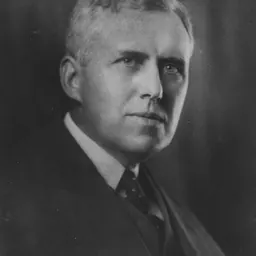
Contemporaries
People whose lives overlapped Henry Rogers Seager's



Frequently asked questions
Who was Henry Rogers Seager?
United States economist (1870-1930)
When was Henry Rogers Seager born?
Henry Rogers Seager was born on 21 July 1870 in Lansing.
When did Henry Rogers Seager die?
Henry Rogers Seager died on 23 August 1930 in Kyiv.
What was Henry Rogers Seager's occupation?
Henry Rogers Seager was an economist and university teacher.
What nationality was Henry Rogers Seager?
Henry Rogers Seager was American.
Sources & further reading
· Wikipedia: Henry Rogers Seager
· DBpedia: Henry Rogers Seager
Cite this page
APA: Biography.guide. (2026). Henry Rogers Seager. https://biography.guide/henry-rogers-seager/
MLA: "Henry Rogers Seager." Biography.guide, https://biography.guide/henry-rogers-seager/.
Chicago: "Henry Rogers Seager." Biography.guide. https://biography.guide/henry-rogers-seager/.
Data last updated: 2026-09-20 · Spot an error? Report a correction.
Page generated 2026-09-27 05:10 UTC