
About Henry Nxumalo
Lived 1917 – 1957 (aged 39–40). Henry Nxumalo was a South African journalist and writer.
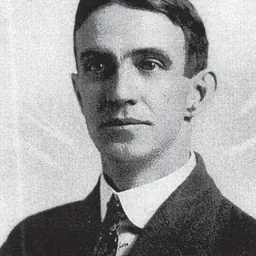
Henry Nxumalo (1917 – 31 December 1957), also known as Henry "Mr Drum" Nxumalo, was a pioneering South African investigative journalist under apartheid.
Early life He was born in 1917 in Margate, Natal, South Africa, and attended the Fascadale Mission School. Showing early promise as a writer, he submitted various samples of his work to publications and as a result was offered a job by the Post newspaper in Johannesburg, which had published some of his earlier contributions.
He enlisted in the South African Army when World War II broke out and was sent to Egypt, where the South African forces were involved in the Western Desert of North Africa.
Career He became frustrated upon his return to South Africa. There were few opportunities for black journalists due to the restrictions of apartheid. Most black-focused publications were controlled by white business interests and none of them offered scope for the kind of investigative exposés that Nxumalo had in mind.
In 1951, the publisher Jim Bailey established the legendary Drum magazine with Anthony Sampson as editor, and asked Henry Nxumalo to become the assistant editor. Nxumalo by this time specialised in investigative journalism.
He obtained employment on the potato farms so as to expose the squalid conditions (almost slave-like) experienced by Black labourers. Worried about the lawlessness in Johannesburg "the square mile of sin", he agitated for clean-up and appealed for support from the police.
On another assignment he managed to get himself arrested and sent to Johannesburg central prison. His resulting article, describing the ward conditions and the degrading naked search, was an international scoop. He later got work on a farm where an African labourer was beaten to death with a section of hose-pipe. His investigation into whether the church "supported" apartheid showed the difference between prejudice and the gospel of "brotherly love".
In 1957, Nxumalo was investigating an abortion racket when he was murdered by unknown assailants.
Legacy In 2004, Goch Street in Johannesburg's cultural hub, Newtown, was renamed Henry Nxumalo Street. Sylvester Stein's 2005 play Who Killed Mr Drum? (adapted from his 1999 book of the same title about his time as editor of Drum) begins with Nxumalo's murder.
Awards Nxumalo was posthumously honoured with the Order of Ikhamanga in Silver for excellence in South African journalism. The award was collected by his son, Henry Nxumalo Jr, on 27 September 2007.
Don’t just read it —
keep it.
Full-length biographies made to live with: read them, listen on the way to work, watch them tonight.
- E-book
- Audio
- Video
Instant download · yours to keep · every purchase keeps this site free
Important facts
People in Henry Nxumalo's life
Named in this biography and alive at the same time


Related people
Same field, nearest in time


Contemporaries
People whose lives overlapped Henry Nxumalo's

Frequently asked questions
Who was Henry Nxumalo?
South African journalist (1917–1957)
When was Henry Nxumalo born?
Henry Nxumalo was born in 1917 in Margate.
When did Henry Nxumalo die?
Henry Nxumalo died in 1957 in Soweto.
What was Henry Nxumalo's occupation?
Henry Nxumalo was a journalist and writer.
What nationality was Henry Nxumalo?
Henry Nxumalo was South African.
Sources & further reading
Cite this page
APA: Biography.guide. (2026). Henry Nxumalo. https://biography.guide/henry-nxumalo/
MLA: "Henry Nxumalo." Biography.guide, https://biography.guide/henry-nxumalo/.
Chicago: "Henry Nxumalo." Biography.guide. https://biography.guide/henry-nxumalo/.
Data last updated: 2026-09-20 · Spot an error? Report a correction.
Page generated 2026-09-27 05:10 UTC