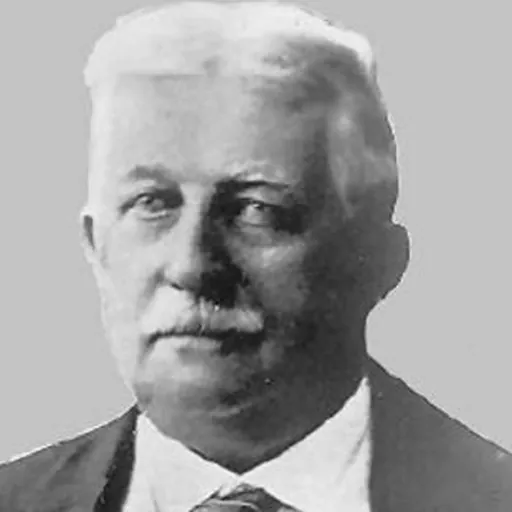
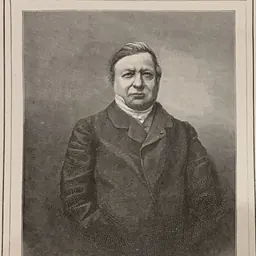
Henry Metcalfe
American military officer and business theorist
About Henry Metcalfe
Lived 1847 – 1927 (aged 79). Henry Metcalfe was an American business theorist.
Captain Henry Metcalfe (October 29, 1847 – August 17, 1927) was an officer in the United States Army Ordnance Corps, inventor and early organizational theorist, known for his 1873 invention of a detachable magazine for small arms, for his work on modern management accounting, the development of the "time card" and his theory on the role of middle management.
Biography Metcalfe was born in New York City, where his father Dr. John Thomas Metcalfe was attending physician to Bellevue Hospital Center. His father was former American Army ordnance officer, and later became professor of institutes and practice of medicine at the New York University. Metcalfe graduated on June 15, 1868, from West Point Military Academy, and was commissioned in the Ordnance Corps.
Metcalfe started his military career as assistant ordnance officer at the Ordnance Bureau in Washington, D.C., in early 1869. That year he was sequentially stationed at Rock Island Arsenal III, at the Military Academy as assistant professor of Spanish and as aide-de-camp of Major-General Henry W. Halleck. After a -month leave of absence in 1870, he was appointed executive ordnance assistant at Springfield Armory on November 11, 1870. There he developed several improvements for small firearms for which he obtained a series of patents.
On June 23, 1874, he was promoted to first lieutenant. In 1875, he was inspector at the small arms manufacturing at Providence Tool Company for three months. The next two years he participated in the presentation of the U.S. Ordnance Department at the Centennial Exposition in Philadelphia. Metcalfe superintendented the construction of the U.S. Government Building, took charge of the Ordnance Exhibit, and represented the Executive Departments of the U.S. government as Executive officer of the Board.
From late 1877 until late 1881 Metcalfe was Assistant Ordnance Officer at Frankford Arsenal, where he started developing a new shop order system and conducted time and motion studies. From late 1878 to late 1881 he was also Inspector of contract small-arms ammunition.
Metcalfe was awarded the Order of Osmanieh from the Sultan of Turkey in 1876. He retired in 1893 after he had suffered an eye injury. He settled down in Cold Spring, New York, where he kept making some inventions over the years.
Metcalfe died in Cooperstown, New York on August 17, 1927. He was buried at the West Point Cemetery on August 20, 1927.
Work Metcalfe is especially noted for his 1885 publication of The Cost of Manufactures and the Administration of Workshops, Public and Private, which presented a new method for production control, and a new accounting system based on the principle of directly assigning material costs and labour costs to jobs. McChristian (2006) explained, that in those years many ammunition-carrying devices were developed but "the looped cartridge belt remained the average soldier's preference. But, it seemed that the army, in its determination to resist the belt, would go to almost any length to find an alternative. The most eccentric of these alternatives was a cartridge—block device submitted to the board by Lieutenant Henry Metcalfe of the Ordnance Department.
McChristian (2006) further explained it essence:
In simple terms, Metcalfe had designed a rectangular wooden block, bored along its upper edge for eight rifle cartridges, that could be attached to the side of the Springfield rifle just ahead of the lock... This cartridge block was affixed to the weapon by means of a special lock mechanism inletted into the stock. Several of these blocks, filled with cartridges, were to be carried on a special waist belt using a clip carrier made of spring steel with a leather fastening strap for each block. The blocks were to be made and loaded with cartridges at the army's principal ammunition plant, Frankford Arsenal.
The Frankford Arsenal
Late 1870s Metcalfe joined the Frankford Arsenal. This arsenal, which opened in 1816, had developed after the American Civil War as the nation's manufactory of small arms ammunition. By the end of the war, the arsenal employed over 1,000 workers. During the Gettysburg campaign in 1863, the arsenal had provided tens of thousands of muskets and vast supplies of ammunition for Pennsylvania's "Emergency Militia" regiments. Among the innovations extensively tested at the Arsenal was the Gatling Gun, an early form of machine gun that saw extensive service in the Indian Wars, which lasted until 1890.
In Metcalfe's time at the Arsenal, it served as a major site for the storage of weapons and artillery pieces, a depot for the repair of artillery, cavalry and infantry equipment, repair and cleaning of small arms and harnesses, the manufacture of percussion powder and Minié balls, and the testing of new forms of gunpowder and time fuses. Metcalfe was appointed Officer in charge of the gun-making workshop, and worked directly under the Commanding Officer of the Frankford Arsenal. In managing the metalworking Metcalfe had at any time "about a hundred orders under way, of different kinds."
Basic managerial problems at Frankford Arsenal When Metcalfe was appointed Officer in charge at Frankford Arsenal, one specific concern was "being unable to account for costs within the workshops."
This was not a specific problem at the Frankford Arsenal, but a problem of all industries in that time. Yates (1992) recalled, that this was the main reason why Henry Metcalfe, and others in those days as Henry R. Towne, John Tregoning and Horace Lucian Arnold, made considerable efforts to "developed systems of shop orders to control the flow of orders through factories."
Chandler (1977) notified more general that "to Metcalfe the basic managerial problems were coordination and control." Metcalfe had illustrated this basic problem in his 1886 article with a quote from a factory owner and manager in a larger machine shop, which employed some 1,400 people. He had told Metcalfe:
The trouble is not foreseeing necessities, nor in starting the work to meet them; but in constantly running over the back track to see that nothing ordered has been overlooked, and in settling disputes as to whether such and such an order was or was not actually given and received. Superintendence... would be very different work if I were sure that an order once given would go of itself through the works, leaving a permanent trail by which I could follow it and decide positively where and by whom it was stopped. As it is, I spend so much of my time in "shooing" along my orders like a flock of sheep that I have but little left for the serious duties of my position.
These kind of experiences made Metcalfe come up with a so-called "shop-order system of accounts," which "made it possible to control the flow and improve basic cost accounting." Metcalfe wrote down his experiences and ideas in The Cost of Manufactures and the Administration of Workshops, published in 1885. Hugo Diemer (1904) summarized this work as follows:
This is an exhaustive and elaborate treatise on the order, stock-room, and cost-accounting methods employed in arsenal work. The author, at the close of the work, gives a list of such parts of. the treatise as he considers general in their application. In an introductory chapter certain very sane and pertinent statements are made as to the art of administration, and its dependence upon the application of certain principles which make up what may be called the science of administration. In arguing that men intrusted with executive positions be freed from burdensome details, he says: "There is a certain economy of attention by which the more active a man's work, the less he is able of contemplation. Foremen's heads may be put to better purposes than having to bear a constant burden of solicitude about clerical work."
In the introduction of Metcalfe started arguing, that the administration of arsenals and other workshops in great measure should be considered an art. Yet, certain principles of administration could be derived from the "great variety of cases" and turn into a "science of administration." Metcalfe explained:
Since the operations of good administration are in their nature gradual, and for their successful issue depend rather upon uniform attention to their progress than upon occasional violent efforts to adjust them to the current of affairs, it will be seen that the most useful teachings are those gained from a continuous record of events... If there be a science correlative to the art of administration, it must, like every other physical science, be founded on the comparison of accumulated observations.
The key element in Metcalfe's new system is the "continuous record of events." Chatfield, (1996) explained, that in that time and place "the usual production records were informal memorandum books carried by shop foremen, only the most cursory data were kept on job orders, which were often verbally authorized and were sometimes lost track of entirely. Neither the foremen's jottings nor the formal shop ledger seemed a proper mechanism for on-the-spot recording of shop-floor events."
The main difference in the proposed organization is, that the commanding officer gets the full responsibility for the Ordnance storekeeper, which in the old organization reported directly to the Chief of Ordnance of all US Arsenals.
System of administration of shop orders
After an analysis of the existing organization of the Arsenal, Metcalfe proposes a new organization and a system of administration of shop orders. It involved the participation of the foremen, storekeeper and clerks, and consisted of the following books and papers to be kept:
... the following books and papers kept by foremen : 1. Reports of fabrication. 2. Reports of material returned to store. 3. Stock books of all kinds. 4. Requisition books for materials to be purchased or to be drawn from store. 5. All time books. 6. All statements of costs. And the following by storekeepers : 7. " Stock " day-books. 8. " Material " day-books. 9. Stock ledgers. 10. Memorandum orders. 11 . Teamsters' receipts. And the following by clerks : 12. Register of orders of supply. 13. Invoice book.
Card system for cost accounting and production control Metcalfe's new system of administration proposed to use cards instead of books for original entries. Metcalfe (1886) summarized the intention of this system:
For every act or name to be recorded, there shall be a separate card; so that the cards being combined or classified, the acts or names they represent will be so too. For this purpose I propose the use of single cards for all initial records, and their gradual consolidation by the simplest mechanical means until they are finally transcribed into the permanent books of record.The independence of a representative unit of record is the basis of system I propose, combined with the use of a nomenclature by which all acts and their purposes may be set forth by the actors in such form as to be intelligible to those whose proper office it is to enroll and classify them.
And more general:
The system has three principal objects in view : 1. The prompt performance of work by the prominence given to unfinished orders. 2. The determination of the most probable cost of work and of management. 3. The keeping of an account of stock, in units of material as distinguished from their values. It attains these objects by using three forms of cards, viz. : 1. Shop-order tickets, or warrants of expense, and records of expense reported on. 2. Service cards. 3. Material cards. ... These facilities may be either in charge of certain foremen, the costs of whose management we wish to compare, or may be too general in their nature to be assigned to any one department. The first are called departmental, and the second, general, standing orders...
Each card of the new Card system for Frankford Arsenal was specially designed to fit its purpose:
Scranton (2000) explained some more how the system works:
Building on locomotive shop practice, Metcalfe developed three classes of cards: the shop order, a "service" or labor record, and a materials receipt. The order card authorized the work and listed the steps necessary. Foremen handed it to workers, who returned it upon task completion. Forwarded from one foreman to another through departments until fully checked off, the order card recycled to the office.Metcalfe also issued each worker bound pads of service cards, printed with his name, hourly rate of pay, and payroll number. For each task, foremen inscribed the order number along with a brief work description, then later certified the time expended. These tickets were "as good as money," for their collation in the office authorized payroll disbursements. About the whole system Chandler (1977) notified:
Each order, after it was accepted by the factory, received a number. That number was then put on what were essentially routing slips prepared at the plant's office. These indicated which departments the order would pass through and what parts were to be fabricated and assembled. These slips accompanied materials. On them, each department foreman placed the time and wages expanded, as well as the machines and materials used on that order while it was in his department. The completed set of slips thus provided a record of the costs of labor and materials used to complete each order. They also gave an accurate account of the cost of operating each department. In addition, the ticket acted as an authority to do work and to requisition materials. It also became a "roll call or time check" on the working force.
System of cost accounting
In his 1885 The Cost of Manufactures and the Administration of Workshops Metcalfe presented one of the first fully developed systems of cost accounting. This system of methods was based on multiple elements:
Classification of the most Important Mechanical Operations of an Arsenal or Machine Shop (see image). There was further classification of possible transactions, one in the scope of the foremen, and another in the scope of the storekeeper. The Card system, as described above, for the real time control of the order flow, and other real time registration of the daily operations. Overview sheets of data such as Monthly abstracts of purchases; Time Book on return work (see image); Proposed Daily Costs Sheet; Proposed Daily Credit Sheet; etc. Sheets for Analysis of performances, such as service performed on components of shop-order.
The whole system, introduced in the 1885 publication, was summarized in the 1886 article, entitled "Metcalfe's cost of manufactures" in the journal Mechanics. Typical for the situation in that time is, that the article started with a description of what factory accounting is about, and what problems they are facing:
It is almost an axiom that bookkeeping consists in the classification of accounts. In commercial bookkeeping these accounts are relatively simple, and the heads of accounts being easily recognized, the balances between classes may be determined by positive rules.But in workshop accounts it is difficult for the accountant to apportion properly the gross sums with which he deals among the different objects on which they have been expended. There is a tendency on the side of the shops, in which the knowledge must originate, simply to work in the most efficient way and to let the records take care of themselves. On the side of the offices there is a contrary tendency, requiring constant knowledge of how things are going and how similar results, when obtained under different circumstances, compare. These tendencies conflict, so that the office is always asking for more specific information than the shop is able to supply, except by guess.
To get a better understanding of how factory accounting could and should work, the article gave an explicit example:
Suppose that the total cost of a year's expenses be known, the office may want to divide them among the yearly products by some better method than that of an average based, as is sometimes done, on their weights, or on some other remote relation to their cost. Stoves, and even harness, are often appraised by weight; while it is evident that, like fret work, the less they weigh often the more they cost. Then, supposing that by any means the gross cost of a job is known, there is usually a remainder in the drawings, patterns, &c, useful for further work of the same kind, which would enable estimates for such work to be made at a lower figure than if the whole work had to be done anew. Or else the cost of some individual component of the product may be required to be separated from the gross cost, as when parts are to be made for repairs, or are to be omitted, or combined. Then, further operations may change; work on some components formerly done by hand may now be done at a less cost by machine; or labor at a different rate may be employed, the effect of which changes on the whole cost may be required to be anticipated.
An 1886 review in the journal Mechanics explained, that "the card may be passed around among several persons, and serves as an efficient 'tracer.' No one who has passed on it need be troubled again with the same question. The originator draws the line through his own name. If the first one 'gives it up' he, carries the line horizontally to the left to his own title and then obliquely to the original questioner, or to whomever he may wish to ask about it."
Metcalfe's correspondence card did not receive much more media attention. An exception is William Kent (1918), who even listed this card as forth basic card of Metcalfe's system. He acknowledged, that "the card system proposed by Capt. Metcalfe has been generally adopted in Government shops, but, as shown in some of the testimony given before Congressional Investigating Committees, much yet remains to be done in the way of cutting out unnecessary red tape..."
About fifteen years later Taylor in his 1903 Shop management further clarified his history and acknowledged Metcalfe's contributions, stating:
The card system of shop returns invented and introduced as a complete system by Captain Henry Metcalfe, U. S. A., in the government shops of the Frankford Arsenal represents another such distinct advance in the art of management. The writer appreciates the difficulty of this undertaking as he was at the same time engaged in the slow evolution of a similar system in the Midvale Steel Works, which, however, was the result of a gradual development instead of a complete, well thought out invention as was that of Captain Metcalfe.
Over the years Metcalfe's work has kept drawing some attention in the fields of Industrial engineering, and in the field of cost accounting. Nowadays Metcalfe's The Cost of Manufactures and the Administration of Workshops, Public and Private is recognized as the first modern book on cost accounting.
Articles, a selection: Metcalfe, Henry. "The Shop-order system of accounts." Transactions of the American Society of Mechanical Engineers 7 (1886): pages 440–86.
Patents Metcalfe, Henry. "Improvement in metallic cartridges". U.S. Patent No. 120,990. 14 November 1871. Metcalfe, Henry. "Improvement in Scabbard-Frogs". U.S. Patent No. 125,604. 9 April 1872. Metcalfe, Henry. "Improvement in Hook Attachment of bans of fire-arms". U.S. Patent No. 149,141. 31 March 1874. Metcalfe, Henry. "Improvement in Means of Attaching Magazines to Fire-Arms". U.S. Patent No. 167,006. 24 August 1875. Metcalfe, Henry. "Improvement in Soldiers' Accouterments". U.S. Patent No. 174,696. 14 March 1876. Metcalfe, Henry. "Road map exhibitor", US patents 841800, Oct 28, 1905. Metcalfe, Henry. "Pocket Memo-Case". U.S. Patent No. 1,308,437. 1 July 1919.
Don’t just read it —
keep it.
Full-length biographies made to live with: read them, listen on the way to work, watch them tonight.
- E-book
- Audio
- Video
Instant download · yours to keep · every purchase keeps this site free
Important facts
People in Henry Metcalfe's life
Named in this biography and alive at the same time



Related people
Same field, nearest in time




Contemporaries
People whose lives overlapped Henry Metcalfe's





Frequently asked questions
Who was Henry Metcalfe?
American military officer and business theorist (1847–1927)
When was Henry Metcalfe born?
Henry Metcalfe was born on 29 October 1847 in New York City.
When did Henry Metcalfe die?
Henry Metcalfe died on 17 August 1927 in Cooperstown.
What was Henry Metcalfe's occupation?
Henry Metcalfe was a business theorist.
What nationality was Henry Metcalfe?
Henry Metcalfe was American.
Sources & further reading
· DBpedia: Henry Metcalfe (military officer)
Cite this page
APA: Biography.guide. (2026). Henry Metcalfe. https://biography.guide/henry-metcalfe/
MLA: "Henry Metcalfe." Biography.guide, https://biography.guide/henry-metcalfe/.
Chicago: "Henry Metcalfe." Biography.guide. https://biography.guide/henry-metcalfe/.
Data last updated: 2026-09-23 · Spot an error? Report a correction.
Portrait: Wikimedia Commons · author & licence
Page generated 2026-09-27 05:05 UTC