
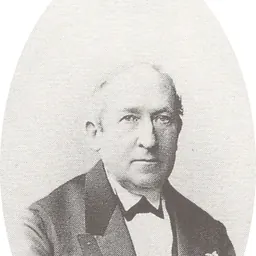
Henry Matthew Stowell
Nga Puhi interpreter, genealogist
About Henry Matthew Stowell
Lived 1859 – 1944 (aged 84–85). Henry Matthew Stowell was a New Zealand interpreter and genealogist.
Henry Matthew Stowell (1859–1944), also known by the pen-name Hare Hongi, was a New Zealand language interpreter and genealogist of European and Māori descent.
Biography He was born in Waimate North, Northland, New Zealand on 4 February 1859. His father was John Shephard Stowell, a sawyer who had come from the United States. His mother was Hūhana (Susan) Farley, daughter of Matthew Farley and Rīmaumau (Maumau), a high-born woman of the Ngāpuhi iwi. Between 1920 and 1940, he struggled to have his writings published, in a space dominated by Pākehā.
Publications Stowell authored the Māori–English Tutor and Vade Mecum, published in 1911, the first Māori grammar written by a Māori author, which also included Māori topics such as "ailments and diseases, sport and past times, tohunga, the lore of tapu, marriage customs and land tenure." It used the Ngāpuhi dialect as standard Māori language, and considered all other versions as dialects.
He published several articles under the name Hare Hongi, including:
Hongi, H. (1898). "CONCERNING WHARE-KURA: ITS PHILOSOPHIES AND TEACHINGS." The Journal of the Polynesian Society, 7(1(25)), 35–41. Hongi, Hare (1907). "A MAORI COSMOGONY." The Journal of the Polynesian Society. 16 (3(63)): 113–119. Hongi, Hare. (1909). "ON ARIKI, AND INCIDENTALLY, TOHUNGA." The Journal of the Polynesian Society, 18 (2(70)), 84–89. Hongi, Hare. (1912). "WHIRO AND TOI." The Journal of the Polynesian Society, 21 (2(82)), 29–38. Skinner, H. D., & Hongi, Hare. (1916). "ON MUMMIFICATION." The Journal of the Polynesian Society, 25 (4(100)), 169–172. Hongi, Hare. (1916). "KURANUI AS A NAME FOR THE MOA." The Journal of the Polynesian Society, 25 (2(98)), 66–67. Hongi, Hare. (1918). "ON THE GREENSTONE “TIKI.” WHAT THE EMBLEM SIGNIFIES." The Journal of the Polynesian Society, 27 (3(107)), 162–163. Hongi, Hare. (1918). "AN ANCIENT 'FLUTE-SONG.'" The Journal of the Polynesian Society, 27 (4(108)), 222–224. Hongi, Hare (1920). "THE GODS OF MAORI WORSHIP. SONS OF LIGHT." The Journal of the Polynesian Society, 29 (1(113)), 24–28.
In 1929, he began a series of radio broadcasts on the pronunciation and meaning of Māori place names, which was shortly abandoned. Hare Hongi also published several poems including "The Defence of Orakau" and "Maori Hymn to the Creator."
There are extensive archives of his unpublished work now held in Te Puna Mātauranga o Aotearoa The National Library of New Zealand.
Don’t just read it —
keep it.
Full-length biographies made to live with: read them, listen on the way to work, watch them tonight.
- E-book
- Audio
- Video
Instant download · yours to keep · every purchase keeps this site free
Important facts
People in Henry Matthew Stowell's life
Named in this biography and alive at the same time


Related people
Same field, nearest in time




Contemporaries
People whose lives overlapped Henry Matthew Stowell's

Frequently asked questions
Who was Henry Matthew Stowell?
Nga Puhi interpreter, genealogist
When was Henry Matthew Stowell born?
Henry Matthew Stowell was born in 1859.
When did Henry Matthew Stowell die?
Henry Matthew Stowell died in 1944.
What was Henry Matthew Stowell's occupation?
Henry Matthew Stowell was an interpreter and genealogist.
What nationality was Henry Matthew Stowell?
Henry Matthew Stowell was New Zealand.
Sources & further reading
· Wikipedia: Henry Matthew Stowell
· DBpedia: Henry Matthew Stowell
Cite this page
APA: Biography.guide. (2026). Henry Matthew Stowell. https://biography.guide/henry-matthew-stowell/
MLA: "Henry Matthew Stowell." Biography.guide, https://biography.guide/henry-matthew-stowell/.
Chicago: "Henry Matthew Stowell." Biography.guide. https://biography.guide/henry-matthew-stowell/.
Data last updated: 2026-09-20 · Spot an error? Report a correction.
Page generated 2026-09-27 05:07 UTC