
About Henry Liu
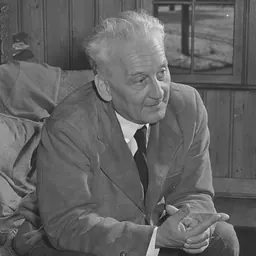
Lived 1932 – 1984 (aged 51). Henry Liu was a Chinese, Taiwanese and American journalist and writer, known for Unauthorized biography.
Henry Liu (; 7 December 1932 – 15 October 1984), often known by his pen name Chiang Nan , was a Taiwanese-American writer and journalist. He was a vocal critic of the Kuomintang (Chinese Nationalist Party), then the single ruling party of the Republic of China in Taiwan, and was most famous for writing an unauthorized biography of Chiang Ching-kuo, then president of the Republic of China. He later became a naturalized citizen of the United States, and resided in Daly City, California, where he was assassinated by Bamboo Union members who had been reportedly trained by the Kuomintang's military intelligence division.
Biography Liu was born on in Jingjiang, Jiangsu, Republican China. When he was nine years old, his father was killed by Communists. where he was sent on assignment to Hong Kong, Manila, and the Vietnam War. After marrying his wife Helen Cui Rong-zhi, he became a foreign correspondent in 1967, and moved to Washington DC, where he took graduate classes at American University and worked part-time as an interpreter for the State Department. He became a United States citizen in 1973–74, around the same time he left the Taiwan Daily News. After publishing several articles about the Chiang family, he received a letter from General Wang Sheng warning him from publishing a biography of Chiang Ching-kuo. He proceeded to publish an unauthorized biography of Chiang Ching-kuo in 1975, which was formed from three articles he had written in 1975 about Chiang's life prior to 1949. Liu planned to update the biography to cover more recent history, but was once again warned against writing about the Chiang family by Admiral Wang Hsi-ling in 1977.
Assassination On 15 October 1984, Liu was shot to death in the garage of his home in Daly City, California shortly after 9 a.m. Police ruled out robbery early in the investigation and an ROC spokesman denied government involvement. Earlier, in the wake of the 1979 Kaohsiung Incident, Chen had reorganized the Bamboo Union to assist the Kuomintang-led government in gathering information and suppressing dissidents. In July 1984, Chen and an unnamed "prominent Taiwan movie producer" received espionage training after being inducted into the service of military intelligence. During the meeting, Chen Chi-li and the movie producer were told that Liu had betrayed the Republic of China as an agent of the People's Republic of China with his criticism.
Chen Chi-li and the movie producer arrived in the United States on 14 September 1984, but the producer unexpectedly backed out shortly afterward for personal reasons, leaving Chen Chi-li to recruit two other Bamboo Union members who had also recently arrived in the US to assist him in the assassination, and Tung Kuei-sen. Wu had left Taiwan earlier in September, after local police had found a gun in his tea shop. Tung had arrived in July to explore business opportunities in southern California. The original plot would have used local northern California Bamboo Union members to carry out the assassination, but the head of the San Francisco branch failed to meet them in late September as planned. After reading news accounts of the murder, Chen Chi-li realized he had been duped into believing that Liu was a communist agent, and he recorded his confession on 18 October 1984. The FBI sought the second recording, but the existence of the second recording was never conclusively proven. Although the FBI did not comment officially, friends of Chen Chi-li claimed they were questioned about the whereabouts of the second recording, as well as about any links between Chen and Chiang Hsiao-wu. The government of Taiwan continued to deny culpability in the death of Liu, claiming that Wang and his subordinates were not acting as agents of the Taiwanese government. until the Los Angeles Times obtained a copy of the recording in March 1985 from Chang An-lo, a friend of Tung who had hosted him in September 1984.
Chen Chi-li's associates claimed that Chen was a close friend of Chiang Hsiao-wu, Chiang Ching-kuo's second son. Chiang Hsiao-wu was also claimed to have close ties to the Taiwanese security network, but Chiang denied both claims in a statement to the Times.
In March 1985, the FBI discovered the October tape recording made by chief hitman Chen Chi-li implicating Republic of China military intelligence in the killing, whereupon they began to pressure the government to bring Liu's killers to trial. The FBI investigation was confirmed by United States Attorney Joseph Russoniello. The investigation was conducted with the State Department serving as go-between for the FBI and the government of Taiwan.
Chen and Wu went on trial in April 1985, with Tung being tried in absentia. The military tribunal of Wang and his subordinates followed in April 1985.
Criminal trials At a pre-trial hearing in Taipei, Chen Chi-li claimed that Wang Hsi-ling of Kuomintang intelligence ordered the assassination, stating that Liu was a double agent who had spied for both Taiwan and China. In May 1985, a month after his conviction, Chen retracted this statement, stating that Wang had only ordered that Liu be taught a lesson, not killed, which brought Chen's story in agreement with Wang's testimony during his nearly-simultaneous military tribunal. The life sentences were upheld under two separate court rulings. Under Taiwan law, both Chen and Wu were eligible for parole after serving ten years of their sentence.
Meanwhile, Wang and his subordinates were subjected to a military tribunal. Two sessions were held; during the first, on 4 April 1985, Chen Chi-li was called to testify, where he and Wang sparred over who bore greater responsibility for Liu's death. although Wang was also eligible for parole after ten years.
Tung Kuei-sen had been rumored to be living in the Philippines, He first stood for federal trial in 1986 in New York, where he was found innocent of racketeering but convicted of conspiring to import and distribute heroin. At the 1986 trial, Tung's defense attorneys argued that Tung had been duped into murdering Liu by appealing to his sense of patriotism. Based on testimony that he had killed Henry Liu in the 1986 federal trial, Tung was ordered to stand trial in June 1987, with the actual trial commencing in March 1988, where despite his earlier testimony, he pleaded innocent to the murder charge. Tung testified during the trial that Chen Chi-li was relaying the order to kill Liu from Chiang Hsiao-wu, a "big boss," but he was found guilty of first-degree murder after just forty-five minutes of deliberation. Because Tung had been extradited from Brazil, he was not eligible for the death penalty.
Tung later filed an appeal for his murder conviction and sentence, which stated that the trial court should have requested a manslaughter verdict rather than murder, as he was acting out of patriotism. The appeal was rejected and his sentence upheld in 1990.
Summary of penalties Chen Chi-li, sentenced to life in prison (April 1985); commuted to 15 years and granted parole (January 1991) Wu Tun, sentenced to life in prison (April 1985); stabbed to death while in prison (1991) Wang Hsi-ling, sentenced to life in prison (April 1985); commuted to 15 years and granted parole (January 1991) and later promoted to director of a Military Intelligence Bureau department
Civil suit Liu's widow Helen filed a suit in a United States district court against the Republic of China and the six named conspirators, alleging that his murder had been arranged by Taiwanese officials acting in an official capacity. Although the suit survived an early motion to dismiss as an act of state grounds, Judge Eugene F. Lynch dropped Taiwan from the suit in 1987 based on Wang's military tribunal, which had concluded that Wang was not acting on behalf of the government of Taiwan, nor could his superiors have predicted his actions. The Ninth Circuit Court of Appeals reversed Lynch's decision, ruling (Liu v. Republic of China) that the ROC government was liable under the doctrine of respondeat superior; a petition for certiorari from the ROC government to the U.S. Supreme Court was subsequently rejected. The suit was finally settled out of court.
Fallout The assassination became a major political scandal in Taiwan, and American officials were critical of the Kuomintang for allegedly orchestrating an assassination on United States soil.
In a December 1985 speech, Chiang Hsiao-wu's father Chiang Ching-kuo declared ″If someone asks me whether anyone in my family would run for the next presidential term, my reply is, ′It can't be and it won't be. Prior to the Henry Liu murder, Chiang Hsiao-wu was the only one of Chiang Ching-kuo's sons mentioned as a potential successor to his father; the younger Chiang later served on the trade mission to Singapore, a move seen as soft exile.
In popular culture The assassination was the subject of the book Fires of the Dragon by David E. Kaplan. A fictionalized version of the assassination was portrayed in the 2009 film Formosa Betrayed.
Don’t just read it —
keep it.
Full-length biographies made to live with: read them, listen on the way to work, watch them tonight.
- E-book
- Audio
- Video
Instant download · yours to keep · every purchase keeps this site free
Important facts
People in Henry Liu's life
Named in this biography and alive at the same time




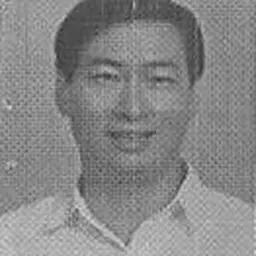
Related people
Same field, nearest in time



Contemporaries
People whose lives overlapped Henry Liu's
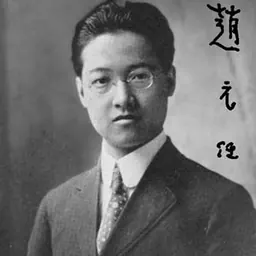


Frequently asked questions
Who was Henry Liu?
Taiwanese American writer (1932-1984)
When was Henry Liu born?
Henry Liu was born on 7 December 1932 in Jingjiang.
When did Henry Liu die?
Henry Liu died on 15 October 1984 in Daly City.
What was Henry Liu's occupation?
Henry Liu was a journalist and writer.
What was Henry Liu known for?
Henry Liu was known for Unauthorized biography.
What nationality was Henry Liu?
Henry Liu was Chinese, Taiwanese and American.
Sources & further reading
Cite this page
APA: Biography.guide. (2026). Henry Liu. https://biography.guide/henry-liu/
MLA: "Henry Liu." Biography.guide, https://biography.guide/henry-liu/.
Chicago: "Henry Liu." Biography.guide. https://biography.guide/henry-liu/.
Data last updated: 2026-09-22 · Spot an error? Report a correction.
Page generated 2026-09-27 04:57 UTC