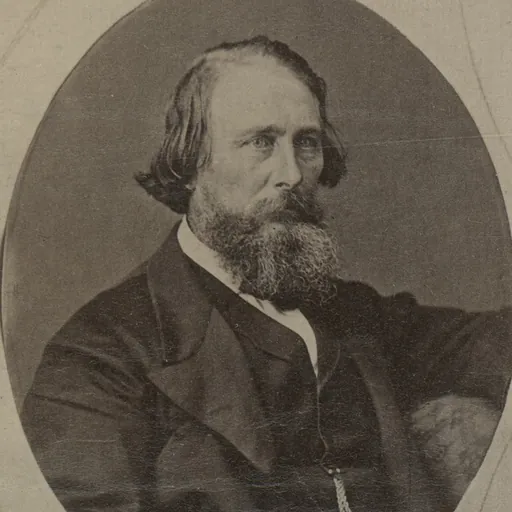
About Henry Kent Hughes
Lived 1814 – 1880 (aged 65–66). Henry Kent Hughes was a British and Australian politician.
Henry Kent Hughes (c. 1814 – 30 August 1880), usually referred to as H. Kent Hughes, was a pastoralist and politician who sat in the South Australian House of Assembly from 1868 to 1875 representing the seats of Victoria and later, Port Adelaide. Early life
Hughes was born in England, possibly the son of Thomas Hughes, dyer, of Bunhill Row. He married Jane Hilditch (died 4 June 1890). They travelled to South Australia on the barque Raleigh, arriving at Port Adelaide on 15 January 1851.
Hughes was, for a considerable period (at least 1838 – 1844) in the colony of Victoria; he was one of a party, with Peter Snodgrass MLC, a Mr. Murdoch, a Dr. Dixon and one James Murdoch, who pioneered settlement in the Goulburn Valley in Victoria. With two brothers he founded the property, later the town, of Avenel, often cited as named for a Gloucestershire village with which had a connection (though information on its whereabouts is lacking), his previous property in England, or Sir Walter Scott's fictional castle and family, of which the White Lady of Avenel is the best known. There is also a reference to his property "Dropmore" which may or may not have been a separate holding.
Around 1854 he formed a business association with the future premier of South Australia, John Hart, in the company Hart & Hughes with offices in Waymouth Street, Adelaide. They built Port Adelaide's first flour mill, run by Hart and Company, of which he was a silent partner. with Connor as general manager until shortly before his death in 1926.
Hughes purchased extensive properties on the River Murray, including one near Wellington where he ran sheep in conjunction with his brother Edmund Chauntrell Hughes, S.M., which was quite successful, largely because of careful breeding and the attention they paid to prevention of diseases. He returned to England in an attempt to regain his health but died at Kew in 1880.
Among his bequests were £250 to the Orphan Home and £300 for St Peter's Cathedral, Adelaide. His wife donated the tower clock on Saint Andrew's Church, Walkerville in his memory.
He had a share in Section 2112, Port Adelaide which was subdivided by Private Act in 1852.
He was a director of the National Bank
His chief public service was to act as Secretary and Treasurer for the Church of England's Orphan Home for Girls on Carrington Street.
His home in Adelaide was "Avenel", a ten-roomed residence on Robe Terrace, North Adelaide. Its 20 acres, "Avenel Gardens", was subsequently owned by William Pope, founder of North Adelaide Golf Club, then subdivided in the 1890s.
Footnotes
Don’t just read it —
keep it.
Full-length biographies made to live with: read them, listen on the way to work, watch them tonight.
- E-book
- Audio
- Video
Instant download · yours to keep · every purchase keeps this site free
Important facts
People in Henry Kent Hughes's life
Named in this biography and alive at the same time

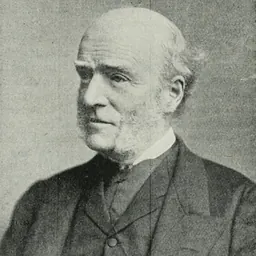
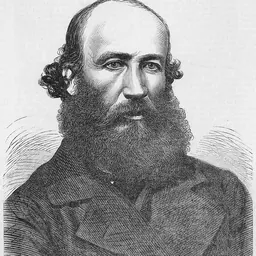

Related people
Same field, nearest in time


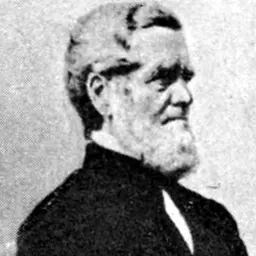
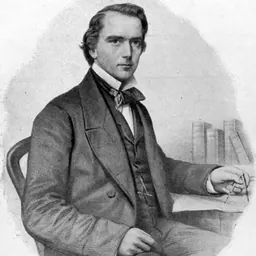


Contemporaries
People whose lives overlapped Henry Kent Hughes's





Frequently asked questions
Who was Henry Kent Hughes?
South Australian pastoralist and politicians (1814–1880)
When was Henry Kent Hughes born?
Henry Kent Hughes was born in 1814 in St Luke's.
When did Henry Kent Hughes die?
Henry Kent Hughes died on 30 August 1880 in Kew.
What was Henry Kent Hughes's occupation?
Henry Kent Hughes was a politician.
What nationality was Henry Kent Hughes?
Henry Kent Hughes was British and Australian.
Sources & further reading
· Wikipedia: Henry Kent Hughes
Cite this page
APA: Biography.guide. (2026). Henry Kent Hughes. https://biography.guide/henry-kent-hughes/
MLA: "Henry Kent Hughes." Biography.guide, https://biography.guide/henry-kent-hughes/.
Chicago: "Henry Kent Hughes." Biography.guide. https://biography.guide/henry-kent-hughes/.
Data last updated: 2026-09-20 · Spot an error? Report a correction.
Portrait: Wikimedia Commons · author & licence
Page generated 2026-09-27 04:57 UTC