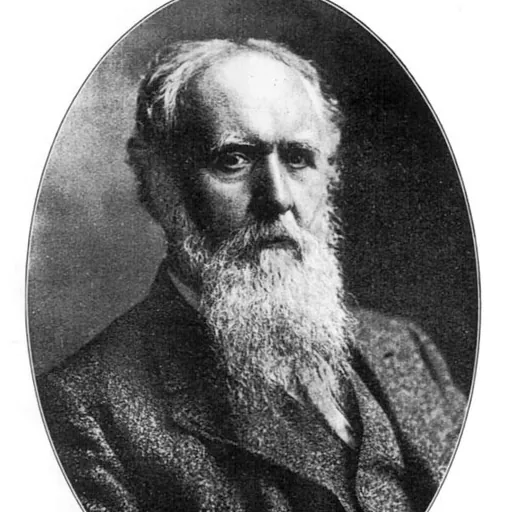
About Henry Jenner
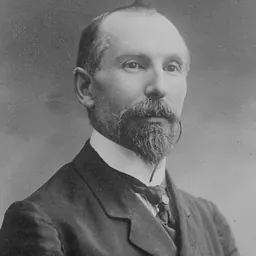
Lived 1848 – 1934 (aged 85). Henry Jenner was a British librarian, translator, archaeologist and bible translator.
Henry Jenner (8 August 1848 – 8 May 1934) was a British scholar of the Celtic languages, a Cornish cultural activist, and the chief originator of the Cornish language revival.
Jenner was born at St Columb Major on 8 August 1848. He was the son of Henry Lascelles Jenner, who was one of two curates to the Rector of St. Columb Major, and later consecrated though not enthroned as the first Bishop of Dunedin and the grandson of Herbert Jenner-Fust. In 1869 Jenner became a clerk in the Probate Division of the High Court and two years later was nominated by the Primate at Canterbury for a post in the Department of Ancient Manuscripts in the British Museum, his father then being the Rector of Preston, a small village near Canterbury.
In 1904, he successfully campaigned for Cornwall to join the Celtic Congress. He jointly founded the Old Cornwall Society at St Ives in 1920 and in 1928 he was a joint founder of the Cornish Gorsedh.
Work with the Cornish language His earliest interest in the Cornish language is mentioned in an article by Robert Morton Nance entitled "Cornish Beginnings",
In 1873, Jenner presented a paper entitled The Cornish Language to the Philological Society in London, concluding that:
Jenner was to prove himself wrong. In 1875, he was contacted by W. S. Lach-Szyrma, Vicar of Newlyn and Celtic scholar. They visited the elderly, making notes on the remnants of Cornish.
In 1877, he discovered, whilst working in the British Museum, forty two lines of a medieval play written in Cornish around the year 1450, known as the Charter Fragment. He decided to promote an interest in Cornish outside academia, among the people of Cornwall themselves and also organised a special commemoration service of Dolly Pentreath and the centenary of her death.
In 1932, the Celtic Congress met in Cornwall for the first time, at Truro, with Jenner as its president. Delegates heard speeches in Cornish from eight Cornish bards and Nance's play An Balores was performed. At this time, Jenner called for Cornish to become an optional subject in schools across Cornwall, to little reaction from the authorities of education.
That year, on 31 December, the Western Morning News published a speech by Jenner on the subject of Cornish patriotism in which he wrote "Bedheugh Bynytha Kernewek" (Be Forever Cornish). A group of young Cornish folk who were politically active joined together to form Cornwall's first national political movement, Tyr ha Tavas (Land and Language), taking Jenner's phrase as their motto to lobby parliament.
At a time when many people thought the Cornish language had died Jenner observed,
Legacy
He contributed articles on Catholic liturgical rites to the Catholic Encyclopedia.
In 2010, Michael Everson published a new edition entitled Henry Jenner's Handbook of the Cornish Language, which contains modern IPA phonetic transcriptions to make clear to modern readers what phonology Jenner was recommending. The book also contains three essays written by Jenner thirty years prior to the 1904 publication, as well as some examples of a number of Christmas and New Years cards sent out by Jenner containing original verse by him in Cornish and English.
Personal life
Jenner married Katharine Lee Rawlings in 1877 (she was a novelist and author of non-fiction under the name Katharine Lee). A biography of Henry and Kitty, including much information about the context in which their work appeared, was published in 2004 by Derek R. Williams.
After working at the British Museum for more than forty years, retired to Hayle, his wife's home town, and in January 1912 he was elected as the Librarian of the Morrab Library, a post he held until 1927. He also served as President of both the Royal Cornwall Polytechnic Society and of the Royal Institution of Cornwall.
In 1933 he was received into the Roman Catholic Church.
He died on 8 May 1934 and is buried in St. Uny's Church, Lelant. Before he died, he said: "The whole object of my life has been to inculcate into Cornish people a sense of their Cornishness."
Political leanings Jenner was a Tory and Jacobite. He and his wife supported the Order of the White Rose, a society of Stuart sympathizers which he had founded in 1891, and of which he was chancellor. He also actively supported The Royalist, a journal which ran from 1890 to 1905. He was a key figure in the Neo-Jacobite Revival of the 1890s.
Don’t just read it —
keep it.
Full-length biographies made to live with: read them, listen on the way to work, watch them tonight.
- E-book
- Audio
- Video
Instant download · yours to keep · every purchase keeps this site free
Important facts
People in Henry Jenner's life
Named in this biography and alive at the same time


Related people
Same field, nearest in time


Contemporaries
People whose lives overlapped Henry Jenner's



Frequently asked questions
Who was Henry Jenner?
British Celticist (1848–1934)
When was Henry Jenner born?
Henry Jenner was born on 8 August 1848.
When did Henry Jenner die?
Henry Jenner died on 8 May 1934 in Hayle.
What was Henry Jenner's occupation?
Henry Jenner was a librarian, translator, archaeologist and bible translator.
What nationality was Henry Jenner?
Henry Jenner was British.
Sources & further reading
Cite this page
APA: Biography.guide. (2026). Henry Jenner. https://biography.guide/henry-jenner-librarian/
MLA: "Henry Jenner." Biography.guide, https://biography.guide/henry-jenner-librarian/.
Chicago: "Henry Jenner." Biography.guide. https://biography.guide/henry-jenner-librarian/.
Data last updated: 2026-09-23 · Spot an error? Report a correction.
Portrait: Wikimedia Commons · author & licence
Page generated 2026-09-27 05:05 UTC