
About Henry Harland
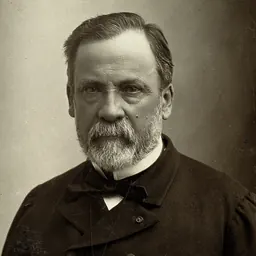
Lived 1861 – 1905 (aged 44). Henry Harland was an American novelist, writer, journalist and editor.
Henry Harland (March 1, 1861 – December 20, 1905) was an American novelist and editor.
Biography Harland was born in Norwich, Connecticut, in 1861, the son of Fourierist Thomas Harland, who had been a one-time roommate of editor and author Edmund Clarence Stedman. He was raised in New York and, after the Civil War, the Harlands lived in a German Jewish section of the city.
Harland attended the City College of New York and briefly Harvard Divinity School. In May 1884, he married Aline Herminie Merriam, who shared his artistic interests. His literary career falls into two distinct sections. During the first of these, writing under the pseudonym Sidney Luska, he produced a series of highly sensational novels, written with little regard to literary quality. His novels written under this persona in the 1880s became the first popularly-read books to feature the American Jewish experience, which Harland both celebrated and criticized. Kaufmann Kohler in The Menorah complained that, in Harland's novels "the Jews, as a class, lack refinement".
Harland's last novel, The Royal End (1909), was incomplete when he died. His wife finished it according to his notes. He died in 1905 at Sanremo, Italy, after a prolonged period of tuberculosis.
After his death, Henry James wrote positively about both Harland and The Yellow Book, though he had previously disparaged both.
Works As It Was Written: A Jewish Musician's Story (1885) by Sidney Luska Mrs Peixada (1886) by Sidney Luska The Yoke Of The Thorah (1887) by Sidney Luska My Uncle Florimond (1888) by Sidney Luska (Henry Harland) A Latin-Quarter Courtship, and Other Stories (1889) by Sidney Luska (Henry Harland) Grandison Mather (1889) by Sidney Luska (Henry Harland) Two Women or One? From the Mss. of Dr. Leonard Benary (1890) by Henry Harland (Sidney Luska) Two Voices (1890) by Henry Harland (Sidney Luska) Contents: “Dies Irae”, “De Profundis”. Fantasy (1890) by Matilde Serao, translated by Henry Harland and Paul Sylvester Mea Culpa: A Woman’s Last Word (1891) Mademoiselle Miss, and Other Stories (1893) The Yellow Book, An Illustrated Quarterly (1894–1897) Harland was literary editor for the entire run of 13 volumes, and contributed a number of (mostly) pseudonymous pieces. Grey Roses (1895) Comedies and Errors (1898) The Cardinal's Snuff-Box (1900) The Lady Paramount (1902) My Friend Prospero (1903) The Royal End: A Romance (1909) Completed by Harland's widow, Aline. The Light Sovereign (1917) with Hubert Crackanthorpe
Don’t just read it —
keep it.
Full-length biographies made to live with: read them, listen on the way to work, watch them tonight.
- E-book
- Audio
- Video
Instant download · yours to keep · every purchase keeps this site free
Important facts
People in Henry Harland's life
Named in this biography and alive at the same time



Related people
Same field, nearest in time




Contemporaries
People whose lives overlapped Henry Harland's

Frequently asked questions
Who was Henry Harland?
US. novelist, editor (1861-1905)
When was Henry Harland born?
Henry Harland was born on 1 March 1861 in New York City.
When did Henry Harland die?
Henry Harland died on 20 December 1905 in Sanremo.
What was Henry Harland's occupation?
Henry Harland was a novelist, writer, journalist and editor.
What nationality was Henry Harland?
Henry Harland was American.
Sources & further reading
Cite this page
APA: Biography.guide. (2026). Henry Harland. https://biography.guide/henry-harland/
MLA: "Henry Harland." Biography.guide, https://biography.guide/henry-harland/.
Chicago: "Henry Harland." Biography.guide. https://biography.guide/henry-harland/.
Data last updated: 2026-09-20 · Spot an error? Report a correction.
Page generated 2026-09-27 05:26 UTC