
About Henry Gaylord Wilshire
Lived 1861 – 1927 (aged 66). Henry Gaylord Wilshire was an American editor, socialist and publisher.
Henry Gaylord Wilshire (June 7, 1861 – September 7, 1927), known to his contemporaries by his middle name of "Gaylord", was an American land developer, publisher, and outspoken socialist. He ran at various times as a candidate for several leftist parties, albeit never elected. He is the namesake of Los Angeles' Wilshire Boulevard and an early resident of the city of Fullerton in Orange County.
Biography
Henry Gaylord Wilshire was born June 7, 1861, in Cincinnati, Ohio. He moved to Los Angeles, California in 1884.
Wilshire turned to populist politics in the early 1890s, writing from London in the fall of 1892 to the Anaheim Journal to advocate the nationalization of America's railways as a means of reining in the "chief grabbers" Jay Gould and Cornelius Vanderbilt.
He was author of the 1890 book Why workingmen should be social democrats, The Problem of the Trust (1900), and Socialism Inevitable (1907).
In 1895 he began developing stretching westward from Westlake Park for an elite residential subdivision. He donated a strip of land to the city of Los Angeles for a boulevard through what was then a barley field, on the conditions that it would be named for him and that railroad lines and commercial or industrial trucking would be banned.
In 1890, he stood as the Nationalist Party candidate for Congress in California's 6th congressional district in the Fullerton area. He was the first congressional candidate in the U.S. for what was a socialist party. He received more than a thousand votes but was not elected.
He ran as the Socialist Labor Party candidate for Attorney General in 1891 and was nominated to run for the British Parliament in 1894 (but had to return to the U.S. prior to the election).
Beside his political work, Wilshire also involved himself in the search for cheap energy. He was the author of the 1899 book Liquid air - perpetual motion at last - Tripler's surplusage explained, in which he explained a way to use the heat of sunlight to pressurize water and create heat and horsepower.
In 1900, Wilshire launched the first of his publishing ventures in Los Angeles, a magazine called The Challenge. At least 40 issues of the publication were produced between December 1900 and October 1901. The name of this publication was subsequently changed to Wilshire's Monthly Magazine in 1901, before being shortened to Wilshire's Magazine (1902) and Wilshire's (1904), with publication variously in New York and Toronto. (He lived in Toronto circa 1902.)
First a small-format magazine, later a tabloid newspaper, Wilshire's continued in production until February 1915.
He ran for Congress in California's 6th district again in 1900, this time on the ticket of the Social Democratic Party of America. That year he was author of The Problem of the Trust (1900).
In 1900, Wilshire was arrested for speaking in a public park in Los Angeles. A judge dismissed the charges, but the incident caused Wilshire to leave Los Angeles for New York.
When his magazine was banned in the U.S., he moved to Canada and mailed his newspaper into the U.S. from that outside location. He is said to have run for the Canadian Parliament in 1902.
He moved to New York City and ran to be a New York Congressman in 1904. In 1909 he was president of the Beaver National Bank of New York City.
Later life
Wilshire eventually returned to Los Angeles and made his connection with the now famous boulevard that bore his name. He had no direct involvement with its gradual expansion in the years while he was absent from the region.
By about 1911 Wilshire expressed doubts about electoral politics, and in his writing, shifted to revolutionary syndicalism and advocacy of the general strike. He was author of Syndicalism: What It Is (1912). He was also the editor of the Syndicalist League's magazine The Syndicalist in April and May 1912 when the editor, Guy Bowman, was imprisoned, and was editor again in 1913.
During World War I Wilshire worked with Emma Goldman in the Free Speech League in New York. He was author of the 1918 book Autocracy vs. democracy: Both failures.
Wilshire was also interested in the health industry. In 1925, he started marketing the Ionaco, an electric belt that could purportedly improve health. The belt gained popularity from its marketing, but was dismissed by medical health experts as quackery.
Death and legacy Gaylord Wilshire died destitute on September 7, 1927 in New York.
Wilshire Drive in Phoenix, Arizona, was named after him, as is Wilshire Avenue in Fullerton, California (where he first ran for Congress in 1890, the first congressional candidate in America from what became a socialist-oriented party).
Don’t just read it —
keep it.
Full-length biographies made to live with: read them, listen on the way to work, watch them tonight.
- E-book
- Audio
- Video
Instant download · yours to keep · every purchase keeps this site free
Important facts
People in Henry Gaylord Wilshire's life
Named in this biography and alive at the same time

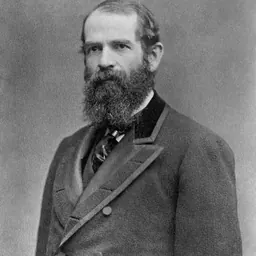

Related people
Same field, nearest in time
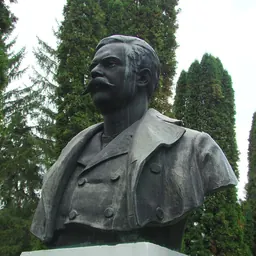

Contemporaries
People whose lives overlapped Henry Gaylord Wilshire's
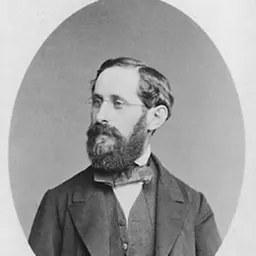

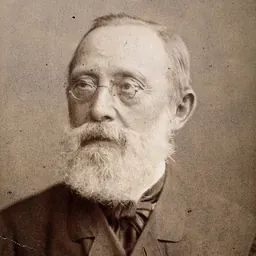
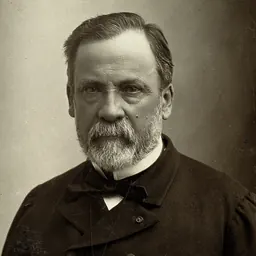

Frequently asked questions
Who was Henry Gaylord Wilshire?
Land developer, publisher, and socialist
When was Henry Gaylord Wilshire born?
Henry Gaylord Wilshire was born on 7 June 1861 in Cincinnati.
When did Henry Gaylord Wilshire die?
Henry Gaylord Wilshire died on 7 September 1927 in New York City.
What was Henry Gaylord Wilshire's occupation?
Henry Gaylord Wilshire was an editor, socialist and publisher.
What nationality was Henry Gaylord Wilshire?
Henry Gaylord Wilshire was American.
Sources & further reading
· Wikipedia: Henry Gaylord Wilshire
Cite this page
APA: Biography.guide. (2026). Henry Gaylord Wilshire. https://biography.guide/henry-gaylord-wilshire/
MLA: "Henry Gaylord Wilshire." Biography.guide, https://biography.guide/henry-gaylord-wilshire/.
Chicago: "Henry Gaylord Wilshire." Biography.guide. https://biography.guide/henry-gaylord-wilshire/.
Data last updated: 2026-09-27 · Spot an error? Report a correction.
Page generated 2026-09-27 05:16 UTC