
About Henry Garfield Alsberg
Lived 1881 – 1970 (aged 88–89). Henry Garfield Alsberg was an American journalist, known for Federal Writers' Project.
Henry Garfield Alsberg (September 21, 1881 – November 1, 1970) was an American journalist and writer who served as the founding director of the Federal Writers' Project.
A lawyer by training, he was a foreign correspondent during the Russian Revolution, secretary to the U.S. Ambassador to the Ottoman Empire, and an influential volunteer for refugee aid efforts. Alsberg was a producer at the Provincetown Playhouse. He spent years traveling through war-torn Europe on behalf of the American Jewish Joint Distribution Committee. After publishing several magazines for the Federal Emergency Relief Administration, he was appointed to head the Federal Writers' Project. Fired from the project in 1939 shortly after testifying before the House Un-American Activities Committee, he worked for a short time for the Office of War Information, before joining Hastings House Publishers as an editor.
Early life and education
Alsberg was born September 21, 1881, in Manhattan to Meinhard and Bertha Alsberg. Meinhard was born in Arolsen, Germany and immigrated as a child with his family to the United States in 1865. He was naturalized in 1876. He married Bertha (born in New York City) and had four children with her, of whom Henry was the youngest.
Alsberg's parents were secular Jews, his mother being indifferent to religion and his father described as "aggressive in his agnosticism".
After practicing law for three years, Alsberg entered Harvard's Graduate School of Arts and Science for a year to study comparative literature.
Journalism, theater, and international activity Early years in journalism Uninterested in finishing his graduate studies at Harvard or practicing law, Alsberg moved back to New York City to write. He sent an early play to Paul Kester, who recommended it to Bertha Galland. He sold a short story, "Soirée Kokimono", to The Forum in 1912; the story was selected for the following year's Forum Stories compilation. Alsberg went to London where he began working as a roving foreign correspondent for The Nation, New York World, and London's Daily Herald.
In August 1916, Alsberg was appointed personal secretary and press attaché to Elkus, who had been appointed U.S. Ambassador to the Ottoman Empire; they traveled on the Oscar II to Constantinople via Copenhagen. Alsberg took charge of the embassy's efforts to aid Armenians and Jews, which put him in contact with the American Jewish Joint Distribution Committee (JDC). When the U.S. declared war on Germany in April 1917, Turkey broke off diplomatic relations and the American embassy officials left. On his return to the states, Alsberg met with Secretary of State Robert Lansing to brief him on conditions in Constantinople and offered a plan for separating the Ottoman Empire from the German Alliance, which Lansing passed on to Woodrow Wilson. The next day, former Ambassador Henry Morgenthau suggested a similar plan to Lansing. A mission to Turkey consisted of Morgenthau and Felix Frankfurter (then an assistant to the Secretary of War), with Alsberg advising them on conditions and issues.
In 1917, Alsberg taught a course on the socialist-inspired cooperative movement at the Rand School of Social Science, while again writing for Evening Post and The Nation. In the Evening Post, Alsberg disputed the authenticity of the Sisson Documents, claiming that they were forgeries, which was later confirmed by historians. In Jan 1919, Alsberg was secretary of the Palestine Restoration Fund Campaign's National Finance Commission, and wrote for The Maccabaean, the official organ of the Zionist Organization of America. Later in 1919, Alsberg returned to Europe as a foreign correspondent for The Nation. He attended the Peace Conference in Paris as attaché to the Zionist delegation. While there, Alsberg reconnected with the JDC which needed volunteers to assess and provide relief to destitute Jews in Central and Eastern Europe. In Goldman's autobiography, she noted that Alsberg was particularly affected by the stories that the townspeople in Fastov told them of the pogroms.
For his travels with Goldman and Berkman, Alsberg had obtained written permission from the Soviet Union Foreign Office's Cheka and from a high-ranking Soviet official to travel on the expedition, but did not get a special visa from the local Moscow Cheka. The Foreign Office assured him the Moscow Cheka visa was not needed. But during their travels, orders were sent out to arrest Alsberg for travelling in Russia without having obtained permission from the Moscow Cheka, and he was taken into custody in Zhmerynka. Alsberg managed to get the police agent who escorted him to Moscow drunk on the trip. Arriving at the police station in Moscow carrying the agent, Alsberg set the unconscious body on the desk and said, "Here is the man you sent out to find me."
The following year, Alsberg accompanied the Bolshevik delegation to the Russo-Polish peace talks in Riga, and he wrote about the signing of the armistice. J. Edgar Hoover, head of the newly formed Bureau of Investigation (now the FBI), received voluminous reports on Alsberg due to his involvement with the Bolsheviks, his friendship with Goldman and Berkman, and because he was a Jew. Alsberg continued his association with and work for the JDC, working in Italy with refugees.
Alsberg left Russia for Germany in May 1921. In September he went to Mexico to observe and write about the presidency of Álvaro Obregón following the Mexican Revolution. His articles accused the U.S. State Department of "putting into effect a private and unofficial imperialism of its own in Latin America" – accusations which were debated in major newspapers across the U.S. After the famine of 1921, the JDC sent Alsberg back to Russia to help set up trade schools and agricultural colonies for Jewish families.
JDC history and theater work The JDC hired Alsberg to write a history of their organization in 1923, which was his first paid work for them. Alsberg submitted a draft in the summer of 1927. Although it was never published, Susan Rubenstein DeMasi wrote: "it still remains as perhaps the most exhaustive account of pre-World War II Central and Eastern European Jewry ever written."
Alsberg became involved in the theater during the early 1920s. In 1924, Alsberg obtained the English translation rights to S. Ansky's The Dybbuk, written in Yiddish. His adaptation ran at the off-Broadway Neighborhood Playhouse.
International Committee for Political Prisoners
Alsberg was particularly concerned about the conditions of political prisoners in Russia.
Alsberg spent several years traveling in Europe and working on his own writing, including his autobiography which he never finished. In March 1934, he joined the publications division of the Federal Emergency Relief Administration (FERA) where his first assignment was editing America Fights the Depression, a book about the Civil Works Administration's accomplishments. He then took on editing two magazines for the agency. At the time, Alsberg dubbed himself a "philosophical anarchist" although others labelled him a "tired radical of the 20s". Novelist Vincent McHugh classified Alsberg in an elite group: "men with a public sense, a feeling for broad human movements and how people are caught up in them." Baker described Alsberg to an associate as "An anarchistic sort of a fellow incapable of administration but one with a great deal of creative talent". His original vision for the project was to produce a guide for each major region of the country, but changed the plans to a guide for each state due to political pressure. Alsberg insisted that the American Guide Series be much more than an American Baedeker; the guides needed to capture the whole of American civilization and culture and celebrate the diversity of the nation. He required that each state project include ethnography with particular attention to Native Americans and African Americans, and 40% of FWP employees were women. First Lady Eleanor Roosevelt was an enthusiastic supporter of the FWP. Two of the writers Alsberg personally recruited to the Writers' Project were John Cheever and Conrad Aiken.
Alsberg felt the American Guide Series needed to be supplemented with books about the people of the country. With this in mind, the project published ethnic studies such as The Italians of New York (in both English and Italian), Jewish Landsmanschaften of New York (in Yiddish), The Armenians of Massachusetts, and The Swedes and Finns of New Jersey. One of Alsberg's letters describes the approach that he wanted the ethnic studies writers to take:
Reception Although the first books in the American Guide Series published under the auspices of the project—Idaho, Washington: City and Capital, and Cape Cod Pilot—were met with praise, the furor that accompanied the release of Massachusetts damaged the reputations of the project and Alsberg. A reporter published a story decrying the Massachusetts guide because it spent forty-one lines discussing the Sacco-Vanzetti case, while only giving nine lines to the Boston Tea Party and five to the Boston Massacre. Other newspapers jumped on the bandwagon to smear the Writers' Project (and the Roosevelt administration by association). Senators demanded investigations. More scrutiny found that the guide had a number of passages that appeared to be pro-labor, and the book was banned by several Massachusetts mayors. Ralph M. Easley, representing a group called the National Civic Federation, complained in a letter to President Roosevelt that the Writer's Project was "dominated by Communist sympathizers whose principal interest was political agitation".
When Alsberg threw a cocktail party to celebrate the publication of the Washington guide, Alsberg and the Writers' Project were attacked on the Senate floor by Mississippi's Senator Bilbo in a tirade because a woman from his own state had been invited to a party that had both white and black guests. Bilbo later had his comments expunged from the Congressional Record.
Alsberg struggled with the project's tension between providing jobs (relief) and creative works.
Dies Committee The Dies Committee was a special investigation committee established by the House Committee on Un-American Activities and chaired by Martin Dies Jr. Aiming to discredit the New Deal by attacking individual projects, Dies claimed that one-third of the Writers' Project's members were Communists. Despite inaccuracies in statements from the committee being widely reported in the press, Alsberg's superiors refused him permission to issue any statements refuting the charges. Alsberg was called to testify before the committee December 6, 1938, after months of requesting a hearing. Within the project, liberals felt Alsberg had been too deferential toward the committee, while conservatives felt the committee had gone too easy on Alsberg. Numerous co-workers said his testimony was brilliant, but Alsberg wanted to resign afterward. Despite Dies's compliments to Alsberg on his testimony, the committee condemned the Writers' Project.
In 1939, Congress cut the WPA budget, and 6,000 were laid off from Federal One. The FWP was then investigated by Clifton Woodrum's House subcommittee on appropriations, which attacked a letter to the editor Alsberg had written ten years previously about conditions in prisons. The Emergency Relief Appropriation Act of 1939 cut funding and required the FWP, now renamed the Writers' Program, to obtain state sponsorship for its projects. The new head of the WPA, Francis C. Harrington, demanded Alsberg's resignation. Alsberg refused to resign immediately, continuing to work on state sponsorships and works in progress. When Alsberg continued working past the August 1 deadline that Harrington set, he was fired. The liberal press was indignant, with The Nation writing "The dismissal looks too much like a living sacrifice on the altar of Messrs. Dies and Woodrum and the Red-baiting they represent".
Under Alsberg's leadership, the Writer's Project had produced over 200 books of more than 20 million words.
Alsberg took on a project for Hastings House Publishers as editor-in-chief for a one-volume version of the American Guide Series.
During the last years of his life, Alsberg, who never married, lived in Palo Alto, California, with his sister Elsa. Alsberg died November 1, 1970, after a short illness.
Some of Alsberg's papers are archived at the libraries at the University of Oregon.
Don’t just read it —
keep it.
Full-length biographies made to live with: read them, listen on the way to work, watch them tonight.
- E-book
- Audio
- Video
Instant download · yours to keep · every purchase keeps this site free
Important facts
People in Henry Garfield Alsberg's life
Named in this biography and alive at the same time





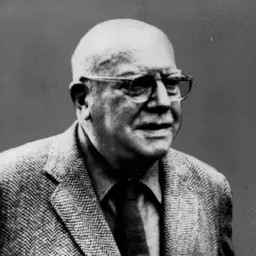

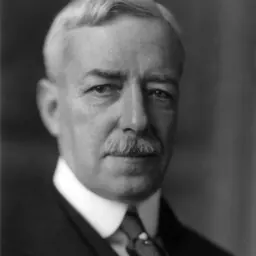
Related people
Same field, nearest in time


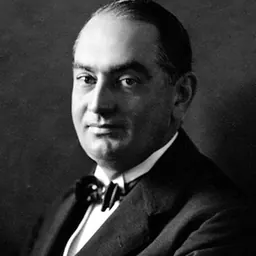

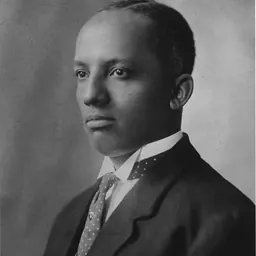
Contemporaries
People whose lives overlapped Henry Garfield Alsberg's


Frequently asked questions
Who was Henry Garfield Alsberg?
American journalist and writer (1881-1970)
When was Henry Garfield Alsberg born?
Henry Garfield Alsberg was born on 21 September 1881 in New York City.
When did Henry Garfield Alsberg die?
Henry Garfield Alsberg died in 1970 in Palo Alto.
What was Henry Garfield Alsberg's occupation?
Henry Garfield Alsberg was a journalist.
What was Henry Garfield Alsberg known for?
Henry Garfield Alsberg was known for Federal Writers' Project.
What nationality was Henry Garfield Alsberg?
Henry Garfield Alsberg was American.
Sources & further reading
· Wikipedia: Henry Garfield Alsberg
Cite this page
APA: Biography.guide. (2026). Henry Garfield Alsberg. https://biography.guide/henry-garfield-alsberg/
MLA: "Henry Garfield Alsberg." Biography.guide, https://biography.guide/henry-garfield-alsberg/.
Chicago: "Henry Garfield Alsberg." Biography.guide. https://biography.guide/henry-garfield-alsberg/.
Data last updated: 2026-09-20 · Spot an error? Report a correction.
Page generated 2026-09-27 05:23 UTC