
About Henry Frith
Lived 1840 – 1910 (aged 69–70). Henry Frith was a civil engineer, translator, writer and children's writer.
Henry Frith (2 May 1840 – 12 October 1917) was an Irish engineer and writer who translated the works of Jules Verne and others, as well as creating his own works. His prolific output amounted to nearly 200 works between translations, novels, and instructional titles.
Early life Frith was born in Dublin, Ireland, on 2 May 1840, at 2, Upper Leeson Street. He was the second son of Henry Frith and Frances (née Winter). Of his four siblings only two, his eldest and youngest brothers, survived to adulthood. His father worked in the Ordnance Office in Dublin. Frith was educated at Cheltenham College and entered Trinity College Dublin on 1 July 1857 to train as a Civil Engineer. When Mary's step-brother William Lowndes (1834–1905) died, his estate was valued at £452,310. He not only left £7,000 to each of his three half sisters, but also left his real estate (the Knightsbridge ground rents, and the Bury house) together with the residue of his personal estate to Mary's eldest son William Frederick.
The couple had six children: Ida Mary Frith (1870–1963) William Frederick Lowndes Frith (1871–1956), changed his surname from Frith to Frith Lowndes in 1906. This was at the request of his step-uncle William Lowndes, in his will, which made William his heir. Ernest Henry Frith (1874–1926) Lilian Adela Frith (1880–1962) Roland Girdlestone Frith (1884–1947), moved to the US Percival Lowndes Frith (1886–1954)
Works Frith originally trained as an engineer, and worked for the War Office until 1875 when he qualified for a pension. The way in which he described himself changed over time: 1870 Baptismal record: Gentleman 1871 Census: Civil ServantWar Office 1871 Baptismal record: Gentleman 1874 Baptismal record: Manager to a Public Company 1881 Census: Author, Editor, Publisher's Reader 1884 Baptismal record: Author 1886 Baptismal record: Authorship 1891 Census: Literature 1896 Marriage Record for Frederick: Author 1901 Census: Retired Author 1908 Marriage record for Ida: Gentleman 1911 Census: Retired Civil ServantWar Office
Frith's work, with nearly 200 books to his credit, consists of: Translations, from French, of novels and instructional works. Novels, mostly juvenile fiction Entertaining non-fiction, usually for younger readers Instructional non-fiction
He also produced some albums and books that don't fit easily into these four categories. Frith freely makes use of the work of others in his non-fiction works, and some of them were encyclopedic in tone, briefly covering a wide range of issues in a topic. In his preface to Ascents and Adventures: A Record of Hardy Mountaineering in Every Quarter of the Globe, he says: "The following pages do not profess to be a record of our own personal adventures. They include many experiences of a varied character in Europe, Asia, and America; but while making use of the narratives and notes of more experienced climbers, without copying their work; we have in some cases embodied the spirit of it, and fixed it in our pages for the amusement, and it may be for the instruction, of young people."
Translations The first of Frith's works that is catalogued at the British Library is an 1875 translation of Les Braves Gens by Jules Girardin. This was translated as The Adventures of Johnny Ironsides in English. Frith followed this in 1876 with a translation of two of Jules Verne's stories: Une Ville flottante and Les Forceurs de blocus as A Floating City and the Blockade Runners. 1876: Vingt mille lieues sur les mers as Twenty Thousand Leagues Under the Seas. 1877: Aventures de trois Russes et de trois Anglais as Adventures of Three Englishmen and Three Russians in Southern Africa 1878: Le Tour du monde en quatre-vingts jours as Round the World in Eighty Days 1879: Le Pays des fourrures as The Fur Country 1884: Kéraban-le-têtu as Kéraban the Inflexible The Encyclopedia of Science Fiction suggests that Frith may have translated Verne's Five Weeks in a Balloon, but neither Wolcott He was survived by his wife Mary, who administered his estate of £2,335 4s 10d. The Buckinghamshire Examiner expressed sympathy with his son, William Frederick. Mary survived Frith by another 11 years, dying on 7 June 1928.
Don’t just read it —
keep it.
Full-length biographies made to live with: read them, listen on the way to work, watch them tonight.
- E-book
- Audio
- Video
Instant download · yours to keep · every purchase keeps this site free
Important facts
People in Henry Frith's life
Named in this biography and alive at the same time


Related people
Same field, nearest in time
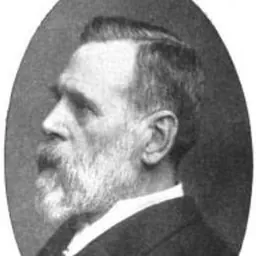
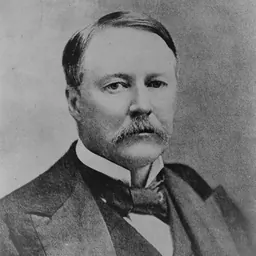
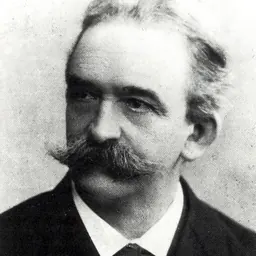
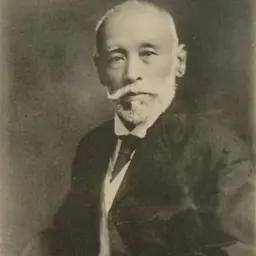

Contemporaries
People whose lives overlapped Henry Frith's
Frequently asked questions
Who was Henry Frith?
Irish author and translator (1840–1917)
When was Henry Frith born?
Henry Frith was born on 2 May 1840 in Dublin.
When did Henry Frith die?
Henry Frith died in 1910 in Amersham, Buckinghamshire, England.
What was Henry Frith's occupation?
Henry Frith was a civil engineer, translator, writer and children's writer.
Sources & further reading
Cite this page
APA: Biography.guide. (2026). Henry Frith. https://biography.guide/henry-frith/
MLA: "Henry Frith." Biography.guide, https://biography.guide/henry-frith/.
Chicago: "Henry Frith." Biography.guide. https://biography.guide/henry-frith/.
Data last updated: 2026-09-22 · Spot an error? Report a correction.
Page generated 2026-09-27 04:57 UTC