
About Henry Fownes Luttrell
Lived 1722 – 1780 (aged 57–58). Henry Fownes Luttrell was a politician.
Arms of Fownes of Plymouth, Kittery Court & Nethway, in Devon & Dunster Castle in Somerset: Azure, two eagles displayed in chief and a mullet in base argent. Following his marriage and inheritance of Dunster Castle he adopted the arms of Luttrell and quartered his paternal arms
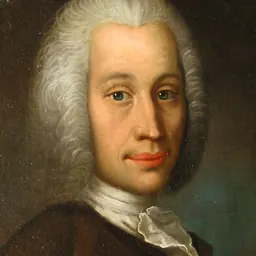
Henry Fownes Luttrell (born Henry Fownes; 1722 or 1723 – 30 October 1780), of Dunster Castle, Somerset, was High Sheriff of Somerset from 1754 to 1755 and a Member of Parliament for the borough of Minehead from 1768 to 1774.
Fownes was the son of John Fownes of Nethway and Kittery Court, near Dartmouth, and led the life of a country squire. In 1747, he married Margaret Luttrell, the heiress of Dunster Castle and added his wife's name to his own to comply with her late father's will. In accordance with the era's laws concerning the property rights of married women, on his marriage he became the legal owner of his wife's property, including not only Dunster Castle, but also the lordships of the manors of Dunster, Heathfield, and Kilton amongst others. The newly named Fownes Luttrell altered the castle considerably, remodelling its interior and park and building the Conygar Tower, a folly in the grounds. Following the death of his wife in 1766 he remarried in 1771.
When Fownes Luttrell's candidate for the 1754 election was defeated, he realised that his estate bought him relatively little political power. Frustrated, he set about nursing his interest in the borough. Later, a compromise with a rival landowner placed one of the borough's two parliamentary seats in his pocket. He stood for election in 1768 and was returned with the support of the Government. He was returned again in 1774 alongside his eldest son, John; the Prime Minister was disgruntled that he had not returned his own favoured candidate and Fownes Luttrell resigned on the condition that the Government's candidate would not interfere in the future without his permission. Thenceforth until abolition by the Reform Act 1832 the borough's parliamentary seats were effectively controlled by his family.
Fownes Luttrell was an inactive politician and is not known to have spoken or voted in Parliament during the six years he was a member. Instead, he led the life of a country squire, hunting and managing his estates. Fownes Luttrell died in 1780, and his eldest son succeeded to his estates.
Origins Henry Fownes was born in 1722 or 1723, the eldest son of John Fownes (died 1733) of Kittery Court, Kingswear, Devon, a Member of Parliament for Dartmouth, by his wife Anne Maddock, a daughter of Samuel Maddock of Tamerton Foliot. His grandfather was John Fownes (1661-1731) of Kittery Court in the parish of Kingswear and of Nethway in the parish of Brixham, both in Devon, a Member of Parliament for Dartmouth, Devon, in 1713–14. The first of his ancestors to settle in Devon was Thomas Fones (died 1638) of Plymouth in Devon, a merchant who served as Mayor of Plymouth in 1619, whose ancestors were from Bromsgrove in Worcestershire and in 1539 had acquired Dodford Priory shortly after the Dissolution of the Monasteries.
Marriages and issue
He married twice: Firstly on 16 February 1747, to his second cousin Margaret Luttrell (7 February 1726 – 1766 According to Sir Henry Maxwell Lyte, the historian of Dunster Castle, "the union proved exceptionally happy and her letters to her husband ... are conceived in the spirit of the sincerest affection." Following his marriage and inheritance not only was he required under the bequest to add to his surname but was also compelled to spend six months of each year at Dunster Castle. Of these, several died as infants: Alexander (born and died in 1749), Anne (born and died 1751), Rev. Alexander Luttrell (baptised 1754; died 1816). He was educated at Pembroke College, Cambridge, and took holy orders; in 1807, he married Lucy Gatchell. Francis Fownes Luttrell (1756–1823). He sat as a member of parliament for Minehead from 1780 to 1783 and went on to be Chair of the Board of Customs from 1813 to 1819. Lieutenant-Colonel Thomas Fownes Luttrell (1763–1811). He was an army officer and sat as a member of parliament for Minehead from 1795 to 1796. Lieutenant Henry Fownes Luttrell (1753–77), an officer in the Royal Horse Guards, died unmarried Margaret Fownes Luttrell (1747–92) who in 1769 married John Henry Southcote of Buckland Toutsaints, Devon, and sat for a portrait by Sir Joshua Reynolds that year.
Country squire Margaret Luttrell's father died in 1737, when she was eleven, and she inherited the position.
Don’t just read it —
keep it.
Full-length biographies made to live with: read them, listen on the way to work, watch them tonight.
- E-book
- Audio
- Video
Instant download · yours to keep · every purchase keeps this site free
Important facts
People in Henry Fownes Luttrell's life
Named in this biography and alive at the same time




Related people
Same field, nearest in time



Contemporaries
People whose lives overlapped Henry Fownes Luttrell's



Frequently asked questions
Who was Henry Fownes Luttrell?
British politician and landowner; (1722-1780)
When was Henry Fownes Luttrell born?
Henry Fownes Luttrell was born in 1722.
When did Henry Fownes Luttrell die?
Henry Fownes Luttrell died on 30 October 1780.
What was Henry Fownes Luttrell's occupation?
Henry Fownes Luttrell was a politician.
Sources & further reading
· Wikipedia: Henry Fownes Luttrell
· DBpedia: Henry Fownes Luttrell (died 1780)
Cite this page
APA: Biography.guide. (2026). Henry Fownes Luttrell. https://biography.guide/henry-fownes-luttrell/
MLA: "Henry Fownes Luttrell." Biography.guide, https://biography.guide/henry-fownes-luttrell/.
Chicago: "Henry Fownes Luttrell." Biography.guide. https://biography.guide/henry-fownes-luttrell/.
Data last updated: 2026-09-20 · Spot an error? Report a correction.
Page generated 2026-09-27 05:30 UTC