
About Henry F. Ashurst
Lived 1874 – 1962 (aged 87). Henry F. Ashurst was an American politician and lawyer.
Henry Fountain Ashurst (September 13, 1874 – May 31, 1962) was an American Democratic politician and one of the first two senators from Arizona. Largely self-educated, he served as a district attorney and member of the Arizona Territorial legislature before fulfilling his childhood ambition of joining the United States Senate. During his time in the Senate, Ashurst was chairman of the Committee on Indian Affairs and the Judiciary Committee.
Called "the longest U.S. theatrical engagement on record" by Time, Ashurst's political career was noted for a self-contradictory voting record, for the use of a sesquipedalian vocabulary, and for a love of public speaking that earned him a reputation as one of the Senate's greatest orators. Among the sobriquets assigned to him were "the Dean of Inconsistency", "Five-Syllable Henry", and the "Silver-Tongued Sunbeam of the Painted Desert".
Background Ashurst was born on September 13, 1874, in an uncovered wagon near Winnemucca, Humboldt County, Nevada, to William and Sarah Ashurst, the second of ten children. His family moved to a ranch near Williams, Arizona, when he was two, and he attended school in Flagstaff. At the age of ten he showed his ambition to be a senator by writing "Henry Fountain Ashurst, U.S. Senator from Arizona" into a speller. After dropping out of school at the age of thirteen, he worked as a cowboy on his father's ranch.
At the age of nineteen, Ashurst was made the turnkey at the county jail in Flagstaff. While working at the jail, he developed an interest in the law by reading Blackstone's Commentaries.
Political career Ashurst in his typical frock coat, striped pants, and winged collar. Ashurst was elected to the Territorial House of Representatives in 1897. He was re-elected in 1899, and became the territory's youngest speaker. In 1902, he was elected to the Territorial Senate. He served as district attorney of Coconino County from 1905 to 1908, when he moved to Prescott, Arizona. During the convention, he positioned himself for a U.S. Senate seat by avoiding the political fighting over various clauses in the constitution which damaged his rivals.
With the admission of Arizona as a state in 1912, Ashurst was elected by the Arizona legislature as one of the state's two senators, taking office on April 2 alongside Marcus A. Smith. He was easily re-elected in 1916 (by popular vote), and again in 1922, 1928, and 1934, serving for almost 29 years. He sought re-election in 1940 but was defeated in the Democratic primary.
During his early years in the Senate, Ashurst was a supporter of the Woodrow Wilson administration and served as chairman of the Committee on Indian Affairs between 1914 and 1919. The Democrats lost control of the Senate in 1918, and the presidency in 1920. Ashurst became a critic of Republican leaders and policy. The Democrats regained control in 1932, and Ashurst became chairman of the Judiciary Committee, serving until he left the Senate in 1941.
During re-election campaigns, Ashurst employed one of his favorite quotations, "Praise undeserved is scandal in disguise." To this end, his normal technique was to confess his faults and shortcomings to the voters while at the same time praising his opponent. During the 1934 elections he even told his constituents "If you don't send me back to the Senate, you'll have an old broken down politician on your hands, and you don't want that."
Oratory and style
Ashurst had an affection for oration, as expressed by his statement, "I simply love speaking – just as one may like maple syrup, Beethoven, Verdi, or Longfellow, Kipling, or Shakespeare – one hardly knows why." This combined with his courtly manners and impeccable attire earned Ashurst a reputation as the Chesterfield of the Senate. The New York Times said "Sheer eloquence is best personified in the present Senate by Ashurst of Arizona – the debonair, balm-tongued chairman of the Senate Judiciary Committee. Without losing one whit of his eloquence, or missing or misquoting a classical phrase, Ashurst can run the range from buffoonery to some of the most challenging remarks heard in Congress."
Ashurst's loquacious nature developed at an early age. After obtaining copies of several speeches by Senator Roscoe Conkling, a prominent 19th-century orator, Ashurst developed his speaking range and ability by thundering the words of other to the plants and rocks of the surrounding countryside. He also read a wide variety of classical and literary sources in an effort to learn as much quotable material as possible. As a result of these early efforts, by the time Ashurst joined Congress he had a well-developed speaker's voice and a wide collection of memorized quotations in both English and Latin. To this was added an interest in etymology that aided his vast vocabulary.
Senator Barry Goldwater was so fond of Ashurst's speeches that he compiled fourteen into the book Speeches of Henry Fountain Ashurst of Arizona. Ashurst responded to the book with "But, Barry, I made over 5,000 of them."
"Dean of Inconsistency" ...there has never been superadded to these vices of mine the withering embalming vice of consistency. Whoever in the public service is handcuffed and shackled by the vice of consistency will be a man not free to act as various questions come before him from time to time; he will be a statesman locked in a prison house the keys to which are in the keeping of days and events that are dead. As Emerson said, 'A foolish consistency is the hobgoblin of little minds, adored by little statesmen.' Never have I let what I said yesterday bind me today. No Senator can change his mind quicker than I.
His four votes on veteran's bonuses, two for and two against, which generated the comment "What of it? At least I was fifty per cent right, which is a pretty good record for a politician."
Retirement and death During his farewell speech in the Senate, Ashurst indicated his intention to retire to Arizona, saying, "When you are here worrying about patronage, worrying about committee assignments, worrying about bills, I shall possibly be enjoying the ecstasy of the starry stillness of an Arizona desert night, or enjoying the scarlet glory of her blossoming cactus, and possibly I may be wandering through the Petrified Forest in Arizona." But instead of going home, he accepted a position on the U.S. Board of Immigration Appeals, serving from April 8, 1941, until his retirement on February 28, 1943.
After his retirement, Ashurst lived in Washington, D.C., devoting his time to classical poetry and public speaking. He also made several public appearances. Ashurst was a contestant on the television game show The $64,000 Question; he missed a question, but received a Cadillac car as a consolation prize. He also made a cameo appearance in the film Advise & Consent, in the role of "Senator McCafferty". Ashurst suffered a stroke on May 15, 1962, and was admitted to Georgetown University Hospital where he died on May 31, 1962.
Ashurst kept a journal from June 1910 to July 27, 1937, which contains pen portraits of several fellow senators. The journal was edited by George F. Sparks and published in 1962 under the title A Many Colored Toga.
Don’t just read it —
keep it.
Full-length biographies made to live with: read them, listen on the way to work, watch them tonight.
- E-book
- Audio
- Video
Instant download · yours to keep · every purchase keeps this site free
Important facts
People in Henry F. Ashurst's life
Named in this biography and alive at the same time


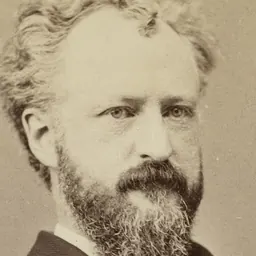
Related people
Same field, nearest in time




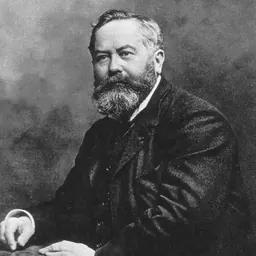
Contemporaries
People whose lives overlapped Henry F. Ashurst's
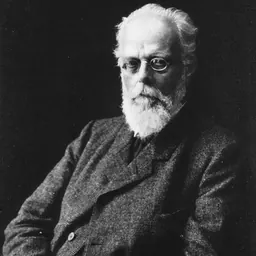
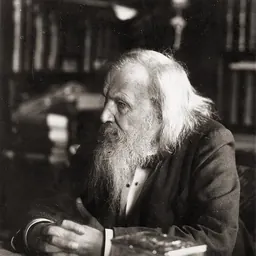

Frequently asked questions
Who was Henry F. Ashurst?
U.S. Senator from Arizona (1874–1962)
When was Henry F. Ashurst born?
Henry F. Ashurst was born on 13 September 1874 in Winnemucca.
When did Henry F. Ashurst die?
Henry F. Ashurst died on 31 May 1962 in Washington, D.C..
What was Henry F. Ashurst's occupation?
Henry F. Ashurst was a politician and lawyer.
What nationality was Henry F. Ashurst?
Henry F. Ashurst was American.
Sources & further reading
Cite this page
APA: Biography.guide. (2026). Henry F. Ashurst. https://biography.guide/henry-f-ashurst/
MLA: "Henry F. Ashurst." Biography.guide, https://biography.guide/henry-f-ashurst/.
Chicago: "Henry F. Ashurst." Biography.guide. https://biography.guide/henry-f-ashurst/.
Data last updated: 2026-09-20 · Spot an error? Report a correction.
Page generated 2026-09-27 05:18 UTC