
About Henry Englefield
Lived 1752 – 1822 (aged 69–70). Henry Englefield was an astronomer.
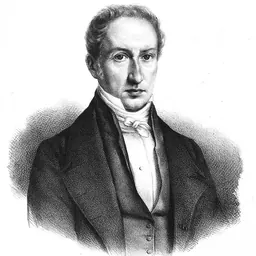
Sir Henry Charles Englefield, 7th Baronet FRS FRSE FSA FLS (1752 – 21 March 1822) was an English antiquary and astronomer.
Life He was the eldest son of Sir Henry Englefield, 6th Baronet (d. 1780) and his second wife, Catherine, daughter of Sir Charles Buck, 3rd Baronet. His father, who was the son of Henry Englefield, of Whiteknights Park at Earley near Reading, had in 1728 succeeded to the title and the Engelfield estates at Wootton Bassett, Wiltshire, so that he inherited both Whiteknights and Wootton Bassett on the death of his father, 25 May 1780. They were descended from the Englefield family of Englefield House in Berkshire.
In 1778 aged 26 Englefield was elected a Fellow of the Royal Society, and in the following year Fellow of the Society of Antiquaries. For many years he was vice-president of the latter, and succeeded George Townshend, Earl of Leicester as president. Owing, however, to his being a Catholic, objection was taken to his re-election; another factor was his opposition to the 1797 election to the Society of the architect James Wyatt. He was replaced by the Earl of Aberdeen. Under his direction the society produced between 1797 and 1813 a series of engravings of English cathedrals, to which he contributed dissertations on Durham, Gloucester, and Exeter.
Works Englefield's works were:
Tables of the Apparent Places of the Comet of 1661 (London, 1788); Letter to the Author of "The Review of the Case of the Protestant Dissenters" (London, 1790); On the Determination of the Orbits of Comets (London, 1793); A Walk Through Southampton (Southampton, 1801); Description of a New Transit Instrument, Improved by Sir H. Englefield (London, 1814); The Andrian, a Verse Translation from Terrence (London, 1814); Description of the Principal Beauties, Antiquities and Geological Phenomena of the Isle of Wight, with engravings from his own drawings, and a portrait (London, 1816); Observations on the Probable Consequences of the Demolition of London Bridge (London, 1821).
Joseph Gillow printed a list of his papers contributed to the transactions of the Society of Antiquaries, Royal Society, Royal Institution, Society of Arts, and the Linnaean Society, as well as to Nicholson's Journal and Tilloch's Philosophical Magazine.
Don’t just read it —
keep it.
Full-length biographies made to live with: read them, listen on the way to work, watch them tonight.
- E-book
- Audio
- Video
Instant download · yours to keep · every purchase keeps this site free
Important facts
People in Henry Englefield's life
Named in this biography and alive at the same time

Related people
Same field, nearest in time



Contemporaries
People whose lives overlapped Henry Englefield's




Frequently asked questions
Who was Henry Englefield?
British antiquarian
When was Henry Englefield born?
Henry Englefield was born in 1752.
When did Henry Englefield die?
Henry Englefield died on 21 March 1822.
What was Henry Englefield's occupation?
Henry Englefield was an astronomer.
Sources & further reading
Cite this page
APA: Biography.guide. (2026). Henry Englefield. https://biography.guide/henry-englefield/
MLA: "Henry Englefield." Biography.guide, https://biography.guide/henry-englefield/.
Chicago: "Henry Englefield." Biography.guide. https://biography.guide/henry-englefield/.
Data last updated: 2026-09-20 · Spot an error? Report a correction.
Page generated 2026-09-27 05:22 UTC