
About Henry Drummond
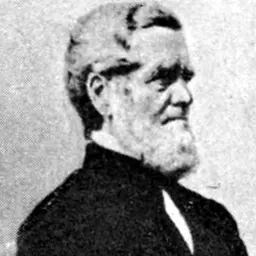
Lived 1786 – 1860 (aged 73). Henry Drummond was a British politician, writer, banker and political economist.
Henry Drummond (5 December 1786 – 20 February 1860) was an English banker, politician and writer, best known as one of the founders of the Catholic Apostolic or Irvingite Church.
Life He was born at The Grange, near Northington, Hampshire, the eldest son of Henry Drummond, a prominent London banker; his mother was Anne, daughter of Henry Dundas. He was educated at Harrow and at Christ Church, Oxford, but took no degree. His name is connected with the university through the chair of political economy which he founded in 1825. were often almost inaudible but were generally lucid and informing, and on occasion caustic and severe.
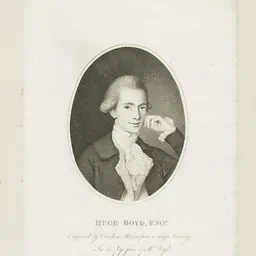
In 1817, Drummond met Robert Haldane at Geneva, and continued his movement against the Socinian tendencies then prevalent in that city. In later years he was intimately associated with the origin and spread of the Catholic Apostolic Church, which Edward Irving and others had founded in 1826. The Albury Conferences, meetings moderated by Hugh Boyd M‘Neile, of those who sympathized with some of the views of Irving were held for the study of prophecy at Drummond's seat, Albury Park, in Surrey. He contributed very liberally to the funds of the new church and he became one of its leading office-bearers, He retired in 1843 from his position as senior partner in the Charing Cross bank. From 1847 until his death, he represented West Surrey in parliament. The Administration was extracted by one of his children who on her husband's succession became Louisa Percy, Duchess of Northumberland.
Works Drummond took a deep interest in religious subjects, and published books and pamphlets on the interpretation of prophecy, the circulation of the Apocrypha and the principles of Christianity. These included apologetics on behalf of the Catholic Apostolic Church.
Hugh McNeile dedicated his book "The Times of The Gentiles" to Henry Drummond in 1828. In this dedication he defends Drummond against attacks which were made upon him over the topic of Drummond's perceived novelty concerning the interpretation of Biblical prophecy.
Family Drummond had married his cousin Lady Henrietta Hay-Drummond, the daughter of Robert Hay-Drummond, 10th Earl of Kinnoull. They had three sons, all of whom predeceased him, and two daughters. His daughter Louisa, Duchess of Northumberland, was the wife of the 6th Duke of Northumberland.
Legacy There is a street near Melbourne in Carlton North, Victoria that has been claimed as named after him in Australia, but the local Council consider Thomas Drummond (1797–1840), the Scottish inventor, civil engineer and cartographer is the person in question.
Don’t just read it —
keep it.
Full-length biographies made to live with: read them, listen on the way to work, watch them tonight.
- E-book
- Audio
- Video
Instant download · yours to keep · every purchase keeps this site free
Important facts
People in Henry Drummond's life
Named in this biography and alive at the same time



Related people
Same field, nearest in time



Contemporaries
People whose lives overlapped Henry Drummond's

Frequently asked questions
Who was Henry Drummond?
British banker, politician and writer (1786-1860)
When was Henry Drummond born?
Henry Drummond was born on 5 December 1786.
When did Henry Drummond die?
Henry Drummond died on 20 February 1860 in Albury Park.
What was Henry Drummond's occupation?
Henry Drummond was a politician, writer, banker and political economist.
What nationality was Henry Drummond?
Henry Drummond was British.
Sources & further reading
· DBpedia: Henry Drummond (1786–1860)
Cite this page
APA: Biography.guide. (2026). Henry Drummond. https://biography.guide/henry-drummond-politician-1786/
MLA: "Henry Drummond." Biography.guide, https://biography.guide/henry-drummond-politician-1786/.
Chicago: "Henry Drummond." Biography.guide. https://biography.guide/henry-drummond-politician-1786/.
Data last updated: 2026-09-26 · Spot an error? Report a correction.
Page generated 2026-09-27 05:14 UTC