
About Henry Docwra, 1st Baron Docwra of Culmore
Lived 1564 – 1631 (aged 66–67). Henry Docwra, 1st Baron Docwra of Culmore was an English statesperson and soldier.
Henry Docwra, 1st Baron Docwra of Culmore (1564 – 18 April 1631), was a leading English-born soldier and statesman in early seventeenth-century Ireland. He is often called "the founder of Derry", due to his role in establishing the city.
Background Henry Docwra was born at Chamberhouse Castle, Crookham, near Thatcham, Berkshire, into a minor gentry family, the Docwras (there are several variant spellings of the name, including Dockwra and Dowkra), who came originally from Yorkshire. Docwra was baptised on 30 April 1564. thumb leftHe was (as far as is known) the only surviving son of Edmund Docwra MP and his wife Dorothy Golding, daughter of John Golding of Halstead, Essex, and sister of the noted translator Arthur Golding. His father was a prominent local politician, who sat in the House of Commons as MP for Aylesbury in the Parliament of 1571, and for New Windsor in that of 1572. He was later obliged by financial difficulties to sell Chamberhouse. The family's money troubles may be the reason why his son pursued a military career.
The Docwras seem to have lacked influential relatives, and this was to be a considerable difficulty to Henry throughout his career, in an age when family connections were of great importance. Henry did inherit some lands in Berkshire, which he sold around 1615 to finance his hoped-for return to Ireland and to public office.
Military career After serving for some years as a professional soldier in the Netherlands and France, Docwra, who was still only in his early twenties, was sent by the English Crown to Ireland in about 1584. He was made the constable of Dungarvan Castle, and served under Sir Richard Bingham, the governor of Connaught, in 1586. Bingham besieged Annis Castle near Ballinrobe, and used Ballinrobe as a base from which to attempt to pacify County Mayo. He was unable to subdue the Burke clan, the dominant political force in Mayo, and the campaign ended inconclusively.
Service with Essex and Vere
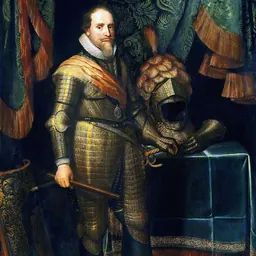
Docwra left Ireland around 1590. Like many ambitious young courtiers of the time, he entered the service of the Earl of Essex, the royal favourite, and fought beside him in the war against Spain. He took part in the Siege of Rouen in 1591-2, and in the Capture of Cádiz in 1596 where he was knighted by Essex in person for his "acts of valour". The following year he saw military service under Sir Francis Vere in Maurice of Nassau's campaigns in Brabant, and spent much of the late 1590s in the Netherlands where he distinguished himself at the Battle of Turnhout. He did not take part in Essex's ill-fated Islands Voyage expedition to the Azores in 1597.
Return to Ireland
In 1599, to his "unspeakable contentment", he was sent back to Ireland to serve with Essex during the Nine Years War, acting as his chief adviser on Irish military affairs. During Essex's disastrous attempts to pacify Ireland, Docwra was mainly occupied with attempting to subdue the O'Byrne clan in County Wicklow. He took no part in Essex's controversial negotiations with Hugh O'Neill, who was the overall Irish leader during the Nine Years' War. These negotiations produced a set of terms called the Cessation, which was attacked by Essex's enemies as a total English capitulation to the Irish. The Queen's reaction was to tell Essex sharply that if she had wanted to abandon Ireland altogether, it would hardly have been necessary to send him there. Docwra had returned to England with Essex in the autumn of 1599. In 1600 he was sent back to Ireland as commander of an army of 4000 men and captured the ruined site of Derry in May 1600. Fighting continued until 1603.
During O'Doherty's subsequent rising in 1608, O'Doherty's foster-father Phelim Reagh MacDavitt killed Paulet in battle and Derry was burned. Docwra's policy of seeking to conciliate the leading Gaelic nobles of Ulster was now utterly discredited. He was accused of neglect of duty and undue leniency towards the native Irish, and retired to England in temporary disgrace. Following the Flight of the Earls, and the O'Doherty rebellion, the English Crown no longer saw any advantage in conciliating the chieftains of Ulster: Docwra's Irish allies were ruined, and many of them, including Donnell O'Cahan, Niall Garve O'Donnell, and his son Neachtain, died as prisoners in the Tower of London.
Later career
During his retirement in England, Sir Henry Docwra protested bitterly to King James I that he had been unfairly accused of incompetence, and of his meagre rewards for his services to the Crown: in particular, he complained of the failure to make him Lord President of Ulster. In 1614 he published his Narrative, which is both a description of, and a justification for, his military actions in Ireland. While obviously self-serving, the Narrative is a valuable source of information for the period.
His decade-long campaign to return to government employment, preferably in Ireland, finally bore fruit. In 1616, following the recall of Lord Deputy Chichester, with whom he had been on bad terms, he was made Treasurer of War for Ireland and returned to live there. In 1621 he was raised to the peerage, with a modest grant of land at Ranelagh, now a suburb but then a village on the south side of Dublin city, and another estate at Donnybrook, also in south Dublin.
Despite his title, he was a comparatively poor man, partly because he had not been given the office of Vice-Treasurer of Ireland, which had previously been associated with the office of Treasurer of War, and thus Docrwa's income was half what he might have expected. Assurances of a grant of lands worth £5000 came to nothing, although he did later receive some further lands in County Wicklow. After his death all his colleagues praised him as "an honest man who died poor". As Treasurer he avoided the temptation, to which so many of his contemporaries succumbed, of using his office to enrich himself; in 1618 the English Council commended him to the Lord Deputy of Ireland for his care and diligence in carrying out his duties. His one serious fault as Treasurer, it was generally agreed, was his exceptional slowness in compiling his accounts. In his last years, he admitted to finding the burden of office almost unbearable, and he was willing to sell his office for £4000.
In 1628 he was one of 15 peers empanelled to try Edmond Butler, Lord Dunboyne for manslaughter after Butler had killed his cousin, James Prendergast, in a quarrel over the right of inheritance to an Irish feudal barony. Docwra was the only one to vote "guilty", and Dunboyne was duly acquitted by 14 votes to 1.
Lord Docwra of Culmore died on 18 April 1631 in Dublin, shortly after retiring from his public offices, and was buried in Christ Church Cathedral, Dublin. His fellow Irish councillors sent a petition to their English colleagues, praising him as "an excellent civil servant", who died (relatively) poor, and recommended his widow and surviving children to their care.
Family He married Anne Vaughan, daughter of Sir Francis Vaughan of Sutton-on-Derwent, Yorkshire, and his wife Anne Boynton, daughter of Sir Thomas Boynton of Barmston, East Riding of Yorkshire, and Frances Frobisher. They had two sons, Theodore and Henry. Theodore, the elder son, succeeded to the barony but died without issue. Little is known of him except that he was obliged to sell his Ranelagh estate and was living in poverty when he died in England in 1647: since his brother Henry had predeceased him, the title became extinct. The 1st Baron also had three daughters, Anne, Frances, who died young, and Elizabeth. Anne married Captain Shore of Fermanagh. Elizabeth married firstly in 1640 Andrew Wilson of Wilson's Fort, Killynure, near Convoy in the east of County Donegal, but seems to have had no surviving issue, and secondly, as his third wife, Sir Henry Brooke of Brookeborough and had issue, including George.
Lady Docwra of Culmore outlived her husband and both of her sons, and survived till 1648: like her elder son, she was living in a state of some poverty in her later years, despite receiving a legacy from the 1st Earl of Cork, who had been a close friend and ally of her late husband in his last years.
Character As a soldier Docwra was brave, skilful and ruthless; even the Irish reportedly admired him as "an illustrious knight of wisdom and prudence, a pillar of battle and conflict". He showed considerable skill in negotiating with the Irish clans of Ulster, and was known for fomenting quarrels among them to strengthen the Crown's position. Historians have remarked that the accusations made against Docwra by his political enemies of excessive "leniency" towards the Irish would have astonished the Irish themselves, thousands of whom are said to have died, directly or indirectly, as a result of his actions. As Treasurer of War, he had his critics, but he also enjoyed an enviable reputation for being diligent, conscientious and upright, if rather slow in conducting business.
In his private life, he had a reputation for being honest, public-spirited, and a man of independent judgment. In religious matters he is said, by the standards of the time, to have been tolerant enough. While there is no doubt that English troops who were under his command killed a number of priests, his biographer argues that Docwra neither ordered nor approved of these killings.
Don’t just read it —
keep it.
Full-length biographies made to live with: read them, listen on the way to work, watch them tonight.
- E-book
- Audio
- Video
Instant download · yours to keep · every purchase keeps this site free
Important facts
People in Henry Docwra, 1st Baron Docwra of Culmore's life
Named in this biography and alive at the same time






Related people
Same field, nearest in time

Contemporaries
People whose lives overlapped Henry Docwra, 1st Baron Docwra of Culmore's



Frequently asked questions
Who was Henry Docwra, 1st Baron Docwra of Culmore?
Irish peer
When was Henry Docwra, 1st Baron Docwra of Culmore born?
Henry Docwra, 1st Baron Docwra of Culmore was born in 1564.
When did Henry Docwra, 1st Baron Docwra of Culmore die?
Henry Docwra, 1st Baron Docwra of Culmore died in 1631.
What was Henry Docwra, 1st Baron Docwra of Culmore's occupation?
Henry Docwra, 1st Baron Docwra of Culmore was a statesperson and soldier.
What nationality was Henry Docwra, 1st Baron Docwra of Culmore?
Henry Docwra, 1st Baron Docwra of Culmore was English.
Sources & further reading
· Wikipedia: Henry Docwra, 1st Baron Docwra of Culmore
· DBpedia: Henry Docwra, 1st Baron Docwra of Culmore
Cite this page
APA: Biography.guide. (2026). Henry Docwra, 1st Baron Docwra of Culmore. https://biography.guide/henry-docwra-1st-baron-docwra-of-culmore/
MLA: "Henry Docwra, 1st Baron Docwra of Culmore." Biography.guide, https://biography.guide/henry-docwra-1st-baron-docwra-of-culmore/.
Chicago: "Henry Docwra, 1st Baron Docwra of Culmore." Biography.guide. https://biography.guide/henry-docwra-1st-baron-docwra-of-culmore/.
Data last updated: 2026-09-20 · Spot an error? Report a correction.
Page generated 2026-09-27 05:18 UTC