
About Niall Garve O'Donnell
Lived 1560 – 1626 (aged 65–66). Niall Garve O'Donnell was an Irish military personnel.
Sir Niall Garbh O'Donnell (; – 1626) was an Irish nobleman and soldier who alternately rebelled against and supported English rule in Ireland. During the Nine Years' War he defected from the Irish confederacy and sided with the Crown against his cousin Hugh Roe O'Donnell, with the aim of restoring the lordship of Tyrconnell to his own branch of the O'Donnell clan.
Although Niall's paternal grandfather Calvagh ruled Tyrconnell, in 1557 the lordship was seized by Niall's half-uncle Hugh McManus O'Donnell. Following a violent succession conflict, Hugh McManus's son Hugh Roe—Niall's younger cousin—succeeded to the lordship in 1592. A long lasting bitterness ensued between the two cousins.
Niall initially fought for Hugh Roe and the Irish confederacy, but in 1600 he entered secret negotiations with English commander Henry Docwra. The government hoped to harness Niall's feud against Hugh Roe and promised him the lordship of Tyrconnell for his military assistance. Niall defected in October bringing many followers with him. Niall's skills in guerrilla warfare emboldened the royal troops and allowed Docwra to significantly weaken Irish forces in Ulster. However, Niall's desire to rule Tyrconnell as a sovereign entity was incompatible with the Plantation of Ulster, and after the war ended, the majority of Tyrconnell's land was granted back to Hugh Roe's immediate family.
Niall was inaugurated as the O'Donnell clan chief in April 1603. Following years of land rights disputes, he turned against the Crown in 1608. He covertly instigated fellow spurned loyalist Cahir O'Doherty to launch a rebellion in Derry, but he was quickly implicated and put on trial for treason. Faced with a sympathetic jury that would almost certainly acquit, the government sent Niall to the Tower of London in 1609, where he remained until his death seventeen years later.
Early life (1569–1586) Niall Garbh O'Donnell was born into the O'Donnell clan, the ruling Gaelic Irish noble family of Tyrconnell. He was the fourth son of Conn O'Donnell, head of the O'Donnells' MacCalvagh branch, and Rose O'Neill, daughter of O'Neill clan chief Shane O'Neill. Niall's brothers included Naghtan, Calvagh Oge, Manus, Hugh Boye, Conn Oge, Donal, and Cathbharr. His sisters were Róise, Elizabeth, Siobhan and Máire.
Niall's sobriquet "Garbh"Efn|Other anglicisations include Garve, His allies imprisoned Conn, Calvagh's son and tanist. When Calvagh died in 1566, Hugh McManus easily established himself as the new Lord of Tyrconnell. Conn and his descendants, particularly Niall, looked to the English-led Irish government as a means of restoring their branch of the family to power. This branch established themselves in Lifford, between the River Finn and Lough Swilly, and were constantly at odds with the ruling O'Donnells. The MacCalvagh family estate, which Niall inherited, totalled 12,900 acres of land and included Finn Castle (now Castlefin), where he was probably born. His father Conn died in March 1583; his mother Rose died in 1585.
Succession dispute (1587–1593)
In 1587, Hugh McManus's son and tanist Hugh Roe O'Donnell was kidnapped on the orders of the Lord Deputy and imprisoned in Dublin Castle. Hugh McManus became prematurely senile, and a long-running succession dispute broke out within the greater O'Donnell family over who would succeed him. Three of Niall's brothers died during the conflict: Naghtan in 1582, Calvagh Oge in 1588, and Manus in 1589.
Hugh McManus's Scottish wife Iníon Dubh effectively took over leadership of Tyrconnell and used her Scottish redshanks to eliminate rival claimants and defend Hugh Roe's claim to the chieftaincy. On her orders, her redshanks killed Calvagh's son Hugh MacEdegany in May 1588. After Hugh MacEdegany's death, Niall took over as the head of the MacCalvagh faction. Niall had a significant following within Tyrconnell, but he was apparently not powerful enough to provoke an assault from Iníon Dubh.
Niall was supported by his neighbour Turlough Luineach O'Neill of Tír Eoghain, who had succeeded Niall's maternal grandfather Shane as O'Neill clan chief. (In 1922, Paul Walsh stated that Nuala and Niall Garbh married prior to Hugh Roe's inauguration (which took place on 23 April 1592).) Niall was incensed at his cousin's successful assertion of the lordship. He was conspicuously absent from the inauguration ceremony, and was instead in Dublin unsuccessfully attempting to secure support from the government.
Soon after Hugh Roe's inauguration, Hugh Roe and Tyrone attacked Turlough, forcing him to surrender in May 1593. In July 1592, Lord Deputy William FitzWilliam agreed to conditionally overlook Hugh Roe's anti-royalist activities, one condition being that Hugh Roe's rivals be treated fairly. Despite his promise to FitzWilliam, Hugh Roe quickly subjugated his rivals. A significant claimant, Hugh Dubh O'Donnell, submitted to Hugh Roe after many of his followers were beheaded. These beheadings intimidated Niall to submit to Hugh Roe "wholly through fear... by the point and edge of the sword". Niall was forced to turn over control of Lifford's castle, though his ambitions to seize the lordship remained.
Irish confederacy (1593–1599) Niall fought for the Irish confederacy, which was led by Hugh Roe and Tyrone, during the early years of the Nine Years' War. Hugh Roe sent him to assist commander Hugh Maguire in 1592. On Hugh Roe's orders, he commanded 60 horsemen, 60 swordsmen and 100 gallowglass to the Battle of Belleek in October 1593. This was one of the first major battles of the war but was secretly planned to result in an Irish failure. This would divert English attention away from Ireland and make the Irish confederacy seem weaker than it actually was. As part of the plan, Hugh Roe was ordered by Tyrone not to send reinforcements. Historian James O'Neill has theorised that Hugh Roe intentionally dispatched Niall to Belleek with the hope that he would die in the slaughter, thus easily eliminating a potential enemy.
Niall's continued belligerence led him to be detained in February 1594. He was only released when he gave one of his brothers to Hugh Roe as a pledge of good behaviour. In late 1597, Niall told two of Hugh Roe's enemies, imprisoned in Donegal, that he would join the English if their forces were sent there. In 1597 and 1598, Hugh Roe sent Niall on military expeditions into Connacht. From at least 1598, Tyrone had his doubts about the sincerity of Niall's loyalty. Hugh Roe was seemingly more trusting of Niall, as he left him in charge of the siege of Collooney castle in July 1599. Niall presumably fought at the Battle of Curlew Pass in August 1599.
Defection (1600–1602)
Arrival of Henry Docwra leftIn May 1600, royal commander Henry Docwra established an English garrison in Derry. The government believed that the divisions within the major Irish clans could be exploited in order to win Gaelic support for the Crown. The prospects of Docwra's mission counted on luring disaffected confederates. Niall had already made overtures to the government, and Docwra had instructions to win him over. They began secretly communicating. By August, Niall had sent through his list of demands, the principal of which was to rule Tyrconnell like his grandfather Calvagh. Docwra promised to obtain Niall a royal grant of Tyrconnell if he served against his cousin.
In September, Hugh Roe left Ulster for a raid in Thomond, entrusting Niall to besiege Derry. While Hugh Roe was in Ballymote, Niall and his followers murdered Niall's uncle Neachtan in a drunken rage. Neachtan was "a man of great authority with [Hugh Roe] and all his country". Fearing Hugh Roe's revenge, Niall—alongside his three brothers and about 100 soldiers—quickly defected to the English. They joined Docwra on 3 October. Hugh Roe's supporters were aware of Niall's communication with Docwra, which forced Niall into leaving for Derry before he was fully ready. He brought over 200 men with him to Docwra, but would have brought more if not for the shortness of time. His brothers Hugh Boy, Conn Oge and Donal defected with him.
Niall was one of many disgruntled Gaelic Irish noblemen who defected on Docwra's promises, including Arthur O'Neill, Sean O'Doherty and Cahir O'Doherty.
Battle of Lifford Accompanied by royal forces, Niall marched to Lifford's castle, which had been left in the control of Hugh Roe's tanist and younger brother Rory. The Crown loyalists successfully stormed Lifford on 9 October. Hugh Roe was shocked at Niall's betrayal and rushed back to Ulster. The confederates tried in vain to retake Lifford from Niall, with minor skirmishes occurring around the castle. Hugh Roe lost about 20 men on 17 October.
The siege climaxed in the Battle of Lifford on 24 October, when Hugh Roe attacked the castle. Niall retaliated by leading a cavalry charge of mixed Irish and English forces out to battle. During the battle, Niall fatally wounded Hugh Roe's younger brother Manus in the shoulder. Rory and Niall subsequently engaged in single combat against each other, though both men survived the battle. leaving Rory as acting chief. He was the last of the O'Donnell clan to be inaugurated.
Mountjoy was now weary of Niall's insubordinate behaviour. Niall was arrested, on Mountjoy's orders, in Derry. Niall justified his inauguration by pointing out to Docwra that "you know the whole country of Tyrconnell was long since promised me, and many services that I have done, that I think have deserved it, but I saw that I was neglected, and therefore I have righted myself, by taking the cattle, and people, that were my own, and to prevent others, have made myself O'Donnell; now by this means the country is sure unto me". After three days in confinement, Niall escaped to a thick wood where he assembled his forces. Rory and Docwra pursued him, capturing his cattle and starving or killing many of his followers. Niall eventually gave himself up and was allowed to proceed to London "to solicit pardon for his offences, and to obtain the reward for his service and aid to the crown of England". Docwra advised on Niall's execution or imprisonment, but Niall still had several supporters at court. On 30 May, Niall sailed to Holyhead with Mountjoy and Tyrone on their journey to meet Elizabeth I's newly-crowned successor James I.
Niall's actions against the state damaged his relations with the government. Rory was raised to the peerage as 1st Earl of Tyrconnell—effectively the lordship—and granted ownership of the majority of Tyrconnell. Niall was granted 13,000 acres of land in east Tyrconnell which he owned prior to the outbreak of war. During a meeting in Dublin in November, Chichester mentioned to Niall the possibility of transferring ownership of Inishowen to him, since O'Doherty had fallen out of favour with the administration. This restored Niall's hopes of seizing more land in Tyrconnell. However, his claims were ignored, and he apparently refused the title Baron of Lifford. By 1608 he was heavily in debt.
Rebellion, trial and death (1608–1626)
O'Doherty's rebellion
Cahir O'Doherty was frustrated with his treatment by Derry's governor George Paulet, and in early 1608, it appears Niall encouraged him to launch a rebellion against the Crown. O'Doherty led a force of rebels in burning Derry on 19 April, but Niall stayed aloof from the rebellion. He hoped to be awarded Inishowen in the event of a failed rebellion, as mentioned by Chichester. Niall rejected meetings with the government, started bargaining with them over the price of his assistance, and demanded recognition as the rightful Lord of Tyrconnell. When royal forces arrived in the region in late May, Niall offered assistance in catching O'Doherty. However, it appears that he maintained correspondence with O'Doherty and warned the rebels of the royal army's movements. The government quickly grew suspicious of Niall.
Niall was accused by his two brothers, Hugh Boye and Donal, with instigating O'Doherty's rebellion. His mother-in-law Iníon Dubh included Hugh Boye and Donal, as well as Niall's 17-year-old son Naghtan, as co-conspirators. Niall protested his loyalty, but under protection from Treasurer Thomas Ridgeway, 1st Earl of Londonderry, he and his two brothers were arrested in June and brought to Dublin on the Tramontana (ironically the same pinnace which brought him to Holyhead). Niall was charged on six counts of treason and imprisoned in Dublin Castle. Subsequently, many of O'Doherty's supporters (including O'Doherty's wife) implicated Niall in the rebellion. O'Doherty was later shot and killed at the Battle of Kilmacrennan on 5 July.
Trial and death Attorney-General for Ireland John Davies, accumulated proof of Niall's correspondence with O'Doherty, but it was unclear whether Niall's guilt was condoned by his protection. On 1 July 1608 Niall was examined before the council and committed to the castle. Prior to his trial, he made numerous unsuccessful attempts to escape his confinement.thumb Niall was finally brought to trial in Dublin in June 1609. The local jury, all Irish men from Donegal, When Niall defected from the confederacy in 1600, Nuala separated from him. In 1602 he was reportedly contemplating a marriage to the widow of Arthur O'Neill, who was also the sister of the late Hugh Maguire. Whether or not Niall remarried, it appears he had more than two children. The historian George Hill states that Naghtan had two younger brothers, and Walsh states that it is unlikely that Niall remained without a partner until his arrest in 1608. By 1607, Nuala was living with her brother Rory. She took part in the Flight of the Earls and died in the Spanish Netherlands circa 1630. He was handed over to Docwra in 1600 as a surety for his father's loyalism. Described as "a boy of an active spirit, and yet much inclined to his book", Naghtan enrolled at St John's College, Oxford in January 1603, at the charge of the Earl of Devonshire. He was given the English name "Hector".
The Austrian and Spanish lines of the O'Donnell family descend from Niall's brother Conn Oge.
Hugh Roe's killing of child A report by Docwra, dated February 1601, describes Hugh Roe murdering Niall and Nuala's four-year-old child in a furious reaction to Niall's betrayal:
"[Hugh Roe] hath of late hanged many of good account . . . he dasht owt the brains of Neil Garve's childe (of [four] yeares olde) againste a post, beinge in the mother's custody, his owne naturall sister." Historian Hiram Morgan notes that since this is a contemporary account, it should not be dismissed out of hand.
Character and legacy Niall's career is dominated by his desire to take power in Tyrconnell. A bardic poet wrote a poem on Niall's ambition to become Lord of Tyrconnell: +Original IrishEnglish translationDo ba neimní re Niall Garbhcrínad a alt dfiaclaib feól-armgo tarrachtain tíre a seandfath-bertaibh gríbhe Gaoidheal.Niall Garbh little cared if his limbswere chopped by the teeth of weapons,provided only he saved his forbears' landwith skilful deeds of a chief of the Gaedhil. Of the commanders working for the Crown, Niall was one of the most zealous and aggressive in attacking Irish civilians during his raids. Historian John Lynch blamed Niall for allowing the execution of the elderly bishop of Derry, Redmond O'Gallagher. He possessed much personal bravery and military skill, but had poor judgement in political matters. He also displayed naivety in his dealings with the government. According to Clavin, Niall was "first and foremost a warrior" and not suited to the role of a landlord. Niall ultimately lived to regret joining the loyalist camp.
Due to Niall's betrayal of both Gaelic Ireland and the Crown, contemporary sources on both sides are somewhat biased again him. Docwra praised Niall's military value to the royal army, but nonetheless wrote that he was "proud, valiant, miserable, tyrannous, unnecessarily covetous, without any knowledge of God, or almost any civility". Walsh points out that Docwra was prejudiced against Irish Catholics and would have described any Irishman in this manner. Seventeenth-century Irish writer Philip O'Sullivan Beare called Niall "a man of great spirit and daring, skilled in military matters". He references that, despite working for the Protestant Crown, Niall "always retained the Catholic faith and kept aloof from heretical rites". Indeed, a condition of Niall's defection was a guarantee of liberty of conscience for himself and his followers. Niall is described by Lughaidh Ó Cléirigh, Hugh Roe's biographer, as "a violent man, hasty, austere, since he was spiteful, vindictive, with the venom of a serpent, with the impetuosity of a lion." However, he adds that Niall "was a hero in valour, and brave".
John O'Donovan wrote: "The character of Niall Garv has been generally painted in unfavourable colours, because of his hostility to Hugh Roe, and the part which he took against him in conjunction with the English. It is true that history does not present a more chivalrous and devoted Irishman than Hugh Roe proved himself to be during his short and eventful career... we should recollect that Niall had the prior title, and that doubtless he was nurtured in feelings of hostility to what his own immediate family must have considered an unjust usurpation."
Irish nationalist historians represent Niall as having betrayed Gaelic Ireland (ironically, it was his insistence on maintaining the Gaelic structure of lordship which led to his incarceration). He has been compared to Dermot MacMurrough, the medieval King of Leinster who incited the Anglo-Norman invasion of Ireland. The Franciscan Donagh Mooney, who knew Hugh Roe personally, had a particularly negative view of Niall. English civil servants nevertheless recognised Niall's importance to the English victory in the Nine Years' War.
Don’t just read it —
keep it.
Full-length biographies made to live with: read them, listen on the way to work, watch them tonight.
- E-book
- Audio
- Video
Instant download · yours to keep · every purchase keeps this site free
Important facts
People in Niall Garve O'Donnell's life
Named in this biography and alive at the same time




Related people
Same field, nearest in time

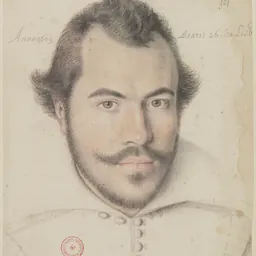
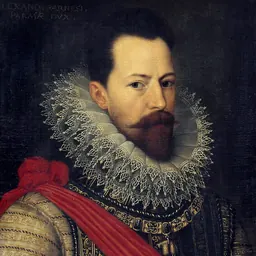
Contemporaries
People whose lives overlapped Niall Garve O'Donnell's

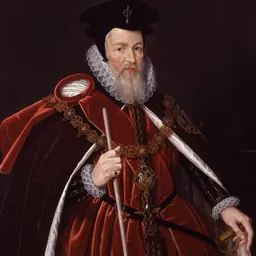


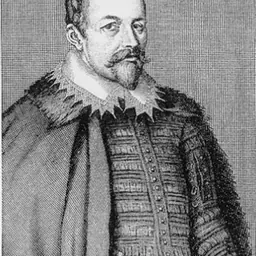

Frequently asked questions
Who was Niall Garve O'Donnell?
Irish chieftain
When was Niall Garve O'Donnell born?
Niall Garve O'Donnell was born in 1560.
When did Niall Garve O'Donnell die?
Niall Garve O'Donnell died in 1626.
What was Niall Garve O'Donnell's occupation?
Niall Garve O'Donnell was a military personnel.
What nationality was Niall Garve O'Donnell?
Niall Garve O'Donnell was Irish.
Sources & further reading
· Wikipedia: Niall Garve O'Donnell
· DBpedia: Niall Garbh O'Donnell
Cite this page
APA: Biography.guide. (2026). Niall Garve O'Donnell. https://biography.guide/niall-garve-o-donnell/
MLA: "Niall Garve O'Donnell." Biography.guide, https://biography.guide/niall-garve-o-donnell/.
Chicago: "Niall Garve O'Donnell." Biography.guide. https://biography.guide/niall-garve-o-donnell/.
Data last updated: 2026-09-20 · Spot an error? Report a correction.
Page generated 2026-09-27 05:16 UTC