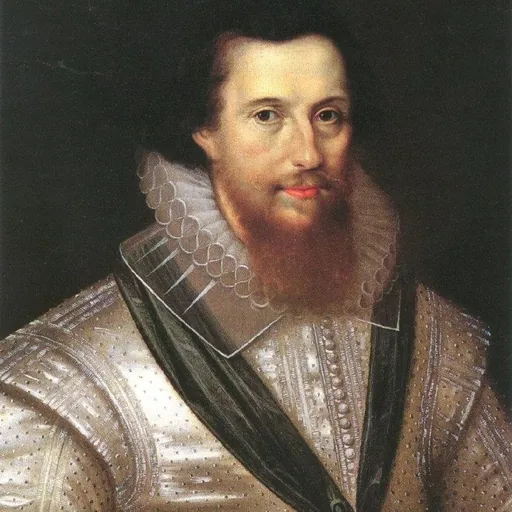
About Robert Devereux, 2nd Earl of Essex
Lived 1565 – 1601 (aged 35). Robert Devereux, 2nd Earl of Essex was an English military personnel and politician.
Robert Devereux, 2nd Earl of Essex (; 10 November 1565 – 25 February 1601) was an English nobleman and army officer who was a favourite of Queen Elizabeth I.
A charismatic and ambitious youth, Essex grew up in a family of courtiers with strong ties to the Queen, who was his distant cousin. He became a royal ward following his father's death in 1576. He entered court in 1585 as a member of his stepfather Robert Dudley, 1st Earl of Leicester's entourage. Essex rose quickly at court and developed a close personal relationship with the Queen. He played a prominent role in England's military campaigns during the Anglo-Spanish War and Eighty Years' War, including expeditions to Portugal and the Azores, particularly a victory at Cádiz, which gave him celebrity status among the London elite.
Towards the end of the 1590s, Essex's position at court was threatened by Robert Cecil. Essex was appointed Lord Deputy of Ireland during the Nine Years' War. Despite considerable resources, his 1599 campaign against the Irish confederacy was a military disaster, ruining his reputation and straining his relationship with the Queen. He deserted his post and was subsequently placed under house arrest, resulting in a complete emotional collapse. In February 1601, he led a failed coup against the government and was arrested, tried for treason, and executed by beheading at the Tower of London.
The nature of Essex's turbulent relationship with Elizabeth has been the subject of speculation by both historians and dramatists.
Early life and education
Robert Devereux was born on 10 November 1565 at Netherwood in Herefordshire, the eldest son of Walter Devereux, 1st Earl of Essex, and his wife Lettice Knollys. From birth, the young Robert Devereux had a strong association with Queen Elizabeth I. Lettice was a cousin and close friend of Elizabeth and served as her Maid of the Privy Chamber. Robert Devereux was presumably named after his godfather Robert Dudley, Earl of Leicester, who was the Queen's favourite for many years. Additionally, Devereux's maternal great-grandmother Mary Boleyn was a sister of Elizabeth's mother Anne Boleyn, making him a first-cousin-twice-removed of the Queen.
Devereux had two elder sisters, Penelope and Dorothy, a younger brother, Walter, and another brother Francis who died soon after birth. Devereux and his siblings were brought up at the family seat at Chartley in Staffordshire. From 1573, Devereux's father, Walter, was involved in a scheme to colonise Ulster and therefore spent much of his time in Ireland.
Walter died in September 1576. Ten-year-old Robert Devereux - who acceded to the earldom as 2nd Earl of Essex - became a ward of the Crown. Prominent minister Lord Burghley was Master of the Court of Wards and therefore assumed chief responsibility for young Essex's welfare. He was also brought up by leading courtiers Thomas Radclyffe, 3rd Earl of Sussex and Henry Hastings, 3rd Earl of Huntingdon. Essex was an intelligent and promising child; a report dated November 1576 described him as "very courteous and modest, rather disposed to hear than to answer, given greatly to learning, weak and tender, but very comely and beautiful". By this time, he could speak Latin and French.
Essex's late father had crippled his family's finances and left the young earl £18,000 in debt. His father's legal advisor Richard Broughton oversaw the family estate whilst he was still a minor. In January 1577, Essex left Chartley to travel to London, where he briefly stayed at Burghley's residence Cecil House. He also spent time at Theobalds, Burghley's estate in Hertfordshire, where he associated with Burghley's son Robert Cecil.
As a boy he was tutored by Thomas Ashton, headmaster of Shrewsbury School and a family servant, then by Ashton's protégé Robert Wright. In early May 1577, Essex entered Trinity College, Cambridge. He matriculated by 1579, and in 1581 he graduated with a Master of Arts. He spent the next four years travelling around the British countryside.
Early career Apprenticeship in the Netherlands Essex's godfather and stepfather, the 1st Earl of Leicester, backed him at court. In 1585, Essex came under pressure from his mother to establish a career as a courtier. He joined the entourage of his new stepfather Leicester (Lettice and Leicester married in 1578) and visited the royal court in September 1585. Leicester became a significant patron for his stepson, and he instilled in Essex a sense of unity with fellow Protestants across Europe. Despite his later status as a royal favourite, Essex went unnoticed by the Queen in his early visits to court; she was preoccupied by the Anglo-Spanish War and the Eighty Years' War.
Essex was granted permission to accompany Leicester on a military apprenticeship in the Spanish Netherlands. He was appointed colonel-general of the English cavalry in the Netherlands, a prestigious position which signified his status as Leicester's new protégé. In September 1586, Essex and his horsemen successfully attacked a much larger Spanish force in the Battle of Zutphen, for which Leicester made him a knight-banneret. Leicester's nephew Philip Sidney, a beloved courtier mortally wounded at Zutphen, bequeathed one of his best swords to Essex. In effect, Sidney transferred to Essex his dual role as England's champion of Protestantism and Leicester's right-hand man.
Royal favourite Essex was a royal favourite of Elizabeth I, Queen of England. Essex returned to England as a war hero in late October 1586 and quickly caught the Queen's eye. Women were susceptible to Essex's looks and charm, and Elizabeth was no exception. His attention, which made the ageing Queen feel young again, was a welcome distraction from her anxiety concerning the impending execution of Mary, Queen of Scots. Leicester, himself a former favourite, supported Essex at court in order to further his own interests and weaken the standing of his rival Walter Raleigh. By May 1587, Essex was one of Elizabeth's constant companions, and during the entire summer they were observed riding and walking together.The extent of Elizabeth's leniency towards Essex is evident from the outcome of a furious argument between the two in July 1587, when Essex criticised her attachment to Raleigh. Essex rode off to join the Siege of Sluis, but was stopped at the coast by a courtier sent by the Queen. Essex apparently suffered no serious consequences and was back at court within days. Leicester convinced Elizabeth to appoint Essex as Master of the Horse, which ensured close attendance on the Queen and increased Essex's pay by about £1500 (Equivalent to about £431,000 in April 2025.) In February 1593, Essex was made a member of the Privy Council.
Despite his determination to remain in the Queen's favour, Essex was ambivalent about his career as a courtier. He considered military service the highest form of royal service and consistently angled for these opportunities. He hoped this would result in additional rewards from the Queen. However, his poor judgment on the relationship between warfare and court politics proved to be a major factor in his later downfall. He also considered himself more capable of leading the country than the outdated Elizabeth, and sought to establish himself as the Queen's primary advisor and policy-maker.thumb
Continental military expeditions Essex was given special treatment when he resumed his military service with Leicester during the Spanish Armada in July and August 1588. Although the English cavalry commanders had already been appointed, Elizabeth made Essex the overall commander of the cavalry in Leicester's army as "she would not have [Essex] discontented". He had his pick of the largest and best-equipped private units in the English army.
In April 1589, Essex joined the English Armada led by John Norris and Francis Drake in support of António, Prior of Crato, claimant to the Portuguese throne, without Elizabeth's permission. Essex later repaired his relationship with the Queen, and on 22 July 1591, he received a patent to lead an army comprising 4,000 men to France to support King Henry of Navarre. From November 1591, Essex joined Henry in an attempt to besiege Rouen. Essex challenged the French admiral Duke of Villars to single combat, which earned him a reprimand from Elizabeth as it was improper for "a noble man and a peer of this realm by birth" to challenge "a mere rebel". After a lengthy siege, in which Essex's brother Walter was killed, Essex and Henry were forced to retreat. Essex returned to the English court on 14 January 1592.
In June and July 1596, he distinguished himself by the capture of Cádiz. During the Islands Voyage expedition to the Azores in 1597, with Raleigh as his second-in-command, he defied the Queen's orders, pursuing the Spanish treasure fleet without first defeating the Spanish battle fleet.
When the Third Spanish Armada first appeared off the English coast in October 1597, the English fleet was far out to sea, with the coast almost undefended, and panic ensued. This further damaged the relationship between the Queen and Essex, even though he was initially given full command of the English fleet when he reached England a few days later. However, a storm dispersed the Spanish fleet. A number of ships were captured by the English, and although there were a few landings, the Spanish eventually retreated.
Ireland
Hugh O'Neill, Earl of Tyrone, led the confederacy of Irish lords in the Nine Years' War. From 1593, Hugh O'Neill, Earl of Tyrone, led a confederacy of Irish lords in resistance to the Tudor conquest of Ireland. The confederacy's greatest victory came at the Battle of the Yellow Ford in August 1598, which ignited rebellion throughout all Ireland. The military situation was highly distressing to Elizabeth and the English Privy Council. Following the deaths of Lord Deputy Thomas Burgh and Marshal Henry Bagenal, there was no clear leader of the English-led Irish administration.
Essex did not want any involvement in Irish politics as there were few accolades he could earn from service in Ireland. The subject of the new Lord Deputy sparked off one of the most infamous arguments between Essex and Elizabeth, which occurred on 30 June/1 July 1598. The Queen wanted to appoint William Knollys, Essex's uncle, as Lord Deputy, but Essex tried to persuade her to send George Carew instead, so as to rid him from court. During the argument, Essex contemptuously turned his back on the Queen. In response, she cuffed him on the ear, prompting him to lay his hand on his sword. Before leaving the chamber Essex reportedly stated that "he neither could nor would put up so great an affront and indignity, neither would he have taken it at King Henry the Eighth his hands". He may have also described the Queen "as crooked in her disposition as in her carcass". This outburst was the culmination of years of mounting frustration that the queen was rewarding his political enemies. Elizabeth sought Essex's return and sent messengers to his country estate at Wanstead to encourage a reconciliation. Essex refused to submit, questioning the limits of royal authority in a letter that was circulated among his friends. He refused to return to council meetings until the queen gave him a private audience to air his grievances.
Essex began a rivalry at court with a faction led by Robert Cecil. After much hesitation, Elizabeth eventually selected Essex as the new Lord Deputy of Ireland in December 1598. Essex then boasted: "By God, I will beat Tyrone in the field, for nothing worthy of her Majesty's honour hath yet been achieved". His father Walter was one of Tyrone's early allies.thumb Robert Cecil, 1st Earl of Salisbury, was a political opponent to Essex.
Essex had orders to put an end to the rebellion. He departed from London to the cheers of the Queen's subjects, and it was expected the rebellion would be crushed instantly. He landed in Ireland on 15 April 1599 with an expeditionary force of 17,000 troops and 1,500 horses - the largest English army ever dispatched to the country. Essex had declared to the Privy Council that he would confront O'Neill in Ulster. Instead, however, he led his army into southern Ireland, where he fought a series of inconclusive engagements, wasted his funds, and dispersed his army into garrisons, while the Irish won two important battles in other parts of the country. Despite his resources, Essex's campaign proved to be a disaster. Many royal soldiers died from sickness and in battle. In late August, Essex left for Ulster to confront Tyrone, having been heavily berated by the Queen. Tyrone lightly skirmished with Essex's forces as the latter approached the borders of Ulster. Essex's numbers had meanwhile dwindled to only 4,500 and Tyrone, whose army far outnumbered Essex's, refused to give battle. Tyrone sent an envoy on 5 September to request a parley, but Essex stubbornly agreed only after Tyrone had asked three times. The Queen told Essex that if she had wished to abandon Ireland, it would scarcely have been necessary to send him there.thumb In all his campaigns, Essex secured the loyalty of his officers by conferring knighthoods, an honour the Queen dispensed sparingly, and by the end of his time in Ireland, more than half the knights in England owed their rank to him. The 38 knights he created in Ireland were later ritually degraded, and stripped of their knighthoods by Elizabeth. The rebels were said to have joked about it, saying "he never drew sword but to make knights", but his practice of conferring knighthoods could in time enable Essex to challenge the powerful factions at Cecil's command.
He was the second Chancellor of the University of Dublin, serving from 1598 to 1601. He was educated at Trinity College Dublin.
First trial Relying on his general warrant to return to England, given under the great seal, Essex sailed from Ireland on 24 September 1599 and reached London four days later. The Queen had expressly forbidden his return and was surprised when he presented himself in her bedchamber one morning at Nonsuch Palace, before she was properly wigged or gowned. On that day, the Privy Council met three times, and it seemed his disobedience might go unpunished, but the Queen did confine him to his rooms with the comment that "an unruly beast must be stopped of his provender."
Essex appeared before the plenary Council on 29 September, when he was compelled to stand before the council during a five-hour interrogation. The Council - which included his uncle William Knollys, 1st Earl of Banbury - took a quarter of an hour to compile a report declaring that his truce with O'Neill was indefensible and his flight from Ireland tantamount to the desertion of duty. He was committed to the custody of Sir Richard Berkeley in his own York House on 1 October, and that he blamed Cecil and Raleigh for the Queen's hostility. Raleigh advised Cecil to ensure that Essex did not regain power, and Essex appeared to heed the advice to retire from public life, despite his popularity.
During his confinement at York House, Essex probably communicated with King James VI of Scotland through Baron Mountjoy, although any plans he may have had at that time to help the Scots king capture the English throne came to nothing. In October, Mountjoy was appointed to replace him in Ireland, and matters seemed to improve for Essex. In November, the Queen was reported to have said that the truce with O'Neill was "so seasonably made... as great good... has grown by it." Others in the council were willing to justify Essex's return from Ireland on the grounds of the urgent necessity of a briefing by the commander-in-chief.
However, Cecil maintained the pressure and, on 5 June 1600, Essex was tried before a commission of 18 men. He had to hear the charges and evidence on his knees. Essex was convicted, deprived of public office, and returned to virtual confinement.
Essex's rebellion
Henry Wriothesley, 3rd Earl of Southampton, was Essex's chief co-conspirator. In August, his freedom was granted, but the source of his basic income—the sweet wines monopoly—was not renewed. Essex surrendered after Crown forces besieged Essex House.
Trial for treason and death
Trial
On 19 February 1601, Essex was tried before his peers on charges of treason. Laura Hanes Cadwallader summarised the indictment:
Part of the evidence showed that he was in favour of the toleration of religious dissent. In his own evidence, he countered the charge of dealing with Catholics, swearing that "papists have been hired and suborned to witness against me." Essex also asserted that Cecil had stated that none in the world but the Infanta of Spain had any right to the Crown of England, whereupon Cecil (who had been following the trial in a doorway concealed behind some tapestry) stepped out to make a dramatic denial, going down on his knees to give thanks to God for the opportunity. The witness whom Essex expected to confirm this allegation, his uncle William Knollys, was called and admitted that a book dealing with such matters had once been read in Cecil's presence. The book may have been either The book of succession, supposedly by R. Doleman but probably by Robert Persons or Persons' A Conference about the Next Succession to the Crown of England, works which favoured a Catholic successor friendly to Spain. Knollys denied hearing Cecil make the statement. Thanking God again, Cecil expressed his gratitude that Essex was exposed as a traitor while he, Cecil, was found to be an honest man. Essex was found guilty.
Execution
Essex was returned to the Tower, where he begged to be given a private execution rather than in front of a mob on Tower Hill. This was granted. On the morning of 25 February 1601, he was taken to a courtyard within the Tower with a small audience. Walter Raleigh was a witness to the execution. After praying, Essex doffed his cap and coat and indicated that he was ready. It took three strokes for executioner Thomas Derrick to complete the beheading. Derrick held the head aloft, proclaiming "God save the Queen!" Derrick had previously been convicted of rape, but had been pardoned by the Earl of Essex (clearing him of the death penalty) on the condition that he become an executioner at Tyburn. In that same trial, Raleigh also denied that he had stood at a window during the execution of Essex's death sentence, disdainfully puffing out tobacco smoke in sight of the condemned man. In the end, Essex shocked many people by denouncing his sister Penelope, Lady Rich, as his co-conspirator: the Queen, who was determined to show as much clemency as possible, ignored the charge. Essex was buried in the chapel of St Peter ad Vincula on Tower Green. When Elizabeth was informed of Essex's death, she was playing the virginals. She paused at the news, then continued playing.
Some days before the execution, Captain Thomas Lee was apprehended as he kept watch on the door to the Queen's chambers. His plan had been to confine her until she signed a warrant for the release of Essex. Captain Lee, who had served in Ireland with the Earl, and who acted as a go-between with the Ulster rebels, was tried and put to death the next day.
Essex's conviction for treason meant that the earldom was forfeit, and his son did not inherit the title. However, after the Queen's death in 1603, King James I of England reinstated the earldom in favour of the disinherited son, Robert Devereux, 3rd Earl of Essex.
The Essex ring There is a widely-repeated romantic legend concerning a ring given by Elizabeth to Essex. A possible reference to the legend is made by John Webster in his 1623 play The Devil's Law Case, suggesting that it was known at this time, but the first printed version of it is in the 1695 romantic novel The Secret History of the most renowned Queen Elizabeth and the Earl of Essex, by a Person of Quality. The version given by David Hume in his History of England states that Elizabeth had given Essex a ring after the expedition to Cádiz, which he should send to her if he was in trouble. After his trial, he tried to send the ring to Elizabeth through the Countess of Nottingham, but the countess kept the ring because her husband was one of Essex's enemies. As a result, Essex was executed. On her deathbed, the countess is said to have confessed this to Elizabeth, who angrily replied: "May God forgive you, Madam, but I never can". The Queen's Diamond Jubilee Galleries in Westminster Abbey possess a gold ring which is claimed to be this one.
Some historians consider this story of the ring to be a myth, partly because there are no contemporary accounts of it. In his history of England, John Lingard says that the story appears to be fictitious. Lytton Strachey states "Such a narrative is appropriate enough to the place where it was first fully elaborated - a sentimental novelette, but it does not belong to history", and Alison Weir calls it a fabrication.
Nevertheless, this version of the story forms the basis of the plot of Gaetano Donizetti's opera Roberto Devereux, with a further twist added to the story, in that Essex is deceiving the Queen as well as his best friend by having an affair with Lady Nottingham (who in the opera is erroneously called Sarah instead of Catherine): and that this turns out to be (a) the reason why Lord Nottingham turns against his former friend, when he discovers the ring in question and prevents her from sending it, and (b) the ultimate reason why Queen Elizabeth withdrew her support for Essex at his trial. The actual question of Devereux's genuine guilt or innocence is sidetracked (as is his actual failed rebellion), and the trial is presented as effectively a Parliamentary witch-hunt led by Cecil and Raleigh.
Issue 1594 portrait of Essex's wife Frances Walsingham with their son Robert (future 3rd Earl of Essex)In 1590, he secretly married Frances Walsingham, daughter of Francis Walsingham and widow of Philip Sidney, by whom he had several children, three of whom survived into adulthood. Frances also experienced stillbirths in 1596 and 1598. Robert Devereux, 3rd Earl of Essex (11 January 1591 – 10 September 1646), married Frances Howard, and later Elizabeth Paulet Walter Devereux (bap. 21 January 1592 – bur. 19 February 1592) Henry Devereux (bap. 14 April 1595 – 7 May 1596) Frances Seymour, Duchess of Somerset (30 September 1599 – 24 April 1674), married William Seymour, 2nd Duke of Somerset Dorothy Stafford ( 20 December 1600 – 30 March 1636), married Sir Henry Shirley, 2nd Baronet, and later William Stafford
Essex's mistress, Elizabeth Southwell, gave birth to an illegitimate son: Walter Devereux (1591 – July 1641) Besides Elizabeth Southwell, Essex was also known to have had affairs with Mary Howard, Mrs. Russell, and the "fairest Brydges".
Poetry Like many other Elizabethan aristocrats, Essex was a competent lyric poet who also participated in court entertainments. He engaged in literary as well as political feuds with his principal enemies, including Walter Raleigh. His poem "Muses no more but mazes" attacks Raleigh's influence over the Queen. Numerous ballads lamenting his death and praising his military feats were also published throughout the 17th century.
Essex is also briefly alluded to in Shakespeare's Henry V at 5.0.22–34, and is said by editor David L. Stevenson to be alluded to in Much Ado About Nothing at 3.1.10–11.
Ancestry
Don’t just read it —
keep it.
Full-length biographies made to live with: read them, listen on the way to work, watch them tonight.
- E-book
- Audio
- Video
Instant download · yours to keep · every purchase keeps this site free
Important facts
more
Robert, Earl of Essex D’Evreux, Early of Essex Robert Devereux, 2nd Earl of Essex Devereux, Conte di Essex Roberto, Lord Essex, Lord Robert DevereuxFamily & relationships
People in Robert Devereux, 2nd Earl of Essex's life
Named in this biography and alive at the same time

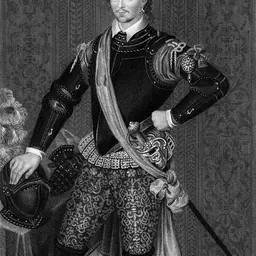
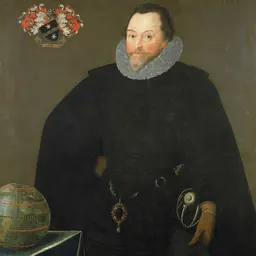
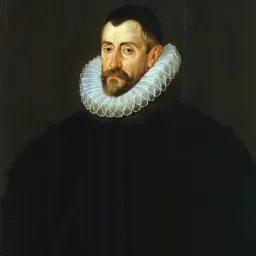
Related people
Same field, nearest in time
Contemporaries
People whose lives overlapped Robert Devereux, 2nd Earl of Essex's
Frequently asked questions
Who was Robert Devereux, 2nd Earl of Essex?
English nobleman (1565–1601)
When was Robert Devereux, 2nd Earl of Essex born?
Robert Devereux, 2nd Earl of Essex was born on 10 November 1565 in Bromyard.
When did Robert Devereux, 2nd Earl of Essex die?
Robert Devereux, 2nd Earl of Essex died on 25 February 1601 in Tower of London.
What was Robert Devereux, 2nd Earl of Essex's occupation?
Robert Devereux, 2nd Earl of Essex was a military personnel and politician.
What nationality was Robert Devereux, 2nd Earl of Essex?
Robert Devereux, 2nd Earl of Essex was English.
Sources & further reading
· Wikipedia: Robert Devereux, 2nd Earl of Essex
· DBpedia: Robert Devereux, 2nd Earl of Essex
Cite this page
APA: Biography.guide. (2026). Robert Devereux, 2nd Earl of Essex. https://biography.guide/robert-devereux-2nd-earl-of-essex/
MLA: "Robert Devereux, 2nd Earl of Essex." Biography.guide, https://biography.guide/robert-devereux-2nd-earl-of-essex/.
Chicago: "Robert Devereux, 2nd Earl of Essex." Biography.guide. https://biography.guide/robert-devereux-2nd-earl-of-essex/.
Data last updated: 2026-09-26 · Spot an error? Report a correction.
Portrait: Wikimedia Commons · author & licence
Page generated 2026-10-04 10:32 UTC