
About Paweł Stefan Sapieha
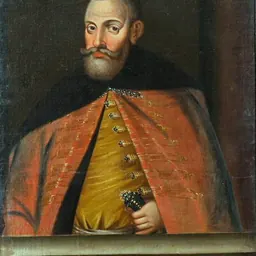
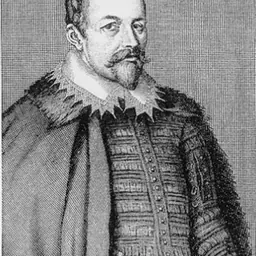
Lived 1565 – 1635 (aged 69–70). Paweł Stefan Sapieha was a Polish statesperson.
Paweł Stefan Sapieha (; ; c. 1565–1635). Lis coat of arms was a Polish–Lithuanian noble and magnate, Grand Lithuanian Koniuszy from 1593, Deputy Chancellor of Lithuania from 1623, starosta.
Genealogy Scion of the great Ruthenian and Lithuanian families of the Great Duchy of Lithuania (including the Kapustich, Gastold and Holszanski families), was a son of voivode of Minsk Bohdan Pawłowicz Sapieha (who was son of voivode of Navahrudak Paweł Sapieha) and Maryna, duchess Kapuścianka (of the princes Kapusta/Kapustich of Pereiaslav); and brother to Mikołaj Sapieha (1588–1638), famous military commander Andrzej Sapieha, Barbara (Wolowiczowa), Zofia (Hajek and later Pac), Anna (Tryzna), and fourth a sister who was a nun in the Sisters of the Order of St. Basil the Great.
Life He inherited the Halshany seat of his family, and early started his political and military career, participating in wars fought by the Polish-Lithuanian Commonwealth. He fought in the Polish–Muscovite War from 1609 to 1611, losing a hand during the siege of Smolensk. Supporter of Polish-Swedish peace and alliance against the Muscovy in negotiations ending the Polish–Swedish wars in a truce signed and known as Treaty of Stuhmsdorf in 1635. Took part, bringing his own troops, in the Smolensk War against the Muscovites, but returned early due to poor health. Paweł Stefan Sapieha owned, among others, the estates surrounding the Zamek holszański (Halshany Castle), and in fact he was the one who commissioned the famous castle to have been built. In 1618 he founded the Franciscan monastery and a Roman Catholic church in Halshany (both run by the Franciscans), while he caused to close the existing Protestant church there and given the property to the Roman Catholic Church, administered by the Basilian monks. He lavished money and precious gifts to the founded churches and monasteries He died in his castle and was buried within the church he founded in Halshany. The church bell had the following Latin inscription: Paulus Sapieha Dux in Holszany Procancellarius M. D. L.
Family He was married four times, first Regina Chalecka, Chalecki coat of arms first, upon her death married Katarzyna Gosławska (Oksza coat of arms), then Elisabeth Vesselini (daughter of a Hungarian voivode), and finally Zofia Danilowiczowna, (Daniłowicz family Sas coat of arms). He had three daughters: Katarzyna and Tekla who became nuns, while Krystyna married Jan Hieronim Chodkiewicz, Kościesza coat of arms.
Don’t just read it —
keep it.
Full-length biographies made to live with: read them, listen on the way to work, watch them tonight.
- E-book
- Audio
- Video
Instant download · yours to keep · every purchase keeps this site free
Important facts
People in Paweł Stefan Sapieha's life
Named in this biography and alive at the same time


Related people
Same field, nearest in time


Contemporaries
People whose lives overlapped Paweł Stefan Sapieha's



Frequently asked questions
Who was Paweł Stefan Sapieha?
Polish-Lithuanian noble
When was Paweł Stefan Sapieha born?
Paweł Stefan Sapieha was born in 1565.
When did Paweł Stefan Sapieha die?
Paweł Stefan Sapieha died on 19 July 1635 in Halshany.
What was Paweł Stefan Sapieha's occupation?
Paweł Stefan Sapieha was a statesperson.
What nationality was Paweł Stefan Sapieha?
Paweł Stefan Sapieha was Polish.
Sources & further reading
· Wikipedia: Paweł Stefan Sapieha
· DBpedia: Paweł Stefan Sapieha
Cite this page
APA: Biography.guide. (2026). Paweł Stefan Sapieha. https://biography.guide/pawel-stefan-sapieha/
MLA: "Paweł Stefan Sapieha." Biography.guide, https://biography.guide/pawel-stefan-sapieha/.
Chicago: "Paweł Stefan Sapieha." Biography.guide. https://biography.guide/pawel-stefan-sapieha/.
Data last updated: 2026-09-24 · Spot an error? Report a correction.
Page generated 2026-09-27 05:06 UTC