
About Henry Dearborn
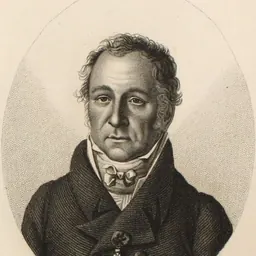
Lived 1751 – 1829 (aged 78). Henry Dearborn was an American politician, diplomat, military officer and physician.
Henry Dearborn (February 23, 1751 – June 6, 1829) was an American military officer and politician. In the Revolutionary War, he served under Benedict Arnold in his expedition to Quebec, of which his journal provides an important record. After being captured and exchanged, he served in George Washington's Continental Army. He was present at the British surrender at Yorktown. Dearborn served on General George Washington's staff in Virginia.
He served as Secretary of War under President Thomas Jefferson, from 1801 to 1809, and served as a commanding general in the War of 1812. In later life, his criticism of General Israel Putnam's performance at the Battle of Bunker Hill caused a major controversy. Fort Dearborn and Dearborn Park in Illinois, Dearborn County, Indiana, and Dearborn, Michigan, were named in his honor.
Early life Henry Dearborn was born February 23, 1751, to Simon Dearborn and Sarah Marston in North Hampton in the Province of New Hampshire. He was descended from Godfrey Dearborn, from Exeter in England, who came to the Massachusetts Bay Colony in 1639. Godfrey Dearborn settled first at Exeter, New Hampshire, and soon after at Hampton, where four successive generations of his descendants lived. Henry spent much of his youth in Epping, where he attended public schools. He grew up as an athletic boy, notably strong and a champion wrestler. He studied medicine under Dr. Hall Jackson of Portsmouth and opened a practice on the square in Nottingham, New Hampshire, in 1772. At age twenty-three, he organized and led a local militia troop of sixty men to the Boston area, where he fought on June 17, 1775, at the Battle of Bunker Hill as a captain in Colonel John Stark's 1st New Hampshire Regiment. During the battle, Dearborn observed that "Not an officer or soldier of the continental troops engaged was in uniform, but were in the plain and ordinary dress of citizens; nor was there an officer on horseback." (In 1822 Dearborn wrote an anonymous plea in the Boston Patriot to urge the purchase of the site of the Bunker Hill battlefield, which was listed for sale.)
Dearborn volunteered to serve under Colonel Benedict Arnold in September 1775, during the difficult American expedition to Quebec. Later Dearborn would record in his Revolutionary War journal their overall situation and condition: "We were small indeed to think of entering a place like Quebec. But being now almost out of provisions we were sure to die if we attempted to return back and we could be in no worse situation if we proceeded on our rout."
On the final leg of the march, Dearborn was taken seriously ill with fever, forcing him to remain behind in a cottage on the Chaudière River. Later, he rejoined the combined forces of Arnold and Gen. Richard Montgomery in time to take part in the assault on Quebec. Dearborn's journal is an important record for that campaign. During the march he and Aaron Burr became companions. Along with a number of other officers, Dearborn was captured on December 31, 1775, during the Battle of Quebec, and detained for a year. He was released on parole in May 1776, but he was not exchanged until March 1777. The cautious General Horatio Gates reluctantly ordered a reconnaissance force consisting of Daniel Morgan's Provisional Rifle Corps and Dearborn's light infantry to scout out the Bemis Heights area. and in the Battle of Newtown against the Six Nations, thereafter laying waste to the Genesee Valley and the various regions around the Finger Lakes. and was present when Cornwallis surrendered in October of that year.
Revolutionary War journals
During the American Revolution Dearborn maintained six separate journals where he recorded the various campaigns, battles, and other notable events from his point of experience. His Revolutionary War journals of Henry Dearborn, 1775-1783, have provided historians of early American history with valuable first-hand information from the perspective of an officer who was engaged in the various battles and surrounding events. His journals were first published in 1939 by the Caxton Club of Chicago and were edited from the original manuscripts by historians Lloyd A. Brown and Howard Henry Peckham; the publication includes a biographical essay of Dearborn by Hermon D. Smith. The six journals are enumerated as follows:
Dearborn also wrote An Account of the Battle of Bunker Hill. Various scholars have cited the short work as being culturally important and greatly contributing to the knowledge base of early American history.
Post-Revolution
Dearborn was commissioned as a brigadier general in the Massachusetts Militia in 1787 and was promoted to major general in 1789. The same year he was appointed as the first U.S. Marshal for the District of Maine under the new Constitution of 1787 by President Washington. He represented this district as a Democratic-Republican in the Third and Fourth Congresses from 1793 to 1797, when he lost re-election to Isaac Parker. Dearborn attempted to return to his former congressional seat in 1798 and 1800, losing both times to Silas Lee, who had succeeded Parker after one term. President Thomas Jefferson frequently consulted Henry Dearborn on matters of military law and management. In 1801, third President Thomas Jefferson appointed Dearborn Secretary of War, a post he held for eight years until March 7, 1809. Dearborn advised Jefferson in matters of military personnel when Jefferson was formulating the Military Peace Establishment Act in 1800-01, which outlined a new set of laws and limits for the military and also led to the founding of a national military academy at West Point. In April 1801, Dearborn asked George Baron, an Englishman who was Dearborn's friend from Maine, to be the mathematics instructor at the academy. Dearborn also offered the superintendency of the school to Jonathan Williams, who had translated into English some European treatises on artillery and fortification.
During the 1801 and 1802 period, Dearborn and Jefferson corresponded frequently, discussing various political and military matters. Notable among them was Dearborn's report of May 12, 1801 on the War Department,
During his tenure, he helped Jefferson form a policy on Native Americans, the goal being to establish a western boundary by procuring lands along the Mississippi River.
In 1805, while events in the Burr conspiracy were beginning to unfold, Aaron Burr and Louisiana Territory governor James Wilkinson were allegedly planning war with Mexico, with the aim of establishing a secessionist state in the Southwest in the process. Hoping to incite war with Spain, Wilkinson in a letter to Secretary of War Dearborn urged him to attack Western Spanish Florida from Baton Rouge. Prompted by prevailing rumors of war, Dearborn ordered him to send three companies of troops to Fort Adams in Western Florida as a precaution. The prospect of war in turn was used by Wilkinson to justify sending an exploratory military expedition into the Southwest to find a route that would be used to supply a war effort at the U.S.-Spanish-Mexican border. (Burr and Wilkinson, with the support of General Andrew Jackson, were earnestly promoting the idea (e.g.) via newspapers) in the Southwest that war with Spain was imminent and that he would use "Mexican treasure" to entice the Western states along the Mississippi and Ohio rivers into secession. When Wilkinson, however, had asked Dearborn to send an exploratory military expedition into the Southwest, Dearborn replied that, "you, Burr, etc., are becoming too intimate ... keep every suspicious person at arm's length." At this time Dearborn also warned his top general that "your name has very frequently been mentioned with Burr's." Shortly thereafter Burr was arrested for treason.
Dearborn was appointed collector of the port of Boston by President James Madison in March 1809, a position he held until January 27, 1812, when he was appointed as the Commanding General of the United States Army. and especially for helping Jefferson draft the Military Peace Establishment Act, which served to remove many Federalist officers from the ranks of the military. Subsequently, Madison's choice for commanding general of the northeast theater was not well received by most Federalists. and ready to install a "Hanoverian"-like monarchy in opposition to them.
On August 9, while General William Hull was expecting a diversionary attack by Dearborn in the Niagara area, the latter was still at his headquarters at Greenbush, just outside of Albany, and was having great difficulty amassing troops for the coming offensive in Canada. At this time George Prevost had sent British Colonel Edward Baynes to negotiate a temporary armistice with Dearborn. Dearborn learned that Lord Liverpool was giving the American government time to respond. Lacking the means to adequately engage the British in Canada, Dearborn was not eager for battle, welcomed the delay, and rushed news of the armistice to Madison for approval. In the meantime Dearborn gave orders to General Van Rensselaer to avoid any engagements along the Niagara. The truce, however, was short-lived when on August 15 Madison repudiated Dearborn's agreement and orders were issued to renew the offensive.
Dearborn prepared plans for simultaneous assaults on Montreal, Kingston, Fort Niagara, and Amherstburg, but the execution was imperfect. A half-hearted advance into Lower Canada in November 1812 simply collapsed after a very minor engagement at the Battle of Lacolle Mills. Some scholars believe that Dearborn also did not move quickly enough to provide sufficient troops to defend Detroit. Hull, without firing a shot, surrendered the city to British General Isaac Brock. Hull was court-martialed and sentenced to death, but the sentence was commuted. Dearborn headed the court martial.
On April 27, 1813, American forces on Lake Ontario under Dearborn and Commodore Isaac Chauncey gained success at the Battle of York, occupying the town for several days and capturing many guns and stores. Thereafter the American army was transported across the lake in Chauncey's ships to Fort Niagara. Dearborn assembled 4,500 troops at Fort Niagara and planned to attack Fort George next, and entrusted the attack to Colonel Winfield Scott, but his army required rest and reorganization. No preparations had been made to accommodate the troops at Fort Niagara, and they suffered considerable shortages and privations for several days.
Although Dearborn had minor successes at the capture of York (now Toronto) on April 27, 1813, and at the capture of Fort George on May 27, 1813, his command was, for the most part, ineffective. He was recalled from the frontier on July 6, 1813, and reassigned to an administrative command in New York City, and married his third wife, Sarah Bowdoin.
Later life Dearborn was an original member of the Society of the Cincinnati, and was elected a member of the American Antiquarian Society in 1816, now the oldest historical society in the United States.
Dearborn ran for Governor of Massachusetts in 1818 against incumbent John Brooks. Because Dearborn was a Democratic-Republican in a predominantly Federalist state, he needed favorable press to help his campaign. Subsequently, Dearborn accepted an offer from Charles Miner, the editor of The Port Folio, a Philadelphia political magazine, asking him to verify and edit a British soldier's map depicting the Battle of Bunker Hill. Dearborn saw this as a chance to win public favor and seized the opportunity. However, his efforts backfired when he also wrote a "correct account" of the battle in the article, which was reprinted in 1818, accusing Israel Putnam of inaction and cowardly leadership during the battle, which sparked a major and long-lasting controversy among veterans of the war and various historians.
On March 1, 1815, President James Madison nominated Dearborn for reappointment as Secretary of War, but the Senate rejected the nomination, and in the face of fierce criticism over Dearborn's performance during the War of 1812, Madison withdrew the nomination. Dearborn was later appointed Minister Plenipotentiary to Portugal by President James Monroe, serving from May 7, 1822, until June 30, 1824, when, by his own request, he was recalled.
He retired to his home in Roxbury, Massachusetts, where he died in 1829. He is interred in Forest Hills Cemetery in Jamaica Plain (outside of Boston at the time; annexed to the city in 1874).
Legacy Lewis and Clark, appointed by Thomas Jefferson, named the Dearborn River in west-central Montana after Dearborn in 1803. Dearborn County, Indiana; Dearborn, Michigan; and Dearborn, Missouri, were also named for him, as was Fort Dearborn in Chicago, which in turn was the namesake for Dearborn Street, a major street in downtown Chicago. There was also a Fort Dearborn in Adams County, Mississippi, in the early 1800s (see Leonard Covington).
Augusta, Maine, was so renamed after Henry's daughter, Augusta Dearborn, in August 1797.
A U.S. military armory, initially named "Mount Dearborn", was planned in the early 1800s to be built on an island near the confluence of the Catawba and Wateree rivers, adjacent to Great Falls, South Carolina. The facility was never constructed, but the island's name stuck, and after the town was founded in 1905, its main thoroughfare was named Dearborn Street.
During World War II, a coastal defense fort named Fort Dearborn was established in Henry Dearborn's home state of New Hampshire, to guard the approaches to Portsmouth.
General Dearborn's son, Henry A. S. Dearborn, was a U.S. congressman representing Massachusetts's 10th congressional district from 1831 to 1833.
Don’t just read it —
keep it.
Full-length biographies made to live with: read them, listen on the way to work, watch them tonight.
- E-book
- Audio
- Video
Instant download · yours to keep · every purchase keeps this site free
Important facts
People in Henry Dearborn's life
Named in this biography and alive at the same time


Related people
Same field, nearest in time



Contemporaries
People whose lives overlapped Henry Dearborn's




Frequently asked questions
Who was Henry Dearborn?
American politician (1751-1829)
When was Henry Dearborn born?
Henry Dearborn was born on 23 February 1751 in North Hampton.
When did Henry Dearborn die?
Henry Dearborn died on 6 June 1829 in Roxbury.
What was Henry Dearborn's occupation?
Henry Dearborn was a politician, diplomat, military officer and physician.
What nationality was Henry Dearborn?
Henry Dearborn was American.
Sources & further reading
Cite this page
APA: Biography.guide. (2026). Henry Dearborn. https://biography.guide/henry-dearborn/
MLA: "Henry Dearborn." Biography.guide, https://biography.guide/henry-dearborn/.
Chicago: "Henry Dearborn." Biography.guide. https://biography.guide/henry-dearborn/.
Data last updated: 2026-09-20 · Spot an error? Report a correction.
Page generated 2026-09-27 05:23 UTC