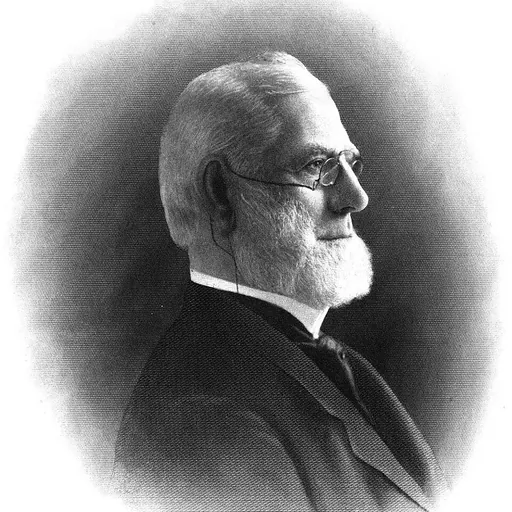
About Henry Clay Hodges
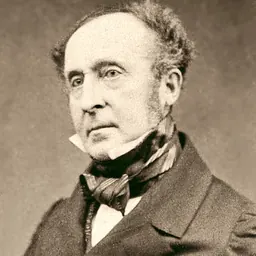
Lived 1828 – 1919 (aged 91). Henry Clay Hodges was a lawyer, manufacturer, editor and publisher.
Henry Clay Hodges (March 2, 1828 – August 31, 1919) was an American businessman, real estate developer, manufacturer, publisher, and New Thought writer. He was among Detroit's wealthiest and most prominent citizens during the late nineteenth century, helping develop major sections of the city through large-scale real estate projects while also leading several important industrial enterprises, including the Detroit Radiator Company and the Detroit Lubricator Company.
In the later part of his life, Hodges became known for his involvement in astrology, psychical research, and the New Thought movement. He was the author of the six-volume Science and Key of Life series and the related volume Two Thousand Years in Celestial Life. In 1904 he financed the establishment of a Church of the New Thought in Detroit, and in 1906 acquired Herbert A. Parkyn's Suggestion magazine, continuing its publication as The Stellar Ray.
Early life and education Henry Clay Hodges was born on March 2, 1828, in South Hero, Vermont. His father was a native of Washington County, New York, and his mother belonged to the Phelps family of Connecticut. He was educated in the local common schools and spent much of his youth working while pursuing his studies independently.
At twelve years of age he began working on a farm, and at sixteen entered the carriage-making trade, remaining in that occupation for approximately six years. During this period he devoted much of his spare time to reading and self-education. In November 1850, at the age of twenty-two, he left Vermont and traveled west.
After a brief stay in Detroit, Hodges settled in Marshall, Michigan, where he taught in country schools and for a time served as steward and clerk of the Railroad Hotel. He later returned to teaching and also began the study of law in 1852, supporting himself in part through teaching during the winter months. Following a prolonged illness from fever, he sought a change of climate and relocated to Wisconsin.
Industrial enterprises While Hodges first achieved prominence through insurance and real estate, a substantial portion of his fortune and public reputation came from manufacturing and industrial development. During the last quarter of the nineteenth century he became associated with several of Detroit's leading industrial enterprises, helping expand the city's role as a center of manufacturing before the rise of the automobile industry. In 1879 Henry C. Hodges and his brother Charles purchased the business of John L. Cook, a manufacturer of lubricating devices. From this acquisition grew the Detroit Lubricator Company, which became one of the most successful manufacturers of its kind in the United States. The company's lubricators were used throughout the world in applications ranging from heavy industrial machinery and railroad equipment to marine engines and surgical apparatus.
In 1882 Hodges and his brother incorporated the Detroit Steam Radiator Company, an early manufacturer of cast-iron steam radiators. As demand for heating systems expanded throughout the United States, the company grew rapidly and was eventually consolidated into the Detroit Radiator Company. Hodges served as president and chief executive officer of the Detroit Radiator Company and under his direction the business expanded into one of the largest manufacturers in its field, being widely used in homes, commercial buildings, industrial facilities, and later in the rapidly developing automobile industry. The company ultimately became part of the American Radiator Company, one of the largest radiator manufacturers in the nation.
Several of Hodges' sons later assumed leadership positions within the companies, including Clarence B. Hodges, who became president, and Frederick W. Hodges, who served as secretary and treasurer.
Wyandotte Rolling Mills and the Detroit-Arizona Copper Mining Company Hodges also became closely associated with the Wyandotte Rolling Mills Company, one of Michigan's most important iron and steel enterprises. He served as vice president and managing director of the company and later succeeded Captain Eber Brock Ward as president. Under its leadership the company participated in the production of materials used throughout the Great Lakes region and was involved in the construction of steamers operating on the Great Lakes and the St. Lawrence waterway system.
By the beginning of the twentieth century, Hodges' companies employed hundreds of workers and supplied products throughout North America, making him one of Detroit's most wealthy and prominent businessmen before his attention increasingly turned toward the New Thought movement.
Hodges' six-volume Science and Key of Life series
Hodges devoted much of his later life to the study of astrology and the influence of the stars and planetary movements on the mind. In 1901 he published his first book on astrology through his Astro Publishing Company, titled Science and Key of Life. Over the next several years he continued writing on the subject, eventually expanding the work into a multi-volume series.
Hodges envisioned a future in which astrology would guide every aspect of society, from school curricula to government policy, and even believed that marriage certificates should only be granted to couples whose astrological readings aligned, a practice he claimed would eradicate the problem of divorce.
He also extended into a wide range of esoteric subjects based in Hermetic, Masonic, and Hindu philosophy, including the significance of numbers, the vibrational effects of color, sound, and heat, palmistry, the pyramids, and the harmonics of cosmic rays upon the mind. He also examined the symbolic meanings of words, names, numbers, and ancient myths, treating them as keys to hidden truths preserved from antiquity. Throughout the series he maintained that ancient wisdom traditions and modern science ultimately pointed toward the same underlying principles governing the universe and the human mind. Article about Hodges' ideas about the future benefits of using Astrology for society. The later volumes of Science and Key of Life examined what Hodges called astro-physiology, exploring the relationship between planetary positions and physical health. He argued that astrology could be used to understand the causes of disease, determine critical periods during illness, and assist in selecting appropriate treatments. In 1908 the New York State Journal of Medicine, reviewing the final volumes of the series, described Hodges as one of those "towering intellects which from time to time appear upon the horizon of the world of thought." Clytina, with the seven pointed "Blazing Star" as a jeweled brooch in her hair. The drawing was created from a psychic image she transmitted. Two Thousand Years in Celestial Life. The psychic W.E. Cole with the transmission device and his hand resting on the closed box holding the messages. This cipher was widely employed in Knights Templar Freemason circles. The slate presented a combination of Masonic cipher text on the left side, plain English text on the right side, and esoteric imagery in the center. On the right the words are given in cursive English. They read, "In the present as in the past do I come unto thee, and by the tokens of the past speak. And in the present do I speak likewise. By the emblem we send know that the star shall still shine on. Clytina." The wording refers to "tokens" and an "emblem." In Masonic and esoteric usage tokens are signs or proofs of recognition that connect to earlier teachings, and an emblem is a symbolic image that conveys a truth. On the left side the words are written in the Masonic or Pigpen cipher using the Grid X Grid X variant that was widely employed in Knights Templar Freemason circles.
Decoded this portion reads, "Beyond the stars that man can see are stars unnumbered for thee and me. Thy loving guide C." (C. for Clytina) At the center is a seven pointed star that contains the all seeing eye and radiates outward, a design long associated with mystical completeness and the planetary cycle. Above it is a six pointed star, also containing an eye, a symbol traditionally understood as the union of opposites and the harmony of spirit and matter. At the lower left is the Rod of Asclepius, a staff entwined by a single serpent which is an ancient emblem of healing and knowledge. The classic combination of cipher, text, and symbols reflected the established language of Masonic and Rosicrucian traditions in which hidden writings, guiding figures, and emblematic imagery served as vehicles for the transmission of wisdom. Clytina' is derived from the Ancient Greek word klutós (κλυτός), which translates to "glorious" or "renowned" and is a deliberate variation of the Greek mythic Clytia. In Greek mythology the nymph daughters of Oceanus, called the Oceanids, were said to number in the thousands and were often understood allegorically as the stars scattered across the sea of night. Among them were Clytia and Leucothoe, whose fate reveals an allegory of Venus and Mercury, the two planets closest to the Sun. Clytia loved Helios, the Sun god, but he directed his affection to her sister Leucothoe. Out of jealousy Clytia revealed the affair to their father who punished Leucothoe by burying her alive, a symbolic entombment that corresponds to Mercury's frequent disappearance into the brilliance of the Sun. Helios could not save her, but he transformed her into the frankincense tree. This tree, long associated with purity, divine worship, and sacred fire, represents Mercury's role as a hidden but consecrated star, veiled within the Sun's radiance. Clytia, abandoned and consumed by grief, sat staring at the Sun until she was transformed into the heliotrope flower, turning perpetually to follow his light. In astronomical terms Clytia is Venus, the Morning and Evening Star, known as the light-bearer. Her punishment and eventual exalted transformation into a heliotrope reflects Venus's observable behavior of never straying far from the solar path and appearing as the herald of dawn or dusk. The emblem from the Illustrated Slate that Hodges uses for his books and for The Stellar Star magazine. This myth is expressed visually in the emblem on the illustrated slate, where two stars are set before the rays of the Sun. The smaller six-pointed star, the hexagram and Star of David, corresponds to Mercury. As the hidden light, it is close to the Sun but easily lost in its glare, echoing Leucothoe's burial and her transformation into the tree of divine connection. The larger seven-pointed star, the heptagram, corresponds to Venus. Rather than the five-pointed pentagram, this "Blazing Star" symbolizes the higher light of divine guidance and illumination. Venus in this form is the light-bearer, the bright one who guides and reveals, and whose devotion to the Sun mirrors Clytia's transformation into the heliotrope. Clytina's messages on the slate tie directly to the planetary allegory. The "tokens of the past" recall the ancient myths, while "the emblem we send" points to the image of the Blazing Star and the Star of David. Her assurance that "the star shall still shine on" affirms the eternal role of the light-bearer's guidance. Most important is the statement, "Beyond the stars that man can see are stars unnumbered for thee and me. Thy loving guide." Here she declares that beyond her visible brilliance of divine guidance there lies an infinite realm of unseeable light.
In Science and Key of Life Hodges repeatedly demonstrates his interest in the etymology of words, especially those connected to Sanskrit roots. One example is his treatment of the word Saturn, which he divides into Sat-urn. Sat, he explains, is a Sanskrit term signifying "Be-ness" or the divine essence that simply is, while urn is the sacred vessel of existence. He concludes that Sat does not exist for it can only be made to manifest through the urn. Hodges involvement within the New Thought movement brought him into close associated with Dr. Herbert A. Parkyn and the growing network of writers, lecturers, publishers, and educators connected with Parkyn's Suggestion magazine and the Chicago School of Psychology. Hodges had followed Parkyn's work for years and was well known to readers of Suggestion through his advertisements and articles on astrology and mental influence.
The historical connections between the two families were also in their professional activities. Parkyn's grandfather owned the Mount Royal Mills in Montreal and also constructed and inspected steamboats on the St. Lawrence waterway, while at the same time Hodges was managing the Wyandotte Rolling Mills Company and also constructing steamers operating throughout the St. Lawrence transportation systems.
Patron of New Thought By 1904 Hodges had become convinced that New Thought represented a practical philosophy capable of improving both individual lives and society as a whole. He viewed the movement as a synthesis of many of the principles he had explored through astrology, mental science, and spiritual philosophy. At a time when opposition to New Thought and mental healing movements was increasing, Hodges used his personal fortune to support the advancement of the movement.
As his business responsibilities gradually passed to his sons and associates, Hodges increasingly devoted his energy to publishing, education, and the promotion of New Thought principles. He regarded these activities as the culmination of his life's work and believed they offered the greatest opportunity to benefit future generations. One of the most significant expressions of Hodges' commitment to New Thought came in 1904 when he financed the establishment of the Church of the New Thought in Detroit and became president of its board of trustees. Hodges envisioned the church not merely as a local congregation but as the foundation of a larger movement that would eventually include additional churches, educational institutions, and centers devoted to the study of mental science and spiritual development. The Detroit church served as the first attempt to transform those ideas into a permanent institution.
To house the organization, Hodges financed the construction of a Greek temple-style building at 43 Winder Street in Detroit. The structure stood apart from conventional church architecture and symbolized the movement's attempt to combine religion, philosophy, psychology, and self-development within a single framework.
Like many of the cover designs used on Parkyn's Suggestion magazine, the building incorporated the symbolic motif of twin columns. Within Masonic and occult traditions these columns were associated with the pillars which were at the gateways to wisdom and spiritual understanding. The 7 principles of the Church of the New Thought by Hodges.
The seven principles of the Church of the New Thought The Seven Principles: In November 1906, Hodges purchased Suggestion magazine from Dr. Parkyn. By that time, Suggestion had become one of the leading publications devoted to mental science and New Thought. Parkyn was increasingly directing his attention toward expanding his interests in the rapidly growing New Thought centers of Denver and Los Angeles. Transferring ownership of the magazine to Hodges provided him with the time and financial flexibility to pursue those ventures while ensuring that the publication would remain in the hands of someone who shared its underlying philosophy.
Hodges was uniquely positioned to assume control. He had become one of the movement's most important financial supporters and possessed the capital necessary to substantially expand the magazine's influence. The only changes Hodges made when he assumed control of Suggestion magazine were the addition of a department devoted to astrology and the renaming of the publication as The Stellar Ray''.
Hodges used his considerable resources to expand its size and to bring together many of the biggest names in the movement at the time. The magazine now featured a Department of Psychic Research headed by Edgar L. Larkin, a Department of Psychical Sciences and Unfoldment led by J. C. F. Grumbine, a Department of New Thought directed by Charles Brodie Patterson, as well as contributions from well-known writers such as Ella Wheeler Wilcox, Eleanor Kirk, and Yogi Ramacharaka.
Personal life and family On October 10, 1854, Hodges married Julia A. Bidwell of Hastings, Michigan, daughter of Horace Bidwell, one of Michigan's early pioneers. The marriage lasted fifty-eight years and produced three sons and two daughters.
Don’t just read it —
keep it.
Full-length biographies made to live with: read them, listen on the way to work, watch them tonight.
- E-book
- Audio
- Video
Instant download · yours to keep · every purchase keeps this site free
Important facts
People in Henry Clay Hodges's life
Named in this biography and alive at the same time



Related people
Same field, nearest in time



Contemporaries
People whose lives overlapped Henry Clay Hodges's




Frequently asked questions
Who was Henry Clay Hodges?
American manufacturer and publisher
When was Henry Clay Hodges born?
Henry Clay Hodges was born on 2 March 1828 in South Hero.
When did Henry Clay Hodges die?
Henry Clay Hodges died on 31 August 1919 in Detroit.
What was Henry Clay Hodges's occupation?
Henry Clay Hodges was a lawyer, manufacturer, editor and publisher.
Sources & further reading
· Wikipedia: Henry Clay Hodges
· DBpedia: Henry Clay Hodges (industrialist)
Cite this page
APA: Biography.guide. (2026). Henry Clay Hodges. https://biography.guide/henry-clay-hodges/
MLA: "Henry Clay Hodges." Biography.guide, https://biography.guide/henry-clay-hodges/.
Chicago: "Henry Clay Hodges." Biography.guide. https://biography.guide/henry-clay-hodges/.
Data last updated: 2026-09-23 · Spot an error? Report a correction.
Portrait: Wikimedia Commons · author & licence
Page generated 2026-09-27 05:08 UTC